Repair TipsLocal Guides
How to unclog a kitchen sink drain safely
A backed-up kitchen sink in Houston is usually grease, soap scum, or food debris in the P-trap or branch line. Here is the safe way to clear it - and when to call us.
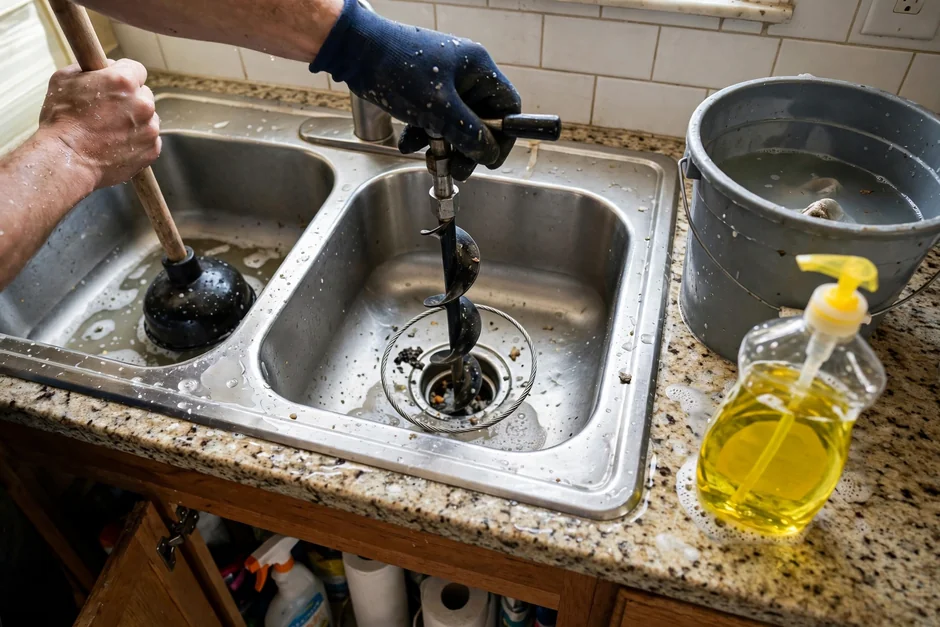
You can unclog a kitchen sink safely by removing the standing water, clearing the P-trap by hand, and flushing the line with hot water and a plunger - never by pouring chemical drain cleaner into a line you haven't inspected. That order matters. Most kitchen sink clogs in Houston sit in the P-trap or the short branch line behind the cabinet, and both can be cleared without caustic chemicals or a snake.
Below we walk through why kitchen drains clog here more than in most cities, the step-by-step method our technicians use, the mistakes that turn a slow drain into a flooded cabinet, and the point where a plumber Houston homeowners trust should take over.
Why kitchen sinks clog so often in Houston
Houston's combination of hard water, heavy cooking, and older cast-iron or galvanized drain lines makes kitchen sinks clog faster than in most U.S. cities. City of Houston water averages about 8 grains per gallon of hardness (about 135.5 mg/L in the City's Main System report), and groundwater-fed districts can run harder — the right number for your address depends on your water provider. Grease and soap scum stick to that scale like Velcro, and the buildup narrows the pipe a little more every month.
Add a household that cooks with oil - and most Houston households do - and you get the classic pattern: a sink that drains a little slower each week, then stops completely on a Sunday night. In homes built before 1980, the drain line itself may be original cast iron that has rusted and scaled down to half its original diameter.
What causes kitchen sink clogs in Houston TX?
Kitchen sink clogs in Houston TX come from four sources, in this order of frequency: grease and oil, food debris, soap scum combined with hard-water scale, and foreign objects. Grease is the big one. Cooking oil looks liquid when it's hot and turns solid the moment it hits a cool drain line - which is why pouring bacon grease down the sink is the single most common cause of a kitchen drain clog we see.
Food debris - coffee grounds, eggshells, rice, potato peels - settles in the P-trap and packs into a paste. Soap scum binds to hard-water scale and narrows the pipe wall. And foreign objects, from broken glass to a lost sponge or a piece of silverware, wedge in the trap or the branch line.
If your sink has a garbage disposal, add one more: overloading it with fibrous food (celery, onion skins, corn husks) that the disposal can't grind fine enough to flush.
The safe way to unclog a kitchen sink, step by step
The safe way to unclog a kitchen sink is to work from the simplest method to the most invasive, stopping as soon as water runs free. Skip a step and you risk cracking a trap, damaging a disposal, or pushing the clog deeper into the branch line. Here is the order our technicians follow on a standard drain cleaning Houston TX call.
Step 1: Bail out the standing water
Use a cup or a small pot to scoop the water out of the basin and into a bucket. You want the sink empty before you do anything else - otherwise the moment you open the trap, that water ends up on the cabinet floor.
Step 2: Try the plunger first
Use a cup plunger (the kind with a flat rubber cup, not the flanged toilet style). Fill the basin with about 3 inches of water, seal the second drain with a wet rag if you have a double sink, and plunge 10 to 15 firm strokes. The pressure alone clears most soft clogs in the trap.
Step 3: Check and clear the P-trap
Put a bucket under the trap, unscrew the two slip nuts by hand, and pull the trap off. Most of the time you'll find a greasy plug of food and soap right there. Clean it out with a bottle brush, rinse it, and reinstall it hand-tight. Run hot water for two minutes to confirm the drain is clear before you go further.
Step 4: Snake the branch line
If the trap was clean and the sink still backs up, the clog is in the branch line behind the wall. Feed a hand snake (a 15- to 25-foot drum auger is enough for most kitchen sinks) through the trap arm and crank it through the clog. This is where a kitchen sink repair Houston call usually starts to make more sense than a DIY attempt - a hand snake that's forced can scratch a cast-iron line or crack a PVC fitting.
Step 5: Flush with hot water
Once water runs free, flush the line with two full basins of hot water - 140°F or hotter if your water heater is set that high. This melts residual grease off the pipe wall and pushes it downstream. Follow with a full basin of cold water to confirm the line is moving freely.
Should you use drain cleaner in Houston Texas?
No - we don't recommend chemical drain cleaner in Houston Texas for a kitchen sink, and here's why. Caustic drain cleaners (the lye-based liquids and crystals) generate heat as they dissolve, and that heat can soften PVC traps and warp older plastic fittings. They also sit in the trap and eat at the pipe wall if the clog doesn't clear.
Worse, they don't fix the underlying problem. A chemical cleaner may punch a hole through a grease clog, but the scale and soap scum that caused it stay on the pipe wall. The sink backs up again in a few weeks, and now you have a trap full of caustic liquid that a plumber has to deal with before he can even snake the line.
If you've already poured cleaner in and the sink is still stopped, stop adding more. Call a plumber and tell them what you used and when - that's the one piece of information that changes how we approach the job.
Common mistakes that turn a slow drain into a flood
The most common mistake we see on a residential plumbing services Houston TX call is a homeowner who kept plunging after the trap was already clear - and blew a slip nut loose under the cabinet. A few other mistakes worth avoiding:
- Plunging a double sink without sealing the second drain. The pressure escapes up the other basin instead of down the clog.
- Using a toilet plunger on a kitchen sink. The flanged cup doesn't seal on a flat sink bottom, so you get no pressure.
- Forcing a hand snake with a drill. A drill-powered snake on a cast-iron line can crack the pipe at a fitting.
- Pouring a second round of chemical cleaner on top of the first. Two caustic loads generate more heat and do more damage than one.
- Ignoring a slow drain for weeks. A slow drain is the warning; a full stop is the emergency.
One more: don't run the garbage disposal as a first response to a clog. Running a disposal on a stopped drain just packs the food finer and pushes it deeper into the trap.
When to call a professional
Call a professional when the sink backs up again within a week of clearing it, when water backs up in a second fixture (a bathroom sink or the tub) at the same time, or when you smell sewer gas under the cabinet. Those three signs point to a clog past the branch line - in the main drain or the sewer lateral - and no amount of plunging will fix it.
We handle those calls every week across Houston, including in older neighborhoods where the original cast-iron drain lines are still in service. If the clog is in the lateral, we camera the line and clear it with a jetter rather than a hand snake. For homes in the Heights and other pre-war neighborhoods where the drain lines are original, we often find roots or collapsed pipe that a snake can't clear - that's a sewer line repair Houston TX job, not a drain cleaning job.
Our team at El Primo Lalo Plumbing finds the clog, clears it, and tests the line before we leave. We give you a flat price before we start, and we don't leave until the sink drains the way it should.
Frequently Asked Questions
How do I unclog a kitchen sink safely in Houston?
Bail out the standing water, plunge with a cup plunger, then remove and clean the P-trap by hand. If the trap is clear, snake the branch line. Avoid chemical drain cleaners - they can damage PVC traps and don't fix the underlying grease and scale buildup.
What causes kitchen sink clogs in Houston TX?
Grease and cooking oil are the top cause, followed by food debris, soap scum bound to hard-water scale, and foreign objects. Houston's hard water — City of Houston water averages about 8 grains per gallon — accelerates scale buildup inside the pipe, which makes every other clog worse.
Should I use drain cleaner in Houston Texas?
No. Caustic drain cleaners generate heat that can warp PVC traps and damage older fittings, and they leave the scale and soap scum that caused the clog in place. Most Houston sinks back up again within a few weeks of a chemical treatment.
Who do I call for a clogged kitchen sink in Houston?
Call a licensed plumber when the sink backs up again within a week, when a second fixture backs up at the same time, or when you smell sewer gas. Those signs mean the clog is past the branch line, in the main drain or sewer lateral.
What should a drain clearing visit include?
Clearing the trap and the branch line, and a camera inspection if the clog keeps coming back — the camera shows whether the problem is grease and scale, roots, or a sagging pipe. Sewer lateral work is scoped separately after a camera inspection. Ask for a free estimate first.
Get help with Plumbing in Houston
If your kitchen sink is still backing up after the steps above, or you'd rather not spend a Sunday under the cabinet, call us. We clear kitchen sink clogs across Houston, give you a flat price before we start, and test the line before we leave.
Call El Primo Lalo Plumbing at (346) 776-8560.
We take calls Monday through Sunday, 7:00 AM to 10:00 PM.