Written price
One number before we start
Water heater installation in Houston is a permit job, not a swap: the City permit and inspection are handled as part of the job. A new water heater in Houston is a permit job, not a swap. El Primo Lalo Plumbing installs tank water heaters to the 2021 Uniform Plumbing Code with Houston Amendments, with the City permit and inspection handled as part of the job.
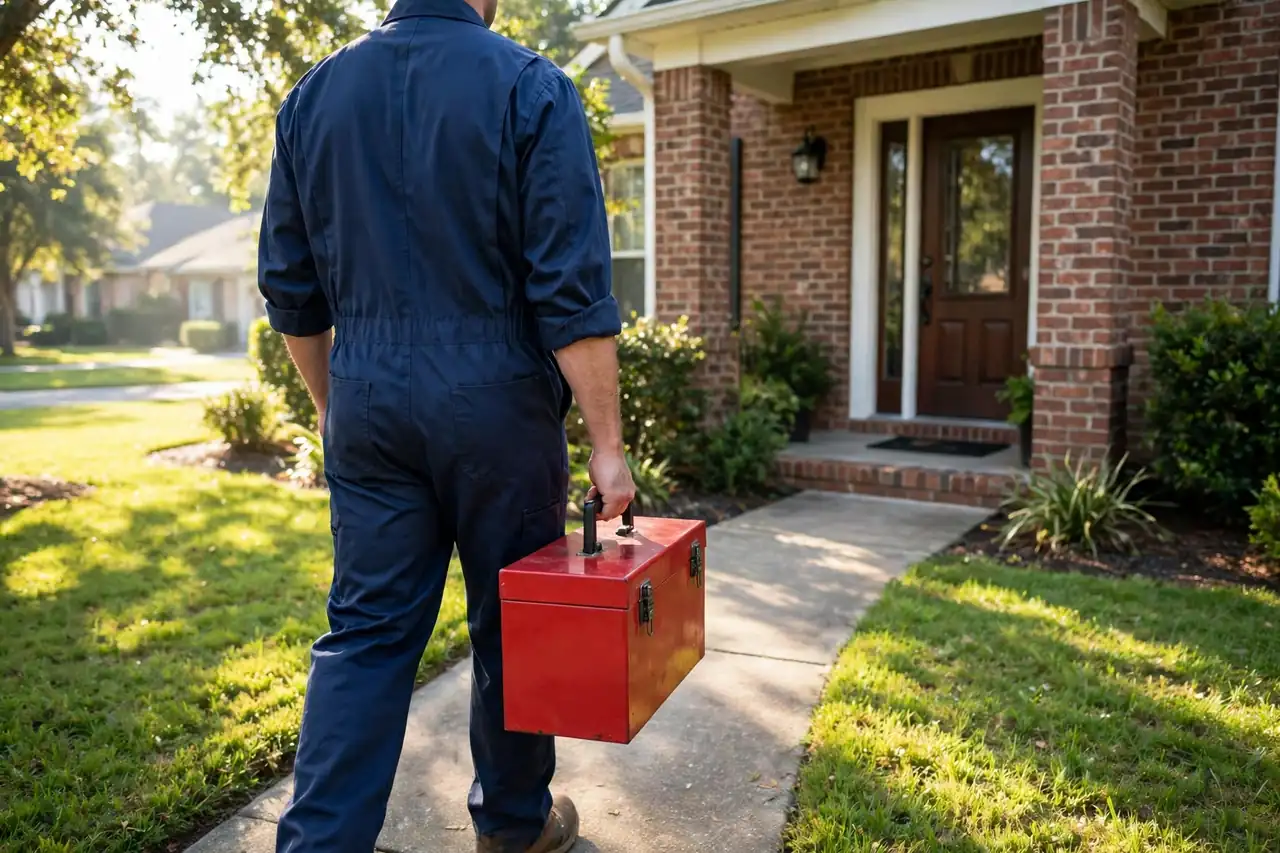
Every install we do covers the parts and labor that make the unit run right and pass inspection. Here is what is in the price, and what we handle as part of the job rather than as a surprise add-on.
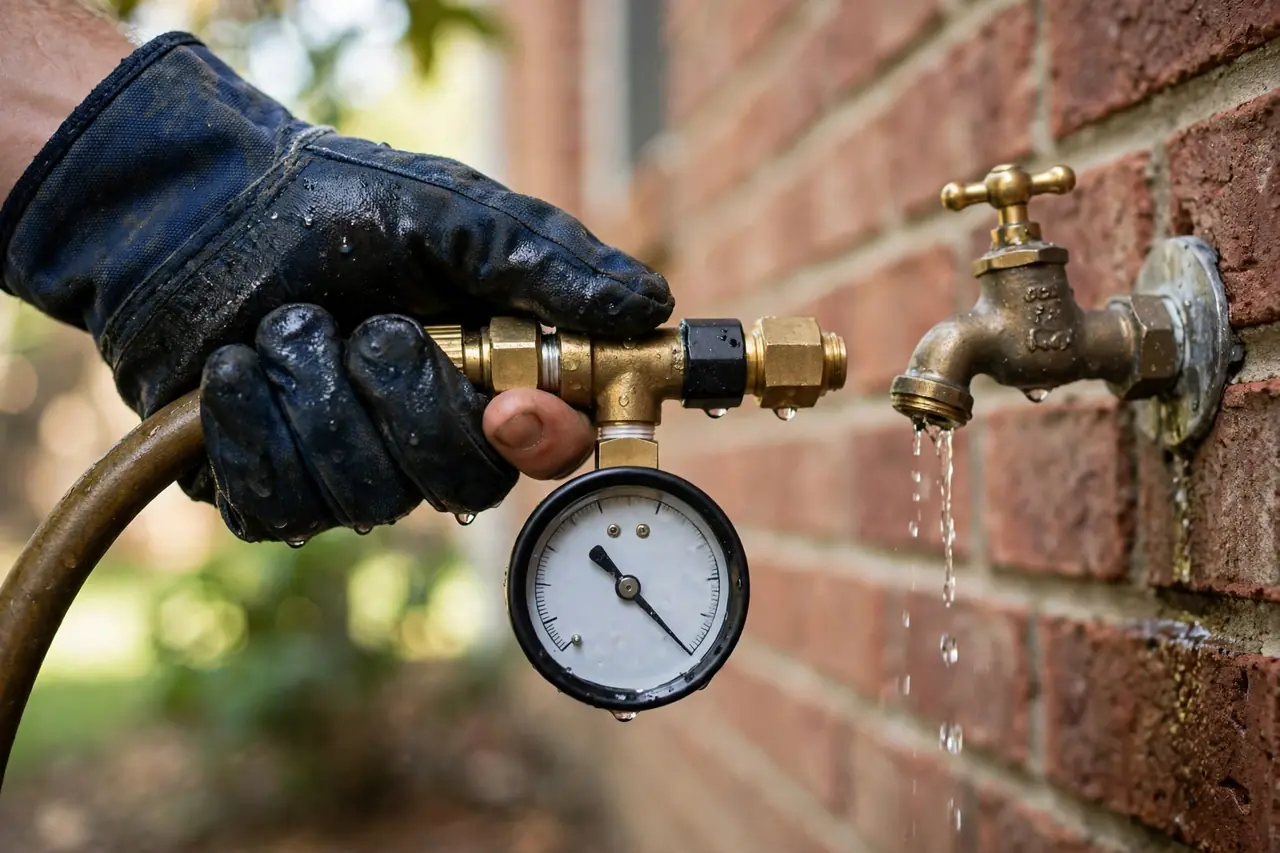
We replace tanks in attics, garages, and closets across Houston homes. You get a new pan, new connections, and a walkthrough before we leave.
We install and replace commercial tanks and tankless units sized for peak demand. Flexible scheduling keeps your doors open and your hot water running.
The City of Houston requires a permit pulled by a master plumber registered with the City for every water heater replacement, plus an inspection. The install covers the pan, the temperature and pressure relief discharge, venting, gas or electric connections, and haul-away of the old tank. We never publish a fee figure, because the City's own pages conflict on it.
Sizing matters more than most homeowners expect. A tank that is too small runs out of hot water; a tank that is too big wastes energy heating water nobody uses. Houston's hard water, about 8 grains per gallon on average, means sediment control and anode care decide how long the new tank lasts. In floodplain homes, elevation of the unit matters too.
A water heater install is a permit job. Do it to code, or do it twice.
No mystery, no surprise line items. Here is the sequence from your first call to hot water at the tap.

You call (346) 776-8560 and tell us the tank age, fuel type, and what it is doing. We ask whether it is gas or electric, attic or garage, and whether there is water on the floor. That five-minute call lets us load the right size unit before we roll.
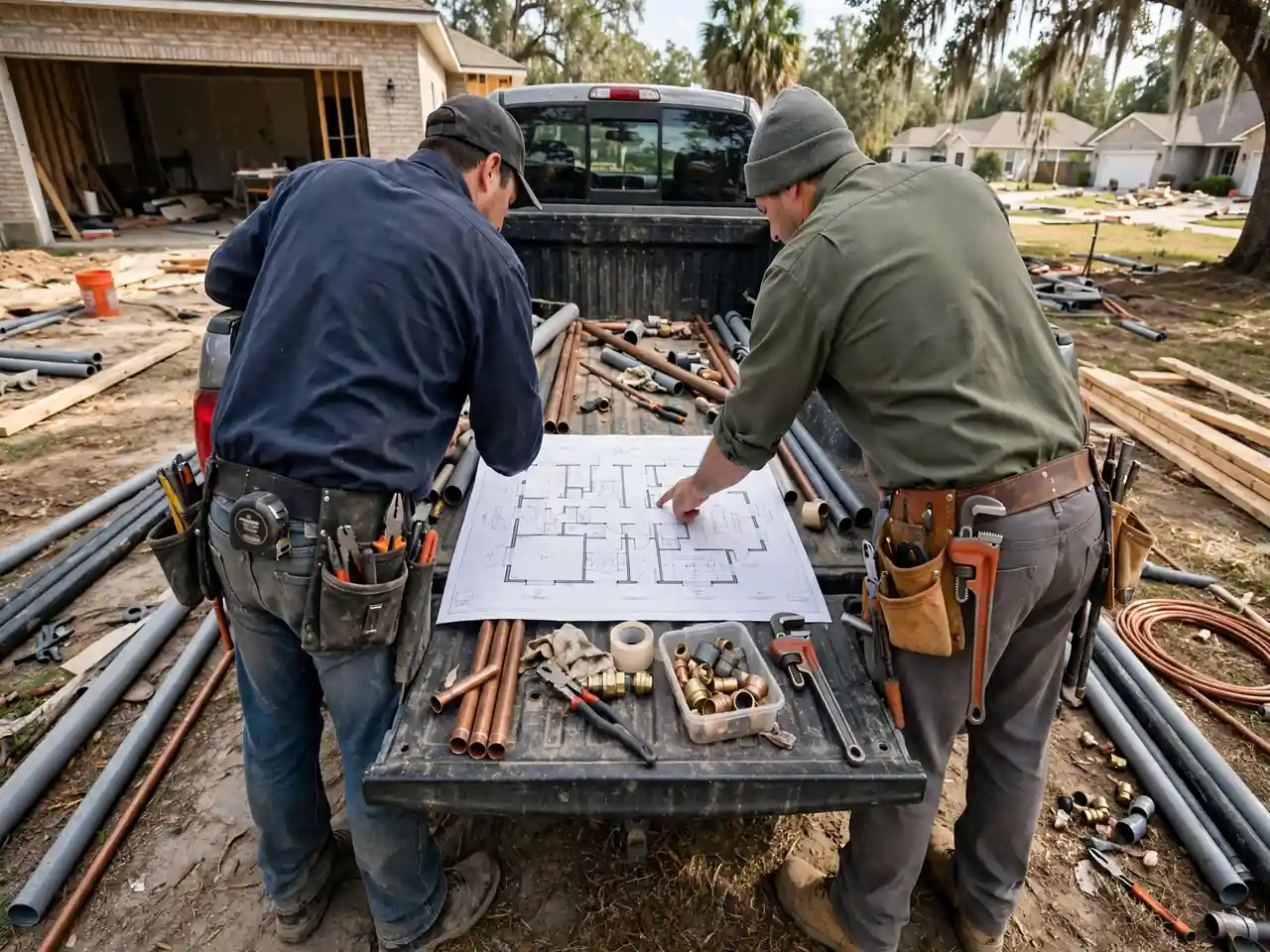
We shut off the gas or breaker, drain the tank, and inspect the shutoff valves, supply lines, venting, and drain pan. If the gate valve will not close or the flue is rusted through, you hear about it before we start, with a price, not after.
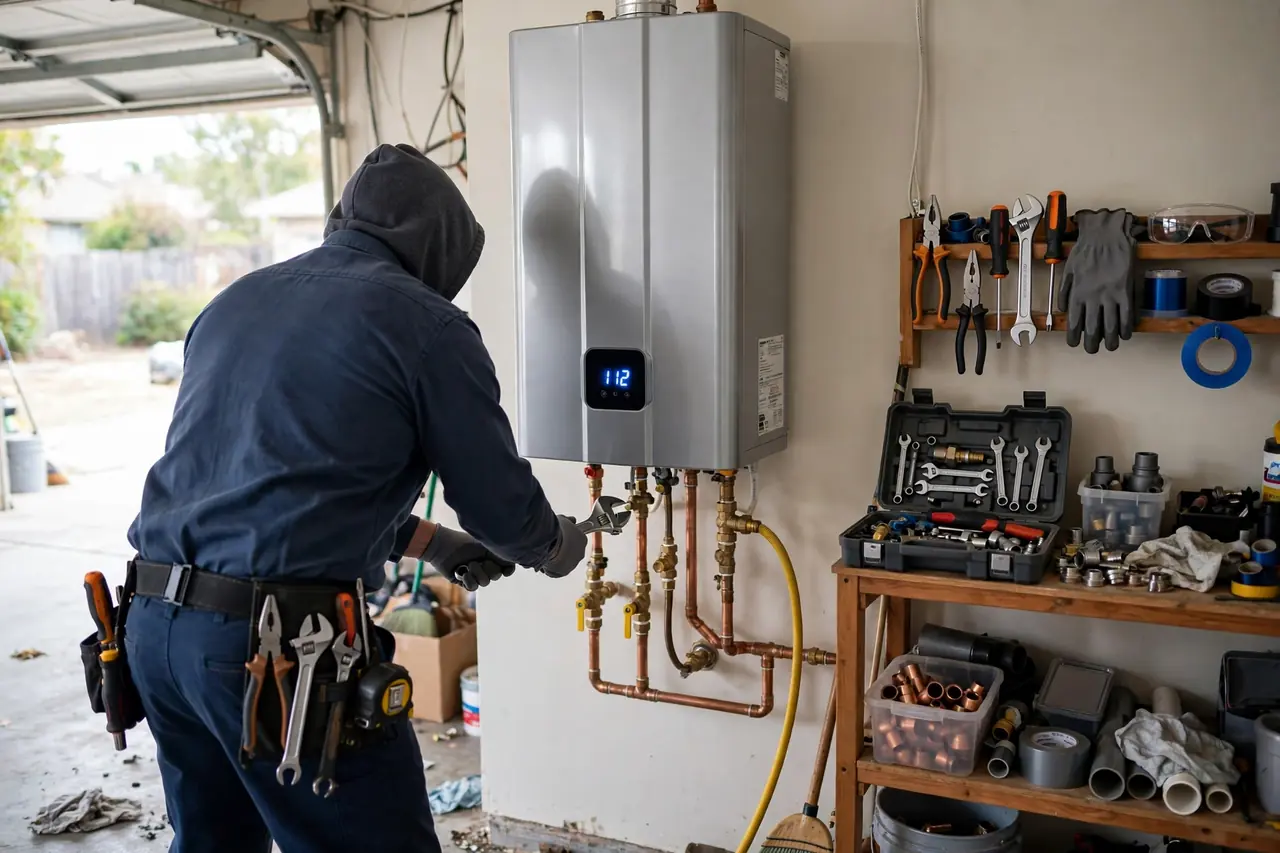
The old tank comes out, and we protect the floor and stair path on the way. We haul the old unit away, which matters in Houston because the city will not pick up a water heater at the curb. Expect 45 to 90 minutes for removal on an attic or second-floor job.
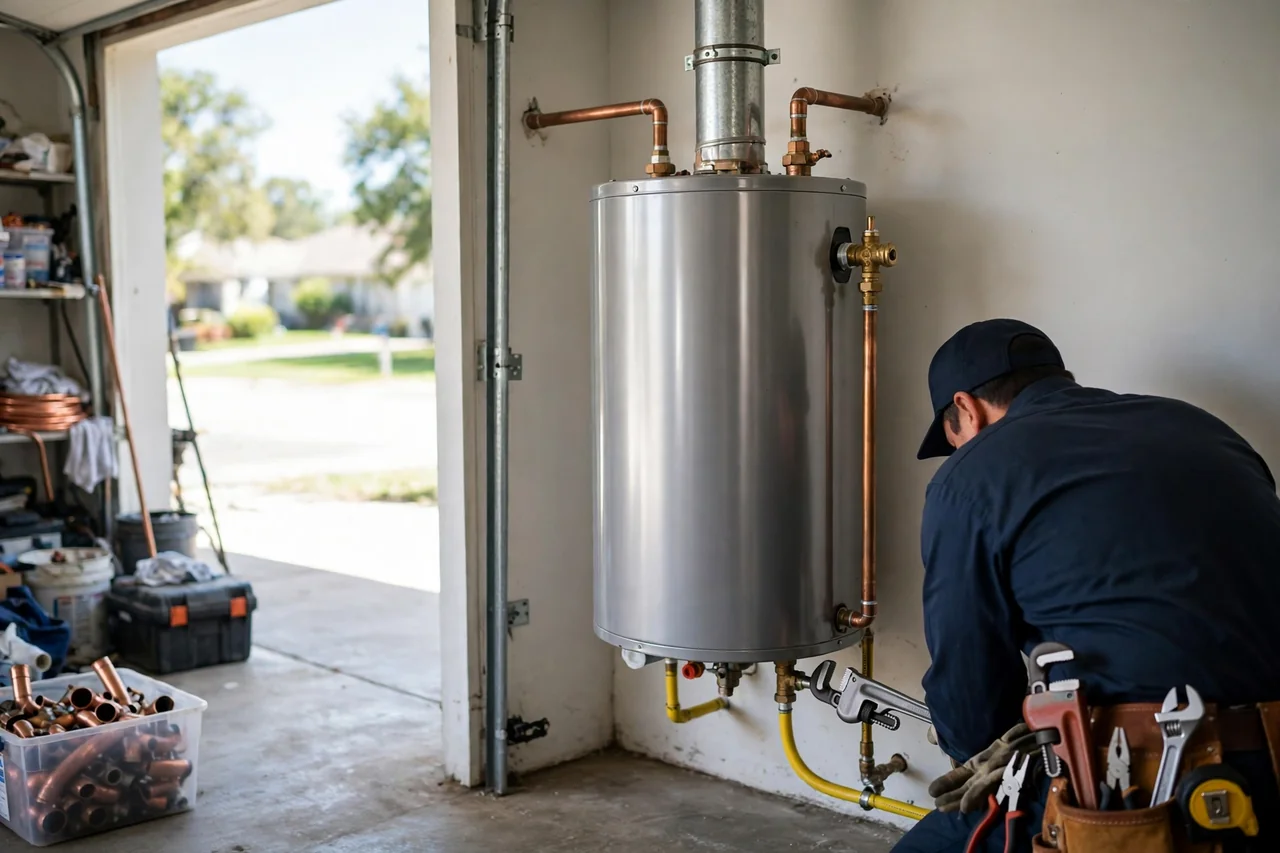
We set the new tank level, connect the gas or electrical, install the T&P valve and expansion tank, and pressure-test every joint. The flue gets reconnected and checked for draft. A standard swap runs two to four hours; a tankless conversion runs a full day.
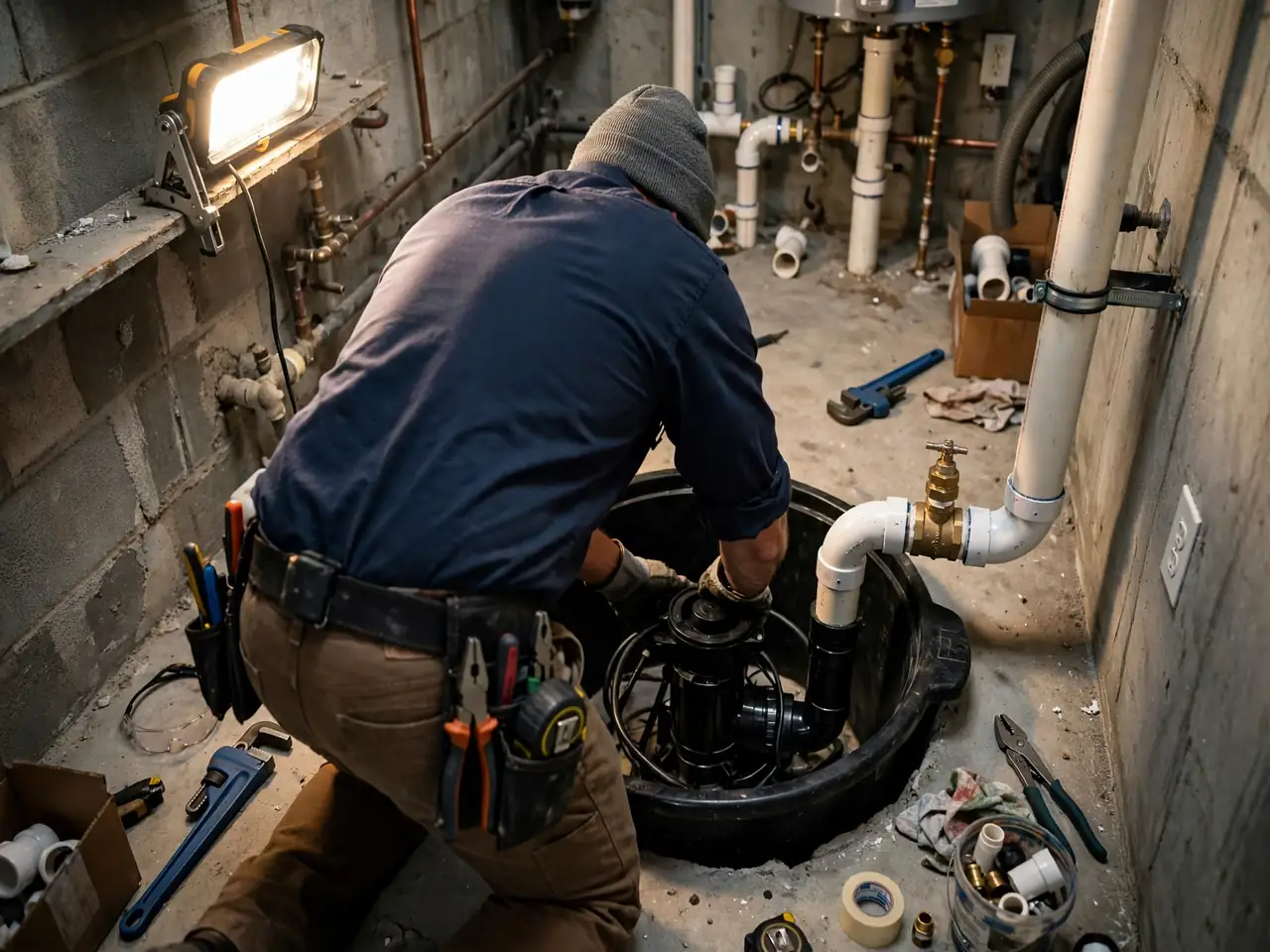
We fill the tank, purge the air from every hot tap, and light the pilot or restore the breaker. You get a walkthrough on the thermostat setting, the anode rod schedule, and the pan drain. We do not leave until the water runs hot and the floor is dry.
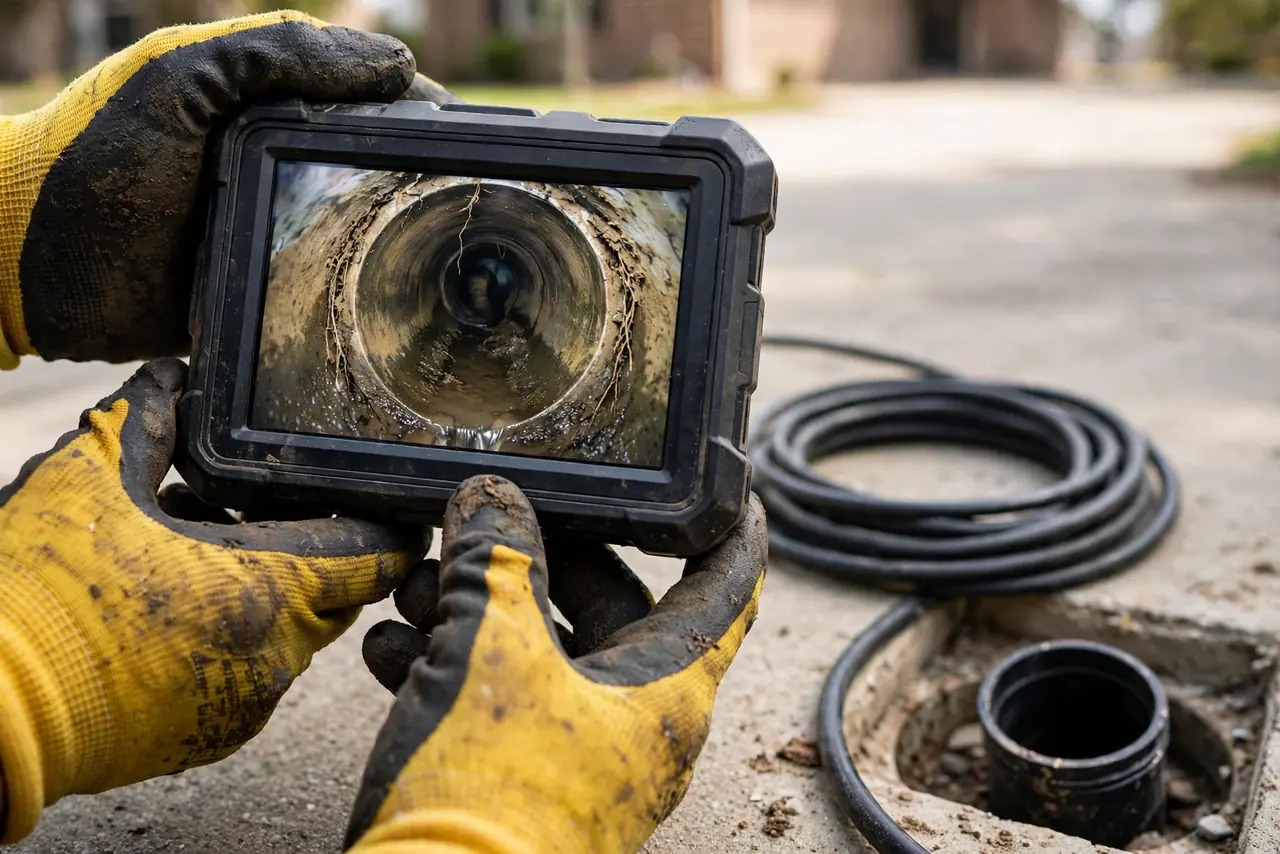
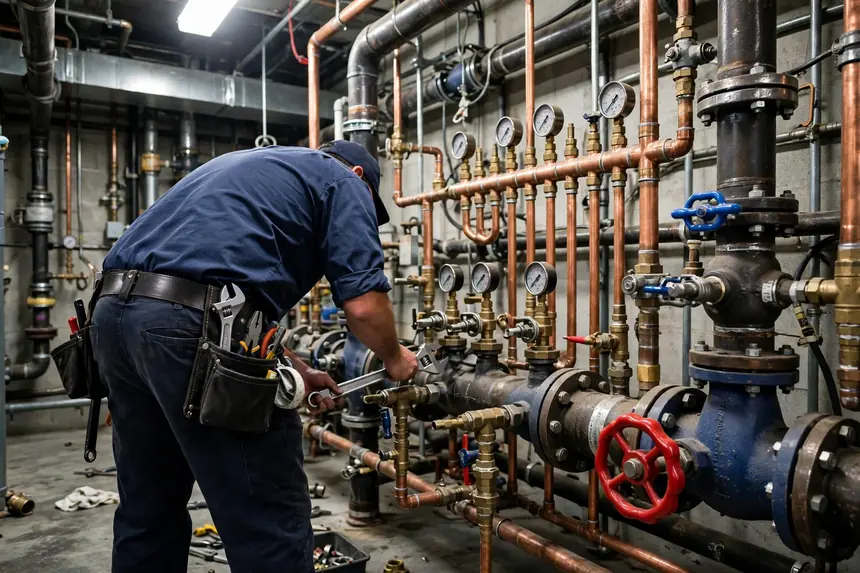
Breaking loose old unions and cutting out corroded nipples cleanly. A pipe cutter leaves a square edge that a hacksaw does not, and a square edge is what lets a new fitting seal.
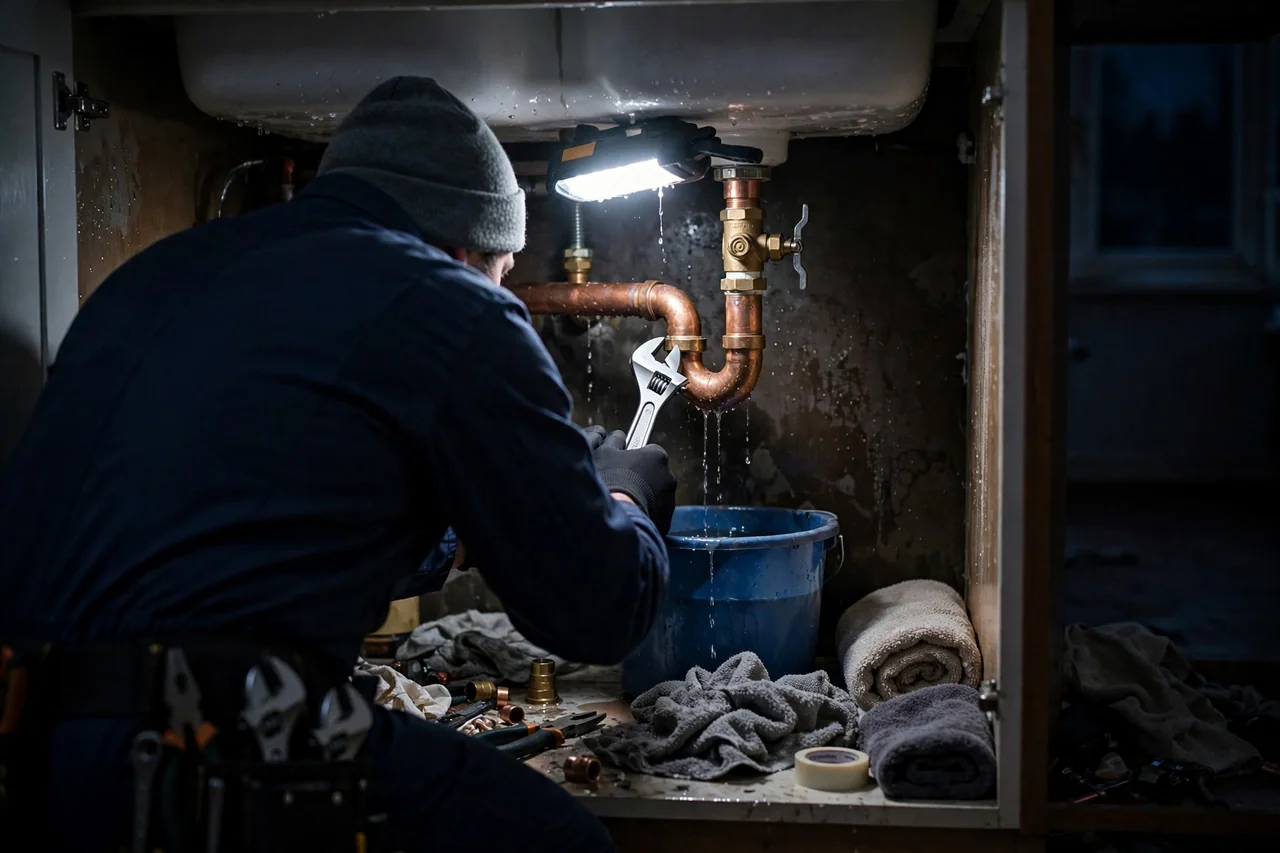
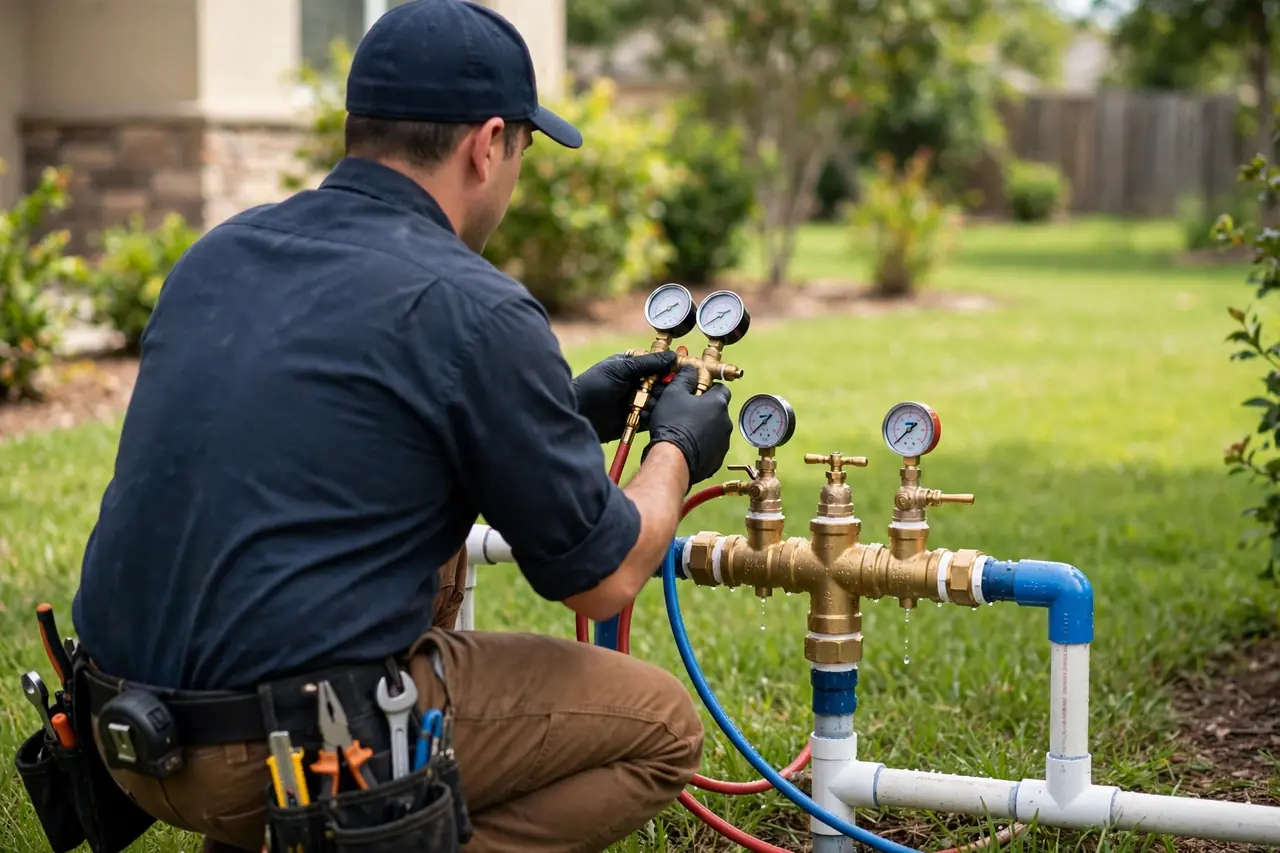
Making leak-free connections on copper and PEX without a torch in tight attic spaces. Press fittings are faster and safer where there is insulation and wood within a few inches.
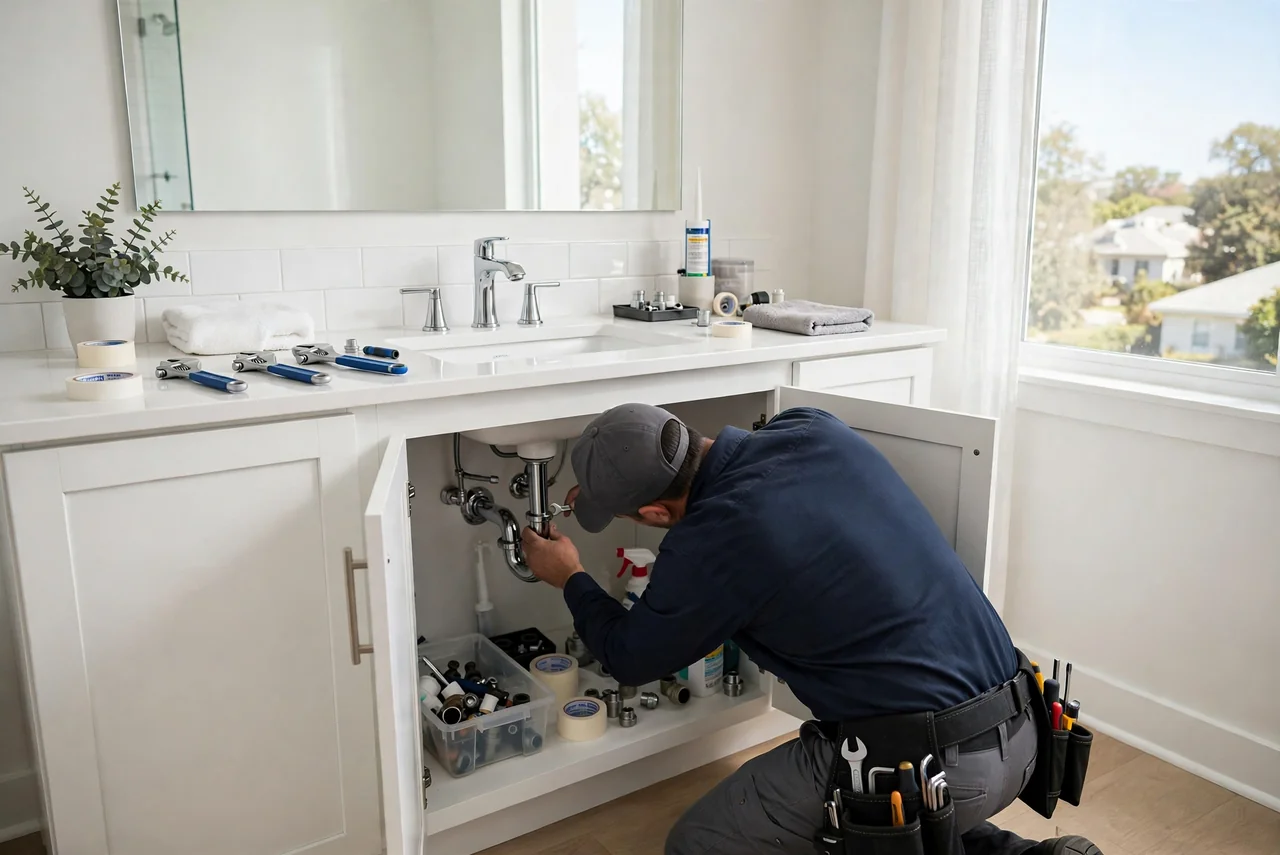
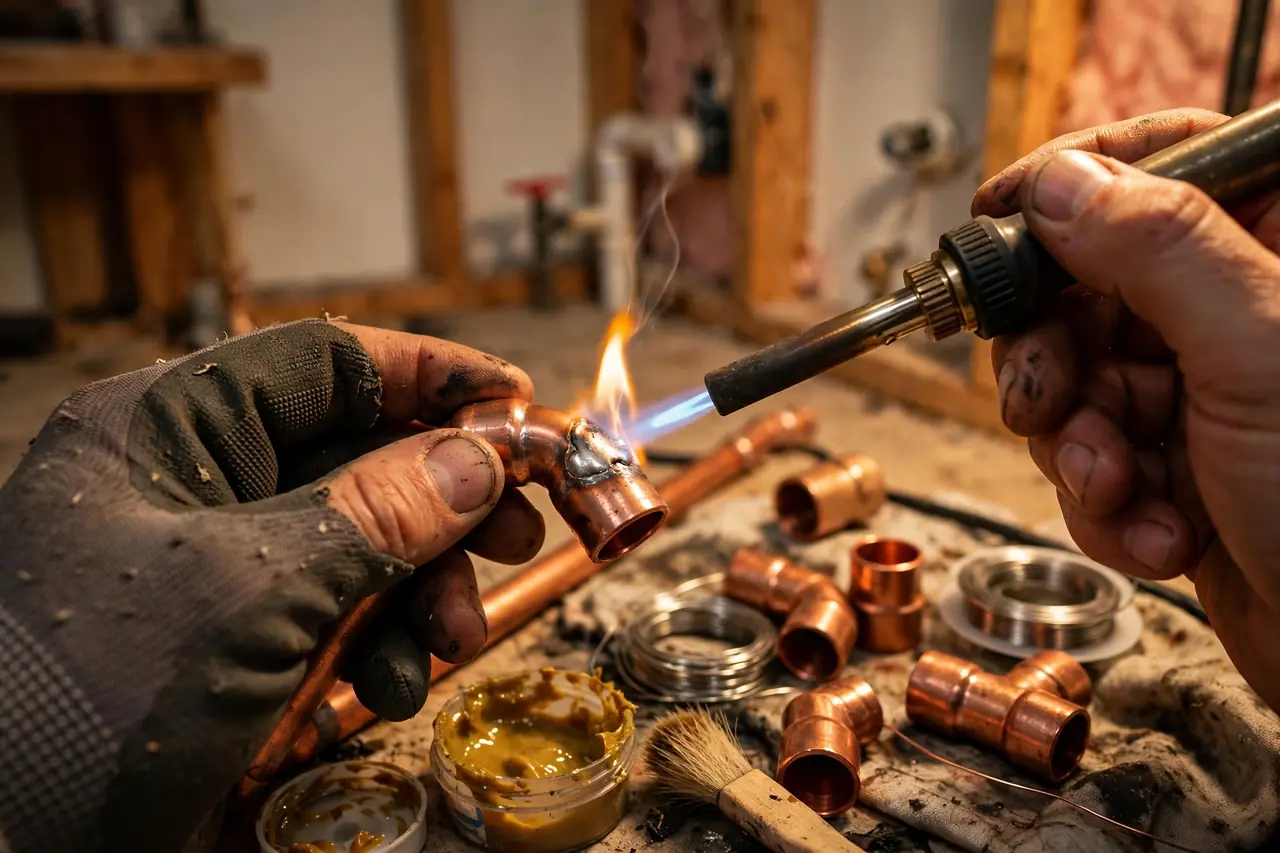
Sweating copper joints where the code and the space call for soldered connections. We use it on copper pipe runs and keep a fire watch in attics and closets.
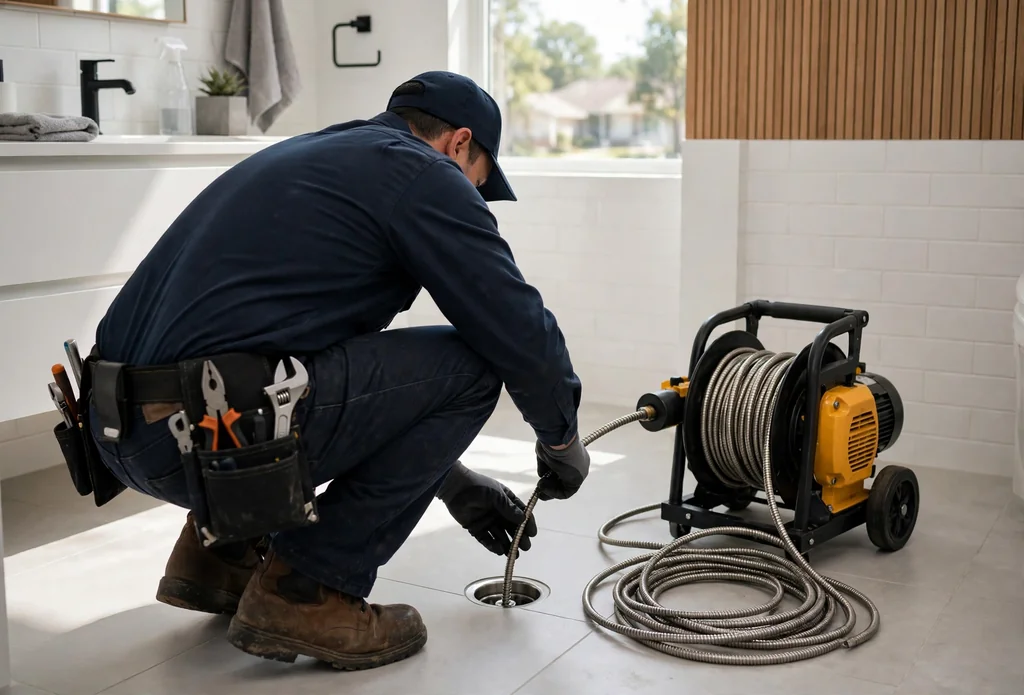
Clearing sediment and scale from drain lines and checking the pan drain before we tie into it. A blocked pan drain defeats the purpose of the pan.
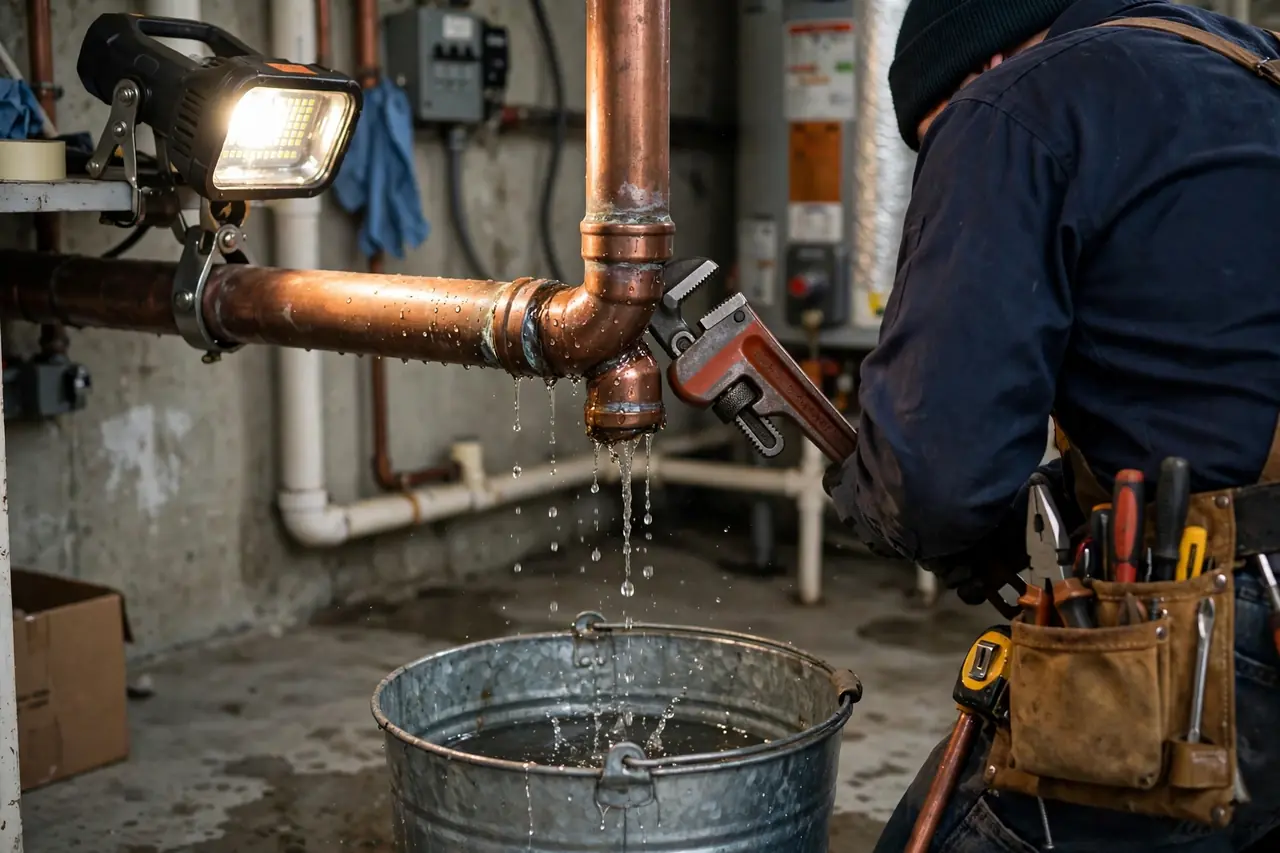
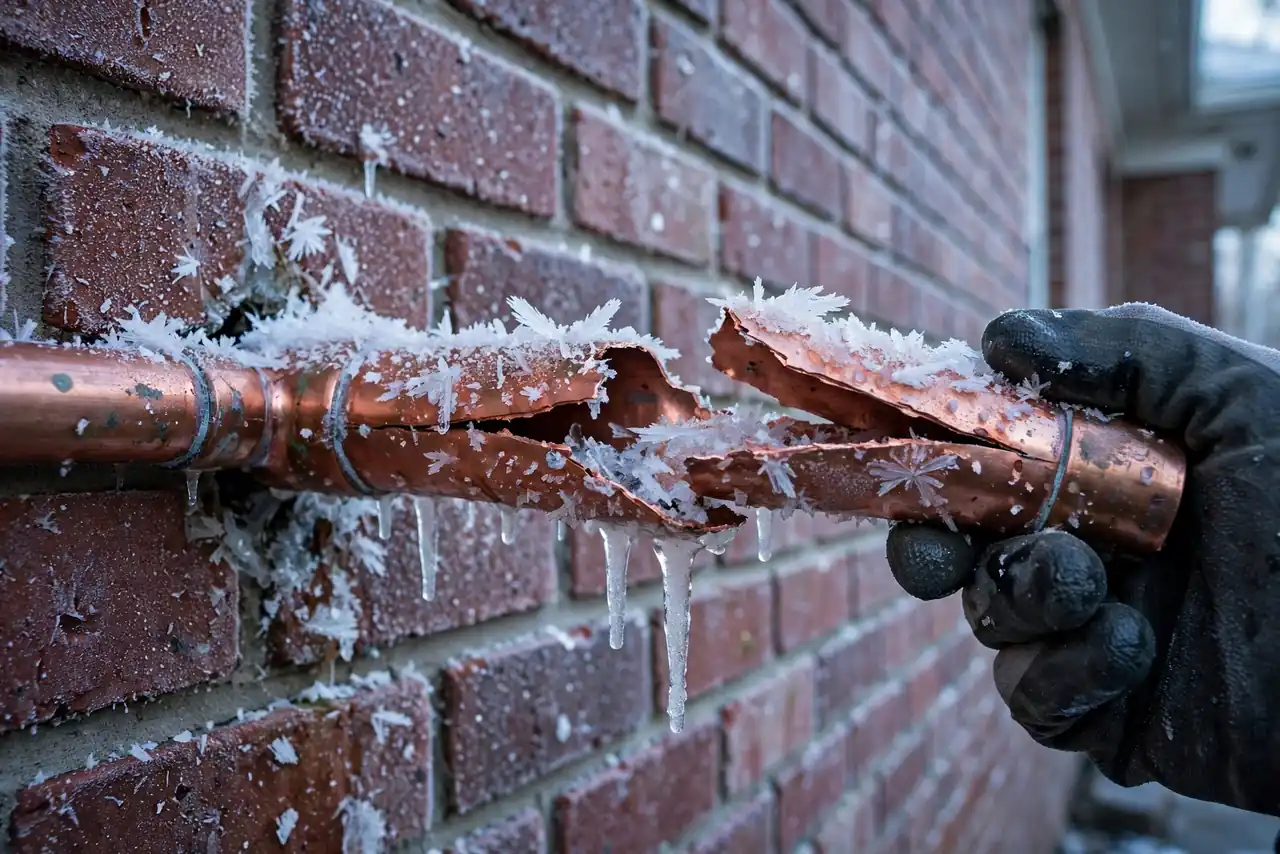
Finding hidden leaks in walls and under slabs when a puddle near the heater is not coming from the tank. It saves cutting drywall to find a supply line leak.
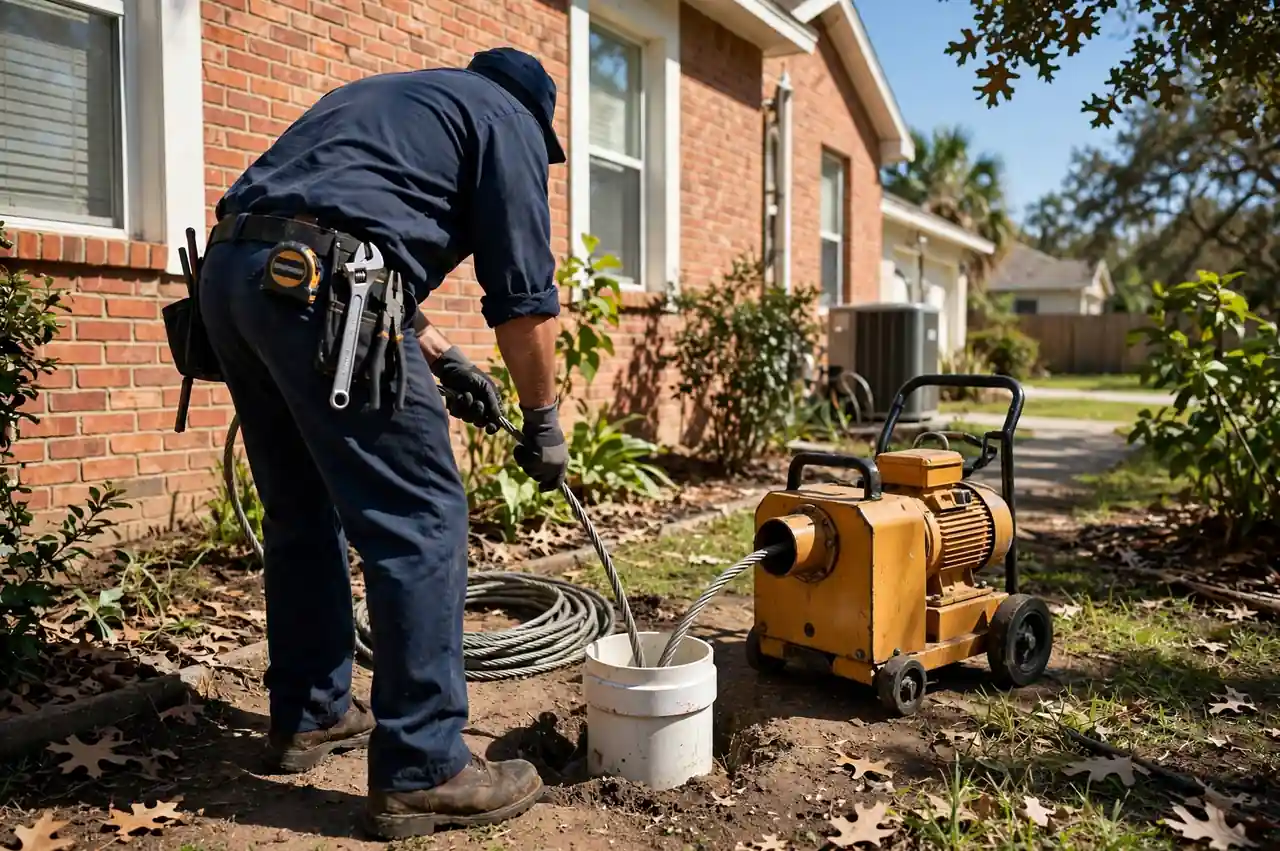
Checking the sewer line on older Houston homes during a heater install. Cast iron and root intrusion are common, and it is better to know before the next backup.
We size gas lines, set flue clearances, route the T&P discharge, and install expansion control to the code Houston inspectors enforce. That is what makes the permit pass the first time and keeps the unit safe.
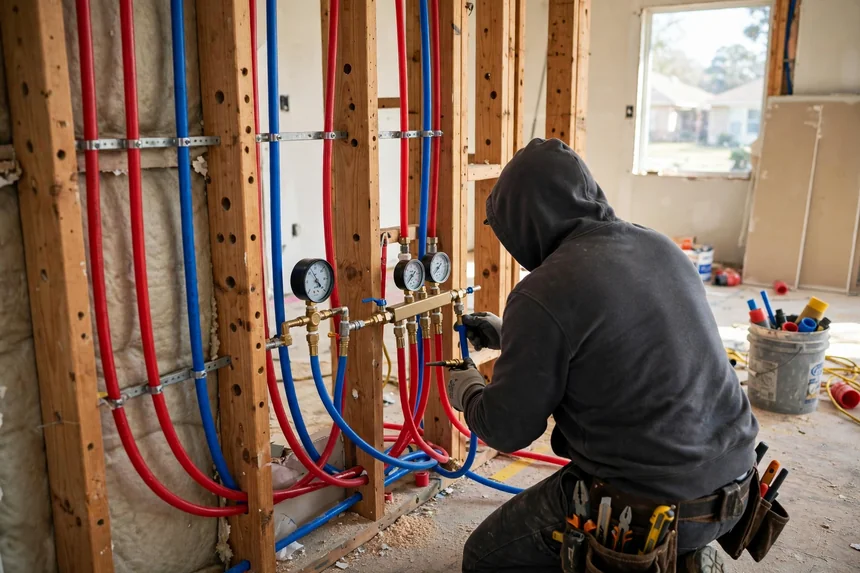
A closed system with a backflow preventer needs an expansion tank. Without one, pressure spikes shorten the tank life and can trip the T&P valve. We check for a closed system and add a tank when it is needed.
We install a code-correct replacement with a permit and provide the inspection paperwork. We can usually schedule around the closing timeline and coordinate access with the realtor. A clean inspection report and a new tank with a manufacturer paperwork that transfers to the buyer.
We measure fixture count and peak demand, then recommend a 50-gallon tank or a properly sized tankless unit. If the gas line is undersized, we quote the upgrade with the install. Hot water through every shower and the dishwasher at the same time, without a mid-morning recovery wait.
We replace the tank, install a new pan with a drain routed outside, and replace the corroded shutoff valve and supply lines while the old unit is out. A dry garage floor and a future leak that goes outside instead of into the wall.
We schedule the commercial install for during business hours or a Sunday, set the new unit, and test it before the Monday open. We size the tank for peak demand, not average use. No lost business day and hot water at every sink and shampoo bowl when the doors open.
End-of-life tanks concentrate in 1960s to 1980s stock in Sharpstown, Meyerland and Memorial, while floodplain homes need elevation considered. Hard water shortens heater life everywhere in the city.
A 14-year-old tank in an attic with no pan drain let go during a rainstorm. Water came through the ceiling in the hallway and the homeowner had shut off the main. The old unit was rusted at the base and the flue was corroded.
We drained and hauled the old tank out, installed a new 50-gallon water heater with a pan and a drain routed to the soffit, and replaced the flue. The ceiling was dry within a day and the new unit was running hot water by 4 p.m.
Flush the tank once a year and check the anode rod at the five-year mark. Keep the pan drain clear so a future leak goes outside, not through the ceiling.
A family of five in a 1990s Katy home had a 40-gallon tank that ran cold by the third shower. The gas line was undersized for a tankless unit and the venting ran through an interior wall.
We upgraded the gas line, ran new venting, and installed a tankless unit sized for the fixture count. Hot water now runs continuously at 120 F, and the gas bill dropped about 18 percent the first full month.
Descale the tankless unit once a year with a vinegar flush. Houston's hard water makes descaling a yearly job, not an optional one.
A 12-year-old garage tank was leaking from the drain valve, and the shutoff valve above it would not close. The supply lines were corroded and the pan was rusted through with no drain.
We replaced the tank with a 50-gallon water heater, installed a new pan with a drain, and replaced the shutoff valve and supply lines with new brass fittings. The garage floor was dry and the valve now closes with a quarter turn.
Exercise the shutoff valve twice a year so it does not seize. Check the pan for rust and keep the drain line clear.
Most of the calls we get are one of these four. Each one has a different fix, and not all of them need a new tank.
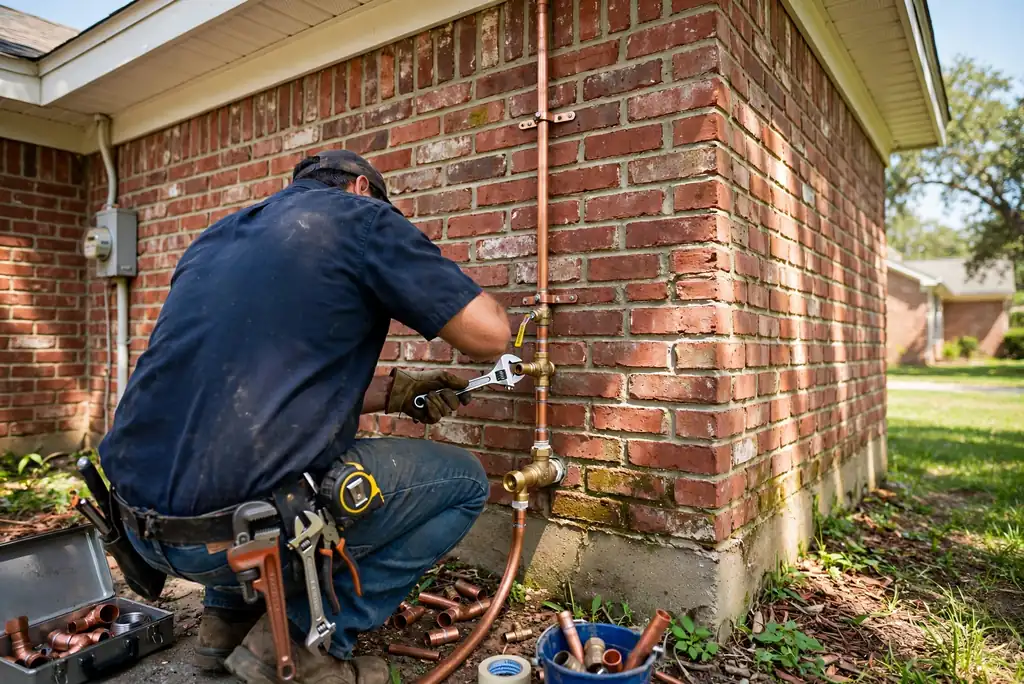
We shut off the water and gas, drain the tank, and replace it. We check the pan and the drain line while we are up there, and we haul the old unit out so there is nothing left for you to deal with. A shell leak means the steel is gone. It will not stop, and in an attic it takes the ceiling down with it. Every hour you wait adds drywall and insulation to the bill.
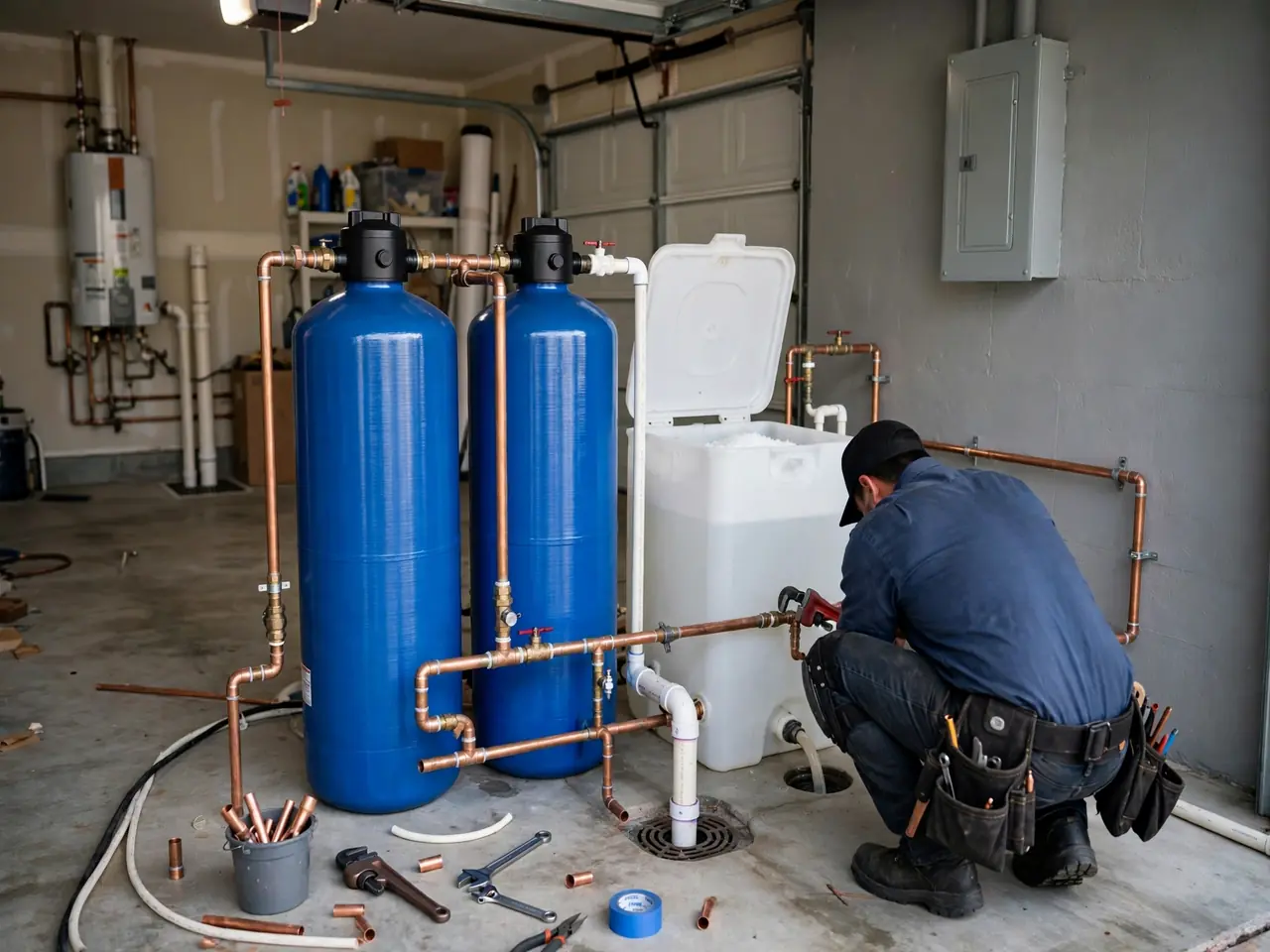
Sometimes a flush buys time. When the sediment is too deep, we replace the tank and recommend a water softener so the new unit does not scale up the same way. We check the anode rod on every install. Houston water leaves mineral scale in the tank. It insulates the burner, raises the gas bill, and eventually cracks the tank. The noise is the sound of water boiling under a layer of rock.
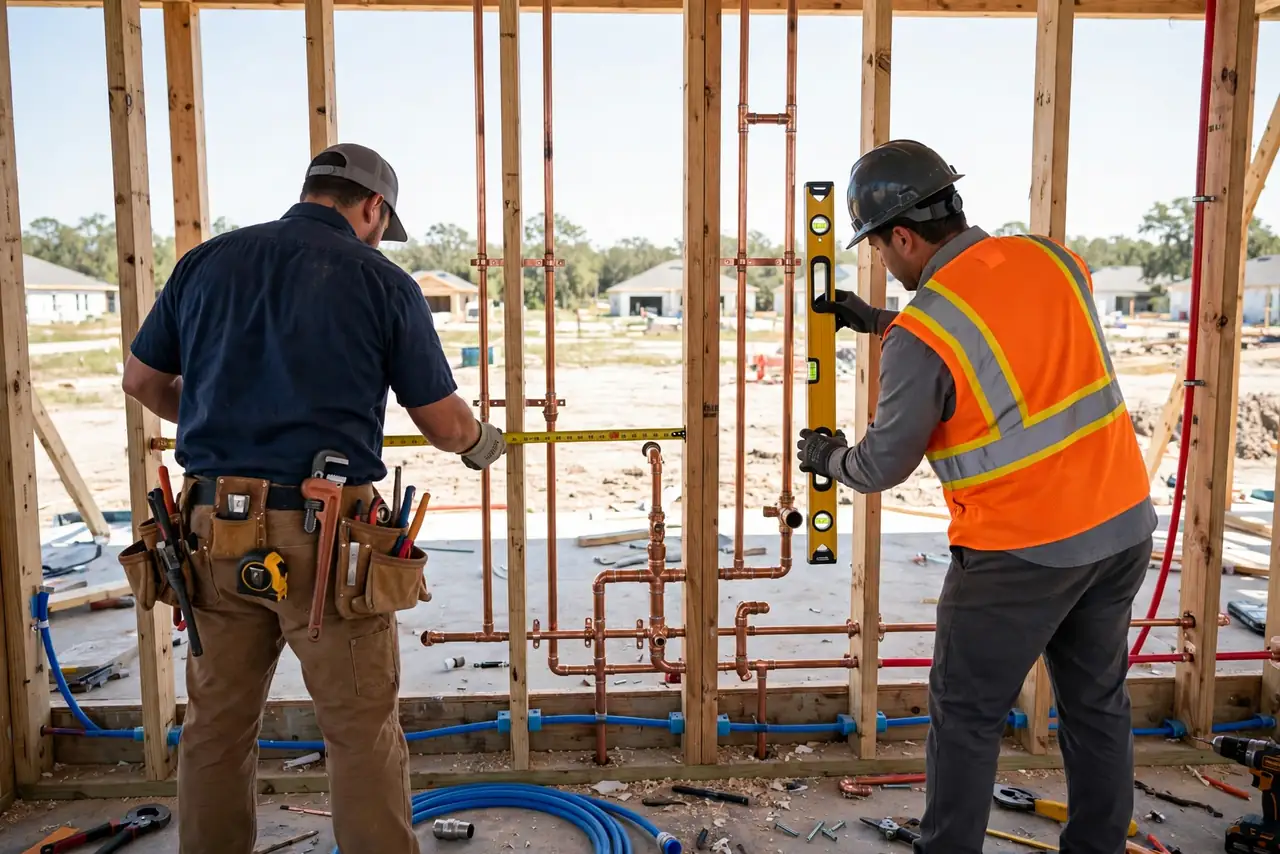
We test the elements, the thermostat, and the dip tube before recommending anything. If it is a repair, we repair it. If the tank is 12 years old and the second element has failed, we tell you that too. A failed heating element, a bad thermocouple, or an undersized tank all look the same from the shower. Guessing wrong means paying for a replacement you did not need.
We check the anode rod and the dip tube, flush the tank, and replace the rod if there is metal left to protect. If the tank is already rusted through, we quote a replacement with a fresh rod and a pan. A failed anode rod lets the tank rust from the inside. Sulfur smell often means bacteria in the tank or a reaction with the anode. Both get worse and neither fixes itself.
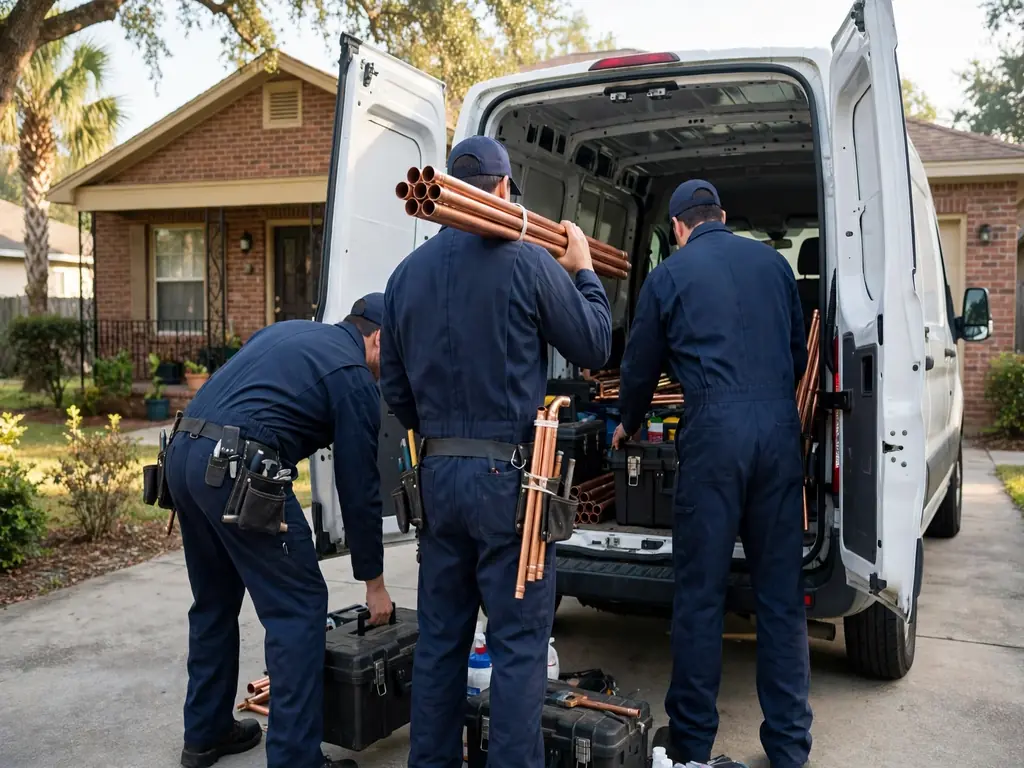
Most standard tank swaps are a two- to four-hour job once we are on site. We stock 40- and 50-gallon units on the truck, so you are not waiting three days on a supply house order while the family showers cold.
A new 0.64 EF tank or a condensing tankless unit cuts standby loss compared to a 15-year-old model. Houston homeowners routinely see a measurable drop on the gas bill the first full month after a high-efficiency swap, especially on tankless conversions.
Houston tanks in attics fail straight down through the ceiling. A new install with a proper drain pan, a pan drain routed outside, and new supply lines removes the single most common cause of ceiling collapse we get called out for in Spring Branch and Memorial.
We size the gas line, check the flue, and verify the T&P discharge pipe runs to within 6 inches of the floor or outside. That is what a Houston inspection looks for, and it is what keeps a new tank from failing early or tripping a CO alarm.
Clear records you can keep and share.
One number before we start
Pulled and met on site
Drained, carried out, taken away
A 40-gallon garage tank and a 50-gallon attic tank are different jobs with different costs. We size the unit to your household and plan the haul-out before we start.
Count the bathrooms and the peak morning use. A family of five with a big tub usually needs 50 gallons or a tankless unit sized to flow.
Attic and second-floor tanks take longer to drain and carry out. Garage tanks are faster but often need new shutoff valves and supply lines.
An attic tank needs a pan with a drain routed outside. Without it, a future leak goes through the ceiling instead of to the soffit.

Outside these areas? Call and ask if we can reach you. (346) 776-8560
Yes, always. The City requires a permit pulled by a master plumber registered with the City, plus an inspection, for every water heater replacement. We handle the permit as part of the job.
Hard water shortens heater life here: scale builds at the bottom of the tank, corrodes internal parts and wears the anode rod. Flushing sediment and checking the anode are the maintenance steps that extend it. We do not publish a lifespan number, because it depends on water, use and maintenance.
It depends on household size, gas capacity, venting and flood elevation. Tankless needs gas-line sizing and venting work, and hard water makes descaling a recurring job. We walk through both options with a free estimate before you decide.
Higher than the flood level the home is built to, with the burner and controls above water that could reach them. If floodwater reached the burner or controls of the old unit, replacement, not repair, is the safe answer.
Call (346) 776-8560 for a free estimate on a new water heater. Permit and inspection handled as part of the job, Monday to Sunday, 7:00 AM to 10:00 PM.
Call us at (346) 776-8560 to book water heater installation or ask a question. We are open Monday to Sunday, 7:00 AM to 10:00 PM, and estimates are free.
The fastest way to book is a phone call. Tell us what is happening and we will give you a free estimate and a time that works, Monday to Sunday, 7:00 AM to 10:00 PM.
Open Mon–Sun, 7:00 AM–10:00 PM. Free estimates.