Written estimate
Quoted before any work starts
Water heater repair in Houston is the work of diagnosing the tank — no hot water, a leak at the base, rusty water or a popping tank — and repairing what is repairable. No hot water, a leak at the base, rusty water or a popping tank all mean the heater needs attention now. El Primo Lalo Plumbing diagnoses tank water heaters in Houston, repairs what is repairable, and tells you plainly when replacement is the honest answer.
Every repair visit covers the diagnosis, the fix, and a test run. Here is what is included in a standard call, and what we price separately if the job turns out bigger than expected.
We repair gas, electric, and tankless water heaters in houses, townhomes, and apartments across Houston. Our techs check the whole unit, not just the obvious part, so the next failure does not catch you off guard.
Restaurants, salons, and small offices need hot water to open. We repair commercial units with the same diagnostic process and a written estimate before work starts, and we work around your hours to keep downtime short.
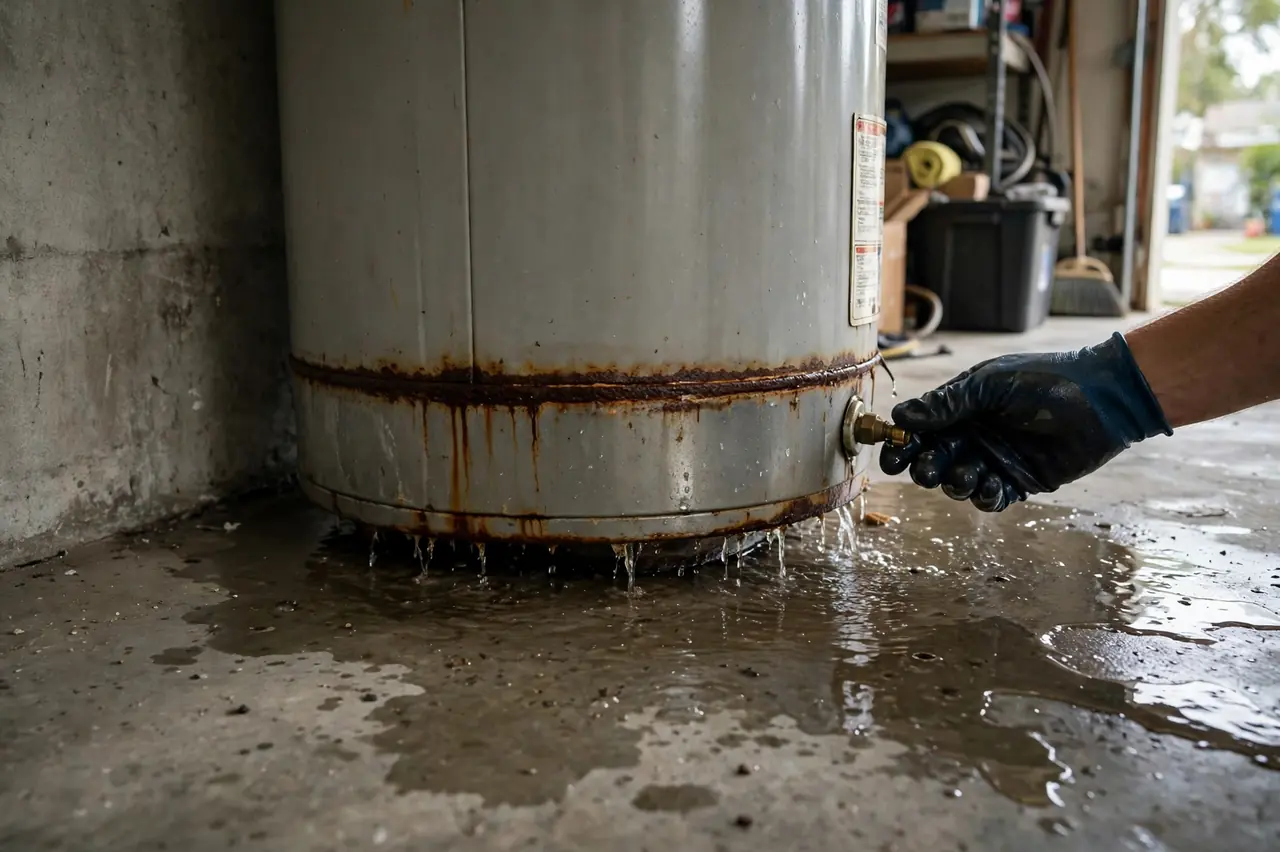
Houston's hard water speeds up sediment buildup, corrodes internal parts and shortens the life of a water heater. City water averages about 8 grains per gallon, so scale collects at the bottom of the tank, makes popping noises, and eats the anode rod. The repair-versus-replace rule is simple: repair when the leak is from a fitting, valve or supply line; replace when water comes through the tank body or bottom, or the tank is rusting.
A water heater that has been in floodwater needs care. If floodwater reached the burner or controls, replacement is the safe answer, not repair. And any replacement in Houston needs a City permit pulled by a master plumber registered with the City, plus an inspection. We explain the permit position before we start, and we never publish a fee figure, because the City's own pages conflict on it.
Repair the fitting. Replace the tank. Knowing which is which is the job.
No mystery, no waiting around all day. Here is exactly what happens from the phone call to the final test.
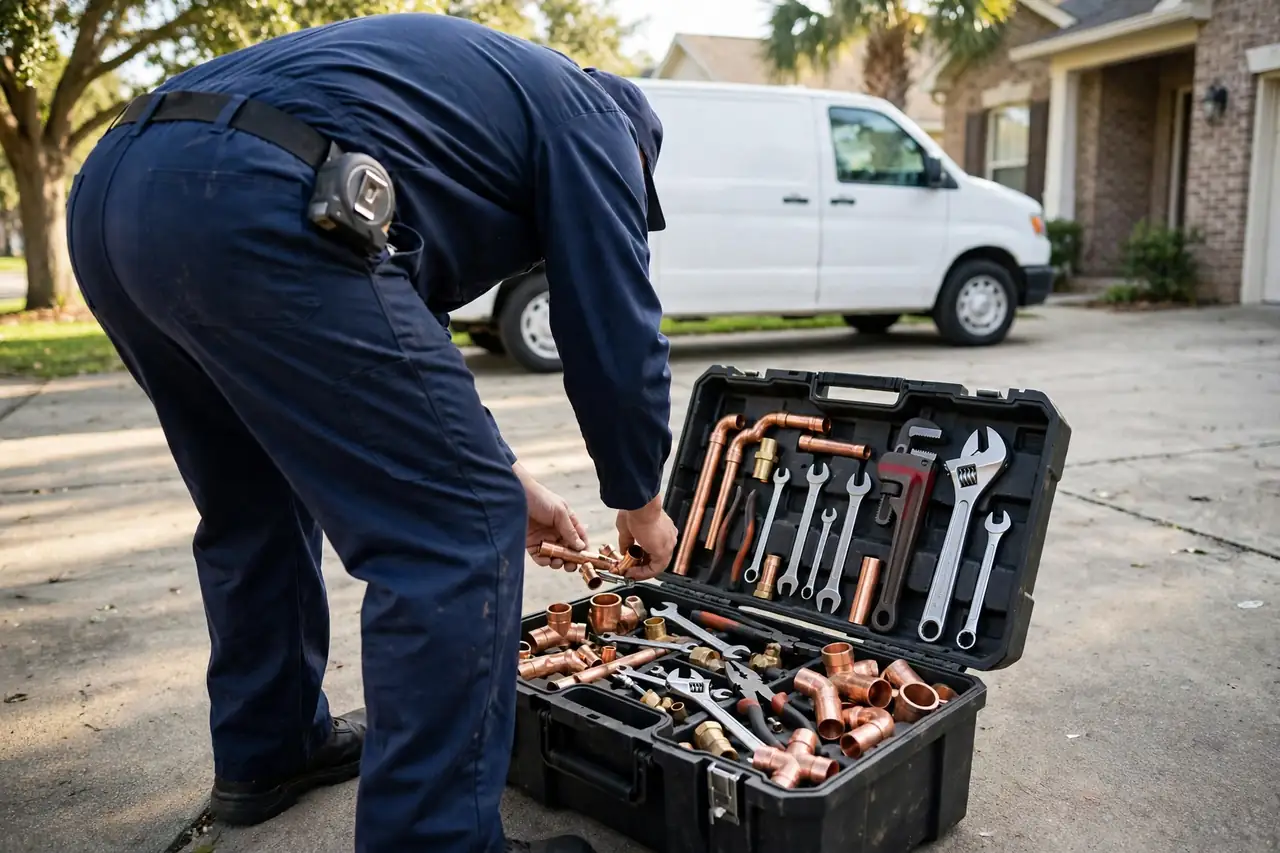
You call (346) 776-8560 or book online. We ask what the heater is doing, how old it is, and whether it is gas or electric, then give you a two-hour arrival window. Most Houston calls get a prompt slot.
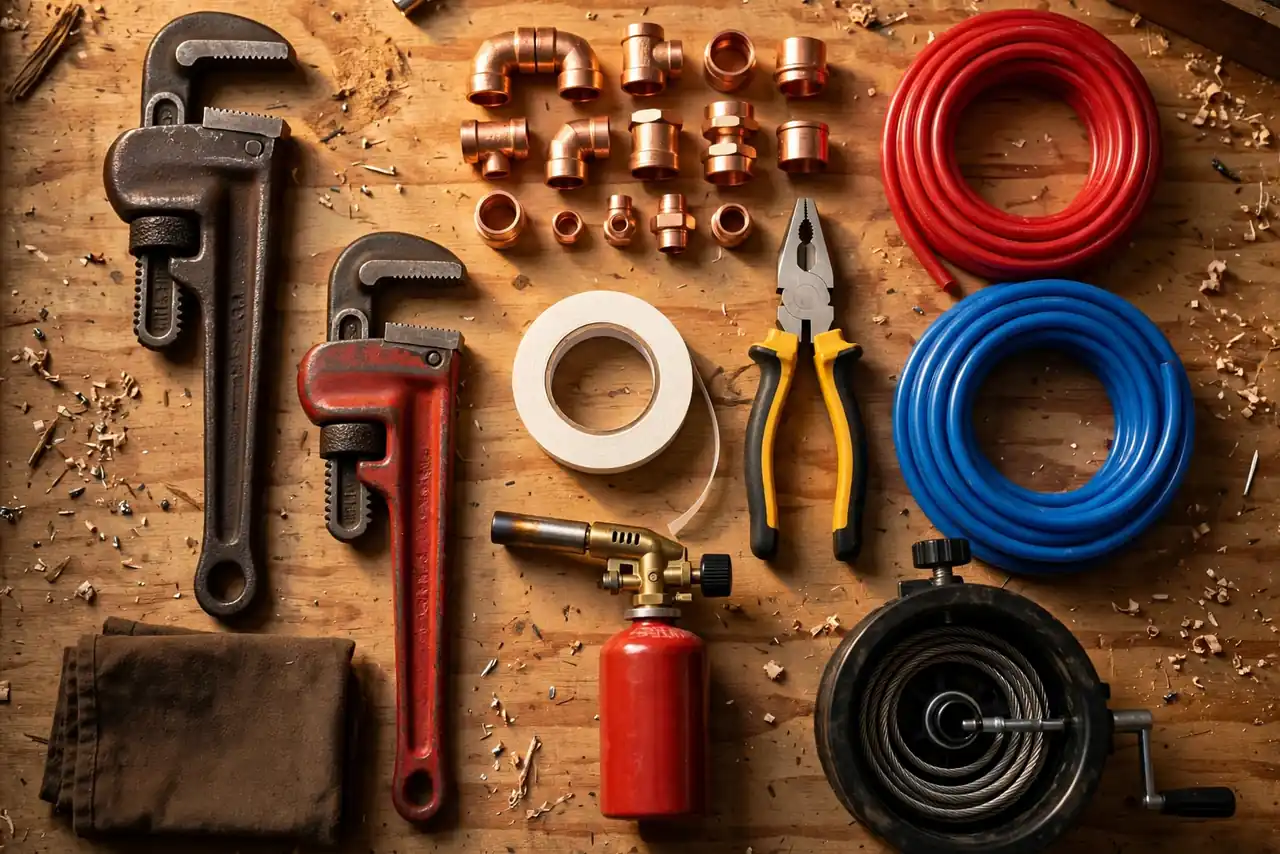
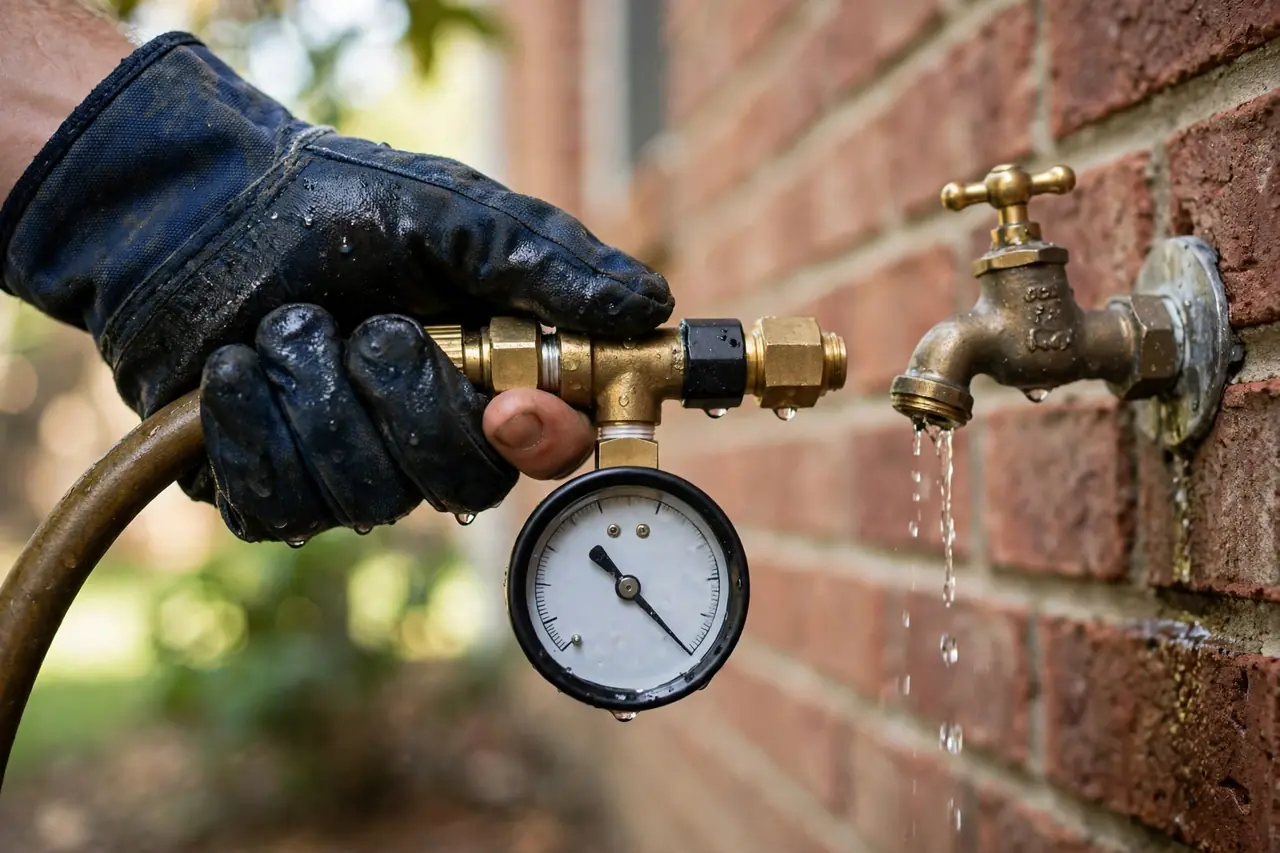
The tech tests the unit with a multimeter and a gas pressure gauge, checks the T&P valve, and looks for leaks at the fittings and the tank seam. Expect 30 to 45 minutes for a full diagnosis, and you get the findings in plain English.
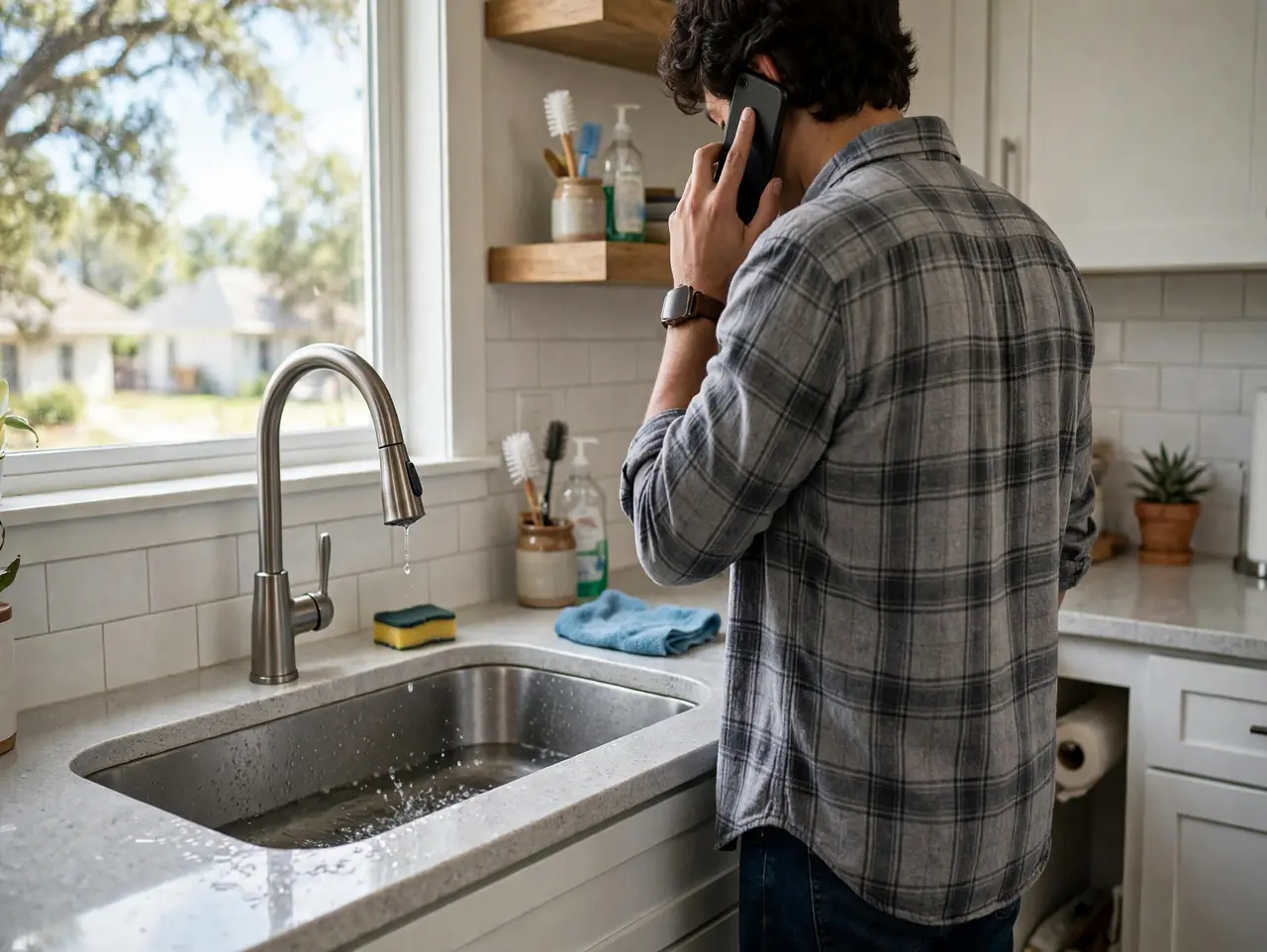
We quote the repair before any work starts. If the tank is past saving, we say so and price a replacement alongside the repair so you can compare. You decide, and we do not start until you say go.
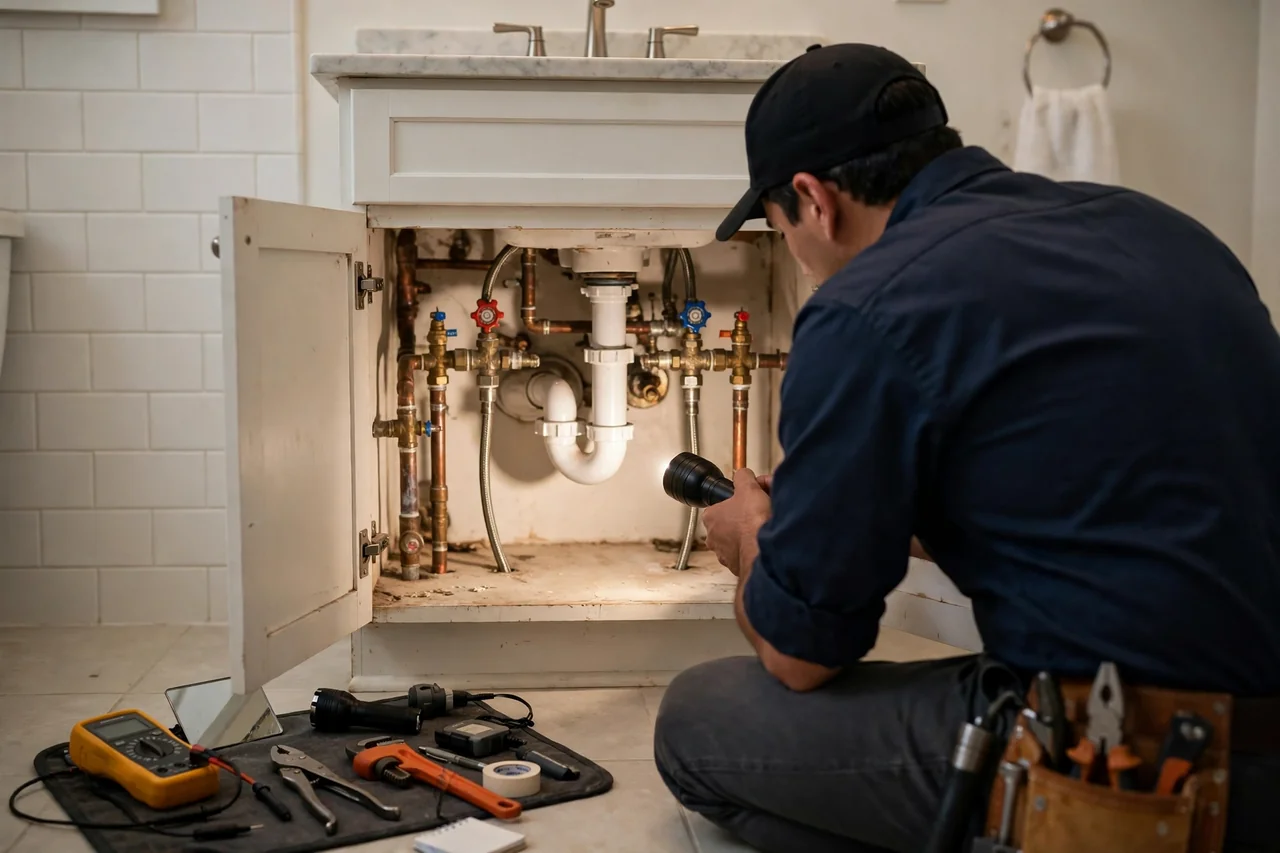
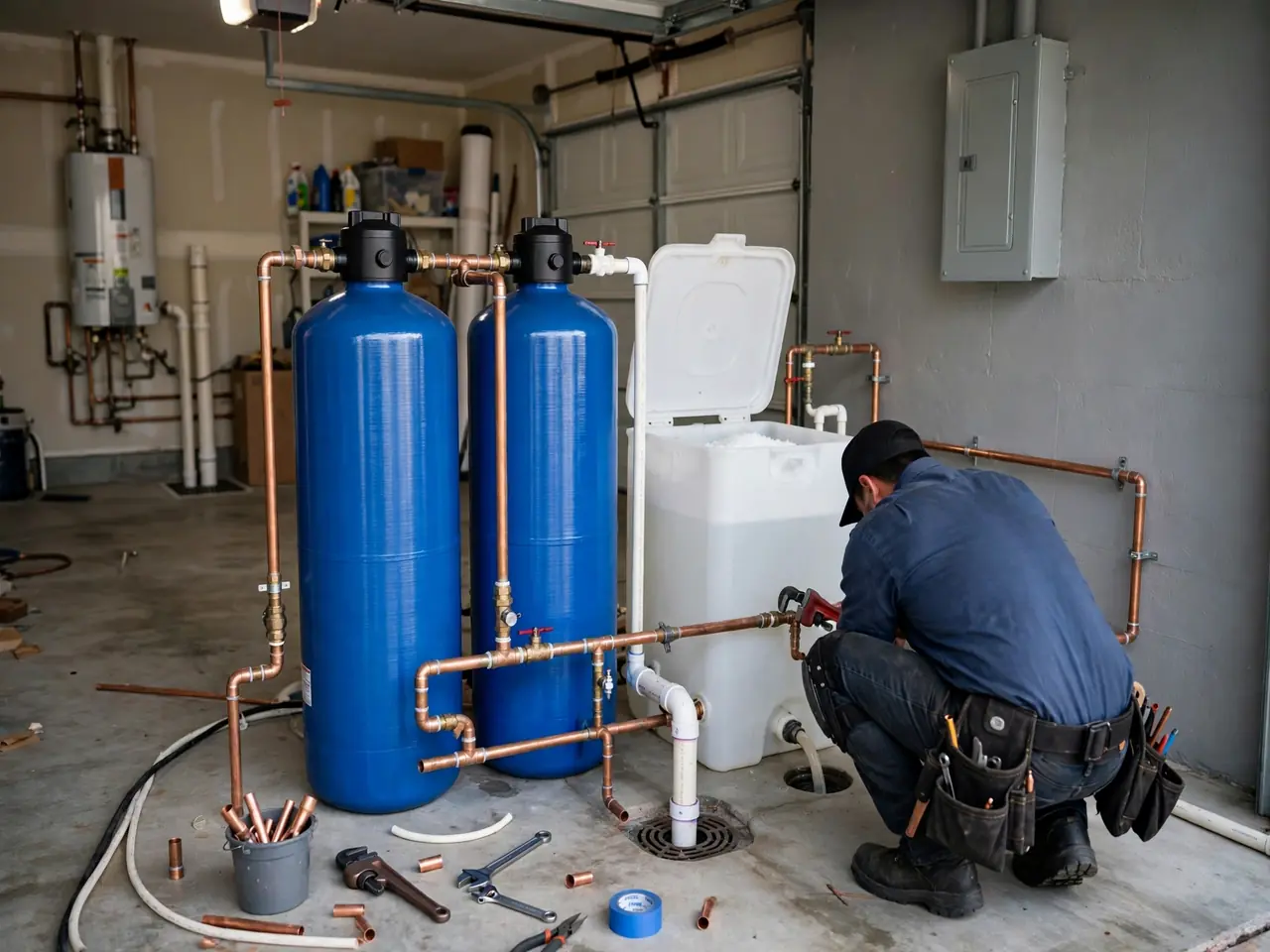
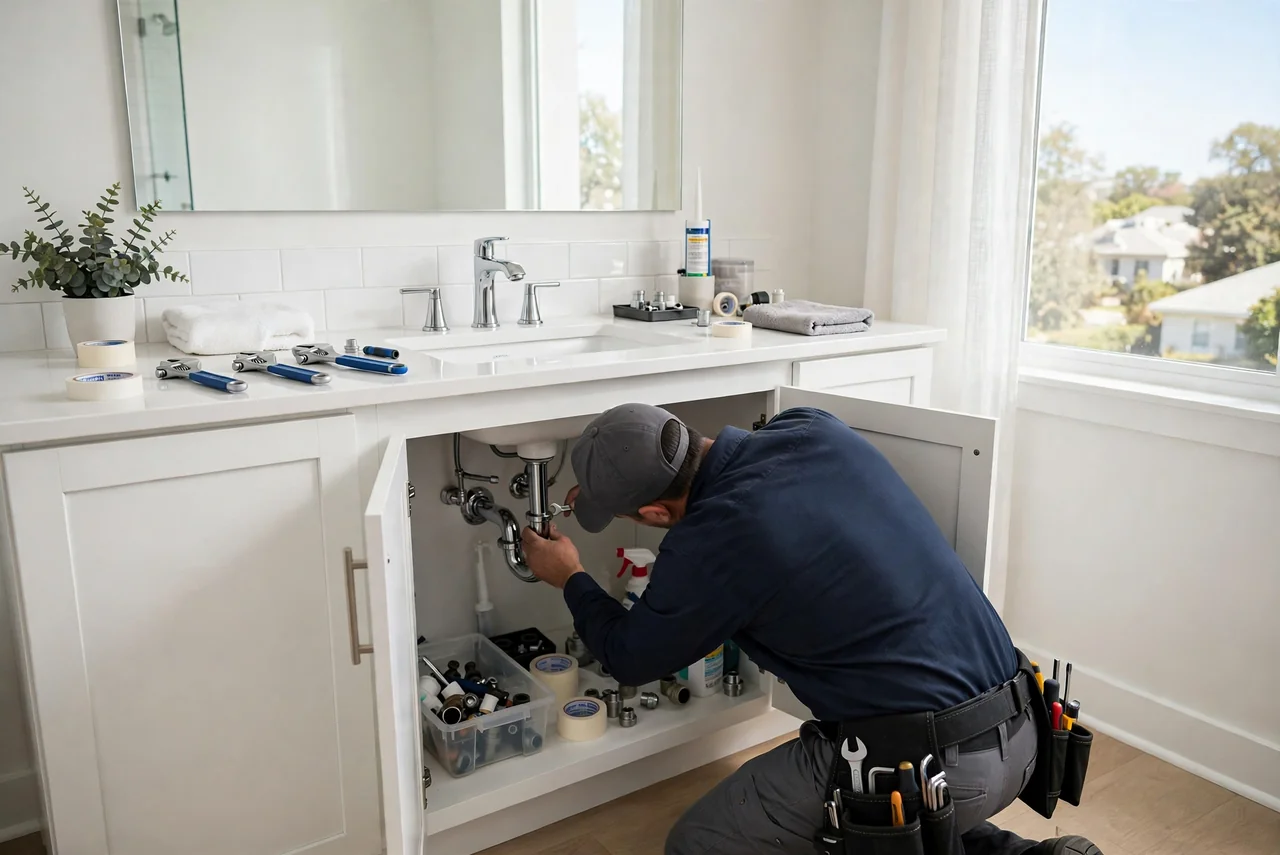
Thermostats, elements, thermocouples, gas valves, anode rods, and drain valves get replaced on the spot. We use brass fittings, Teflon tape, and new supply lines where needed, and we protect the floor and surrounding area while we work.
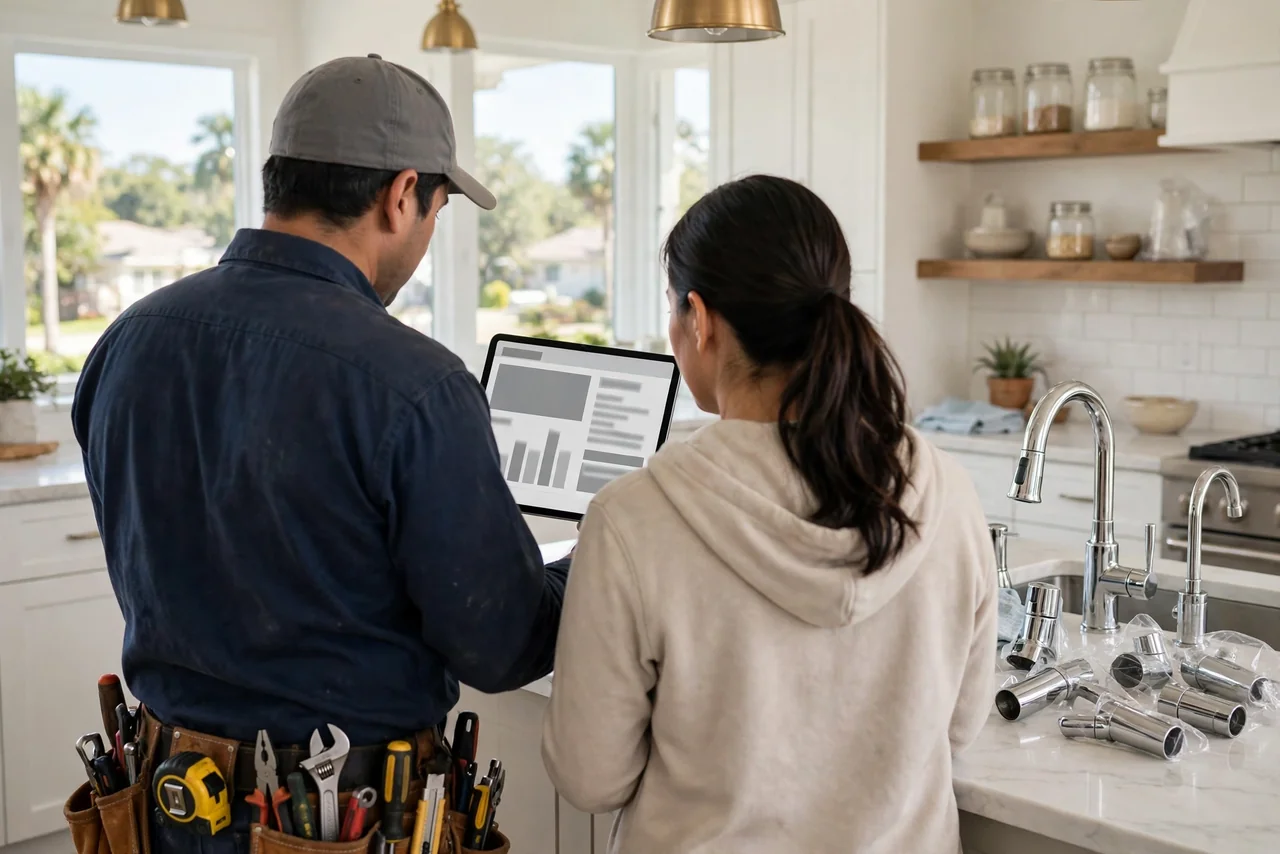
We refill, purge the air, and run the unit up to temperature, then check for leaks at every connection. Before we leave, you get a walkthrough of what failed, what we replaced, and how to keep the next one running longer.
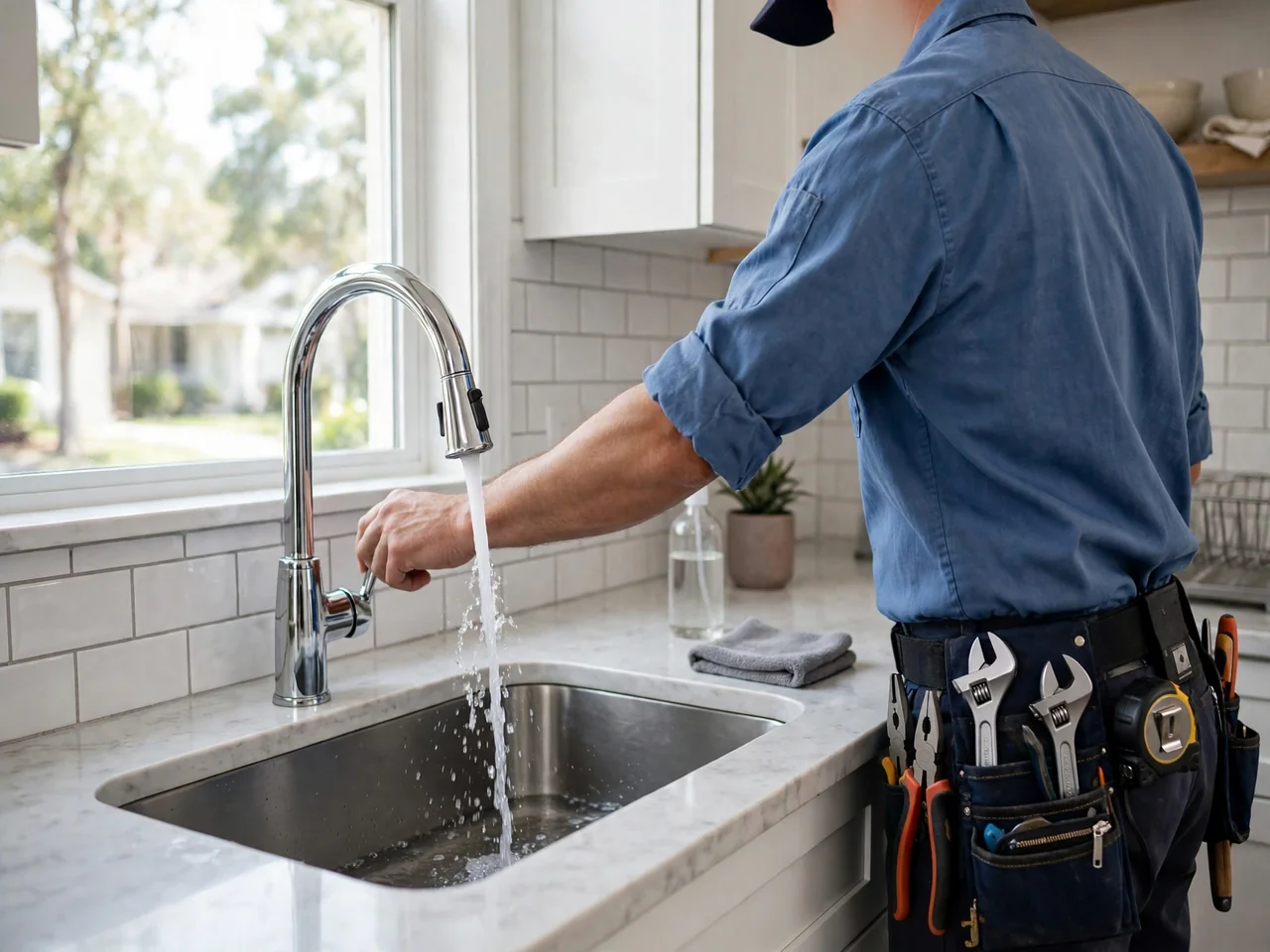
Tests thermostats, heating elements, and continuity on electric water heaters so we replace the right part the first time.
Checks manifold and supply pressure on gas units, which is often the hidden cause of a pilot that will not stay lit.
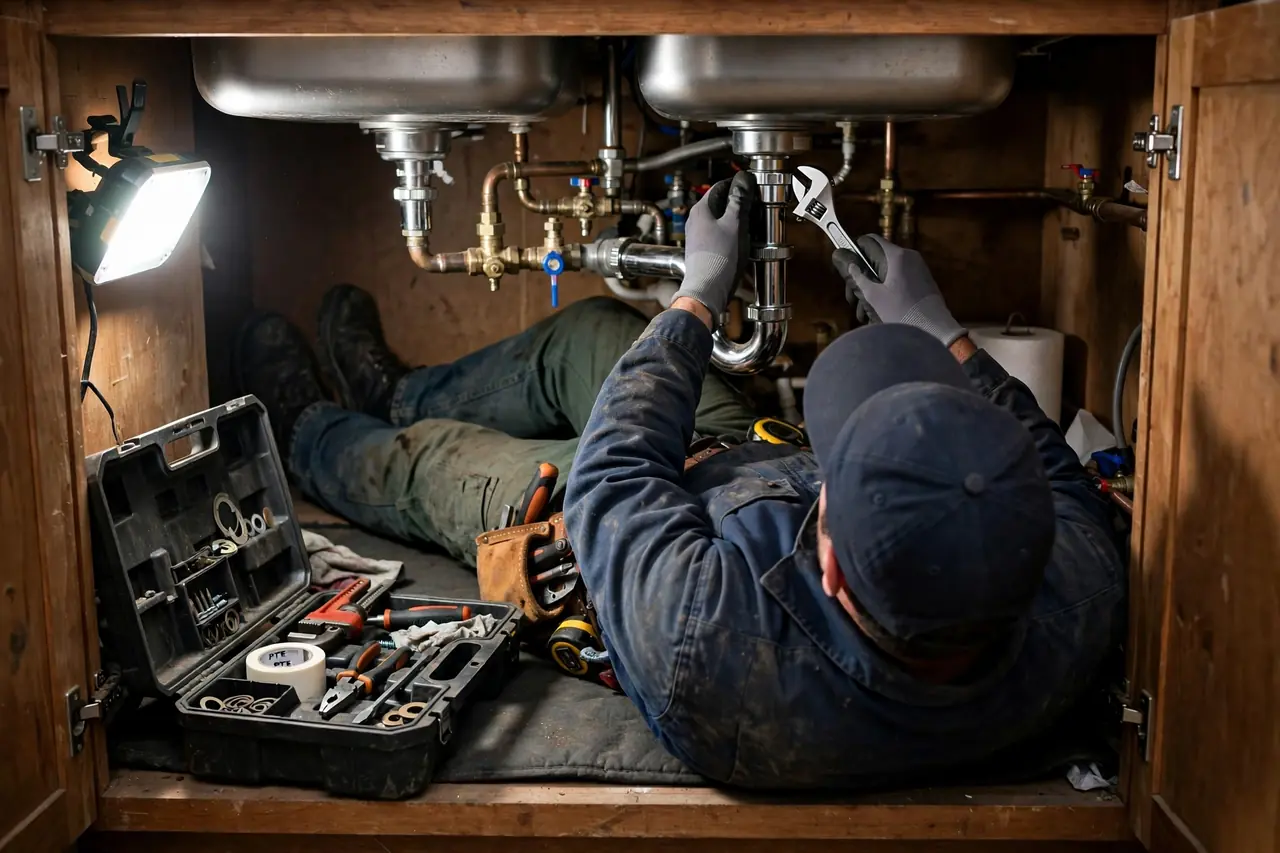
Removes and replaces supply lines and fittings cleanly, with new brass fittings and Teflon tape on every connection.
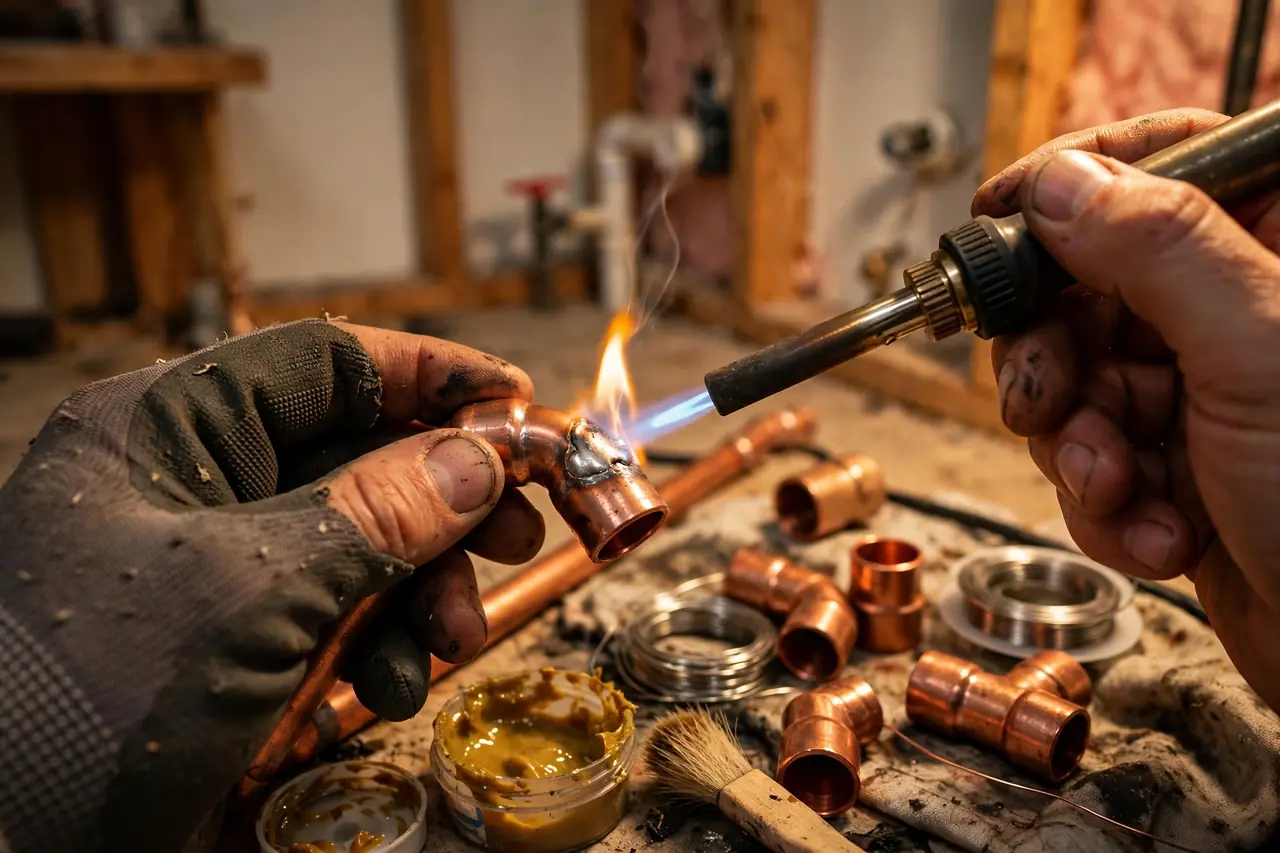
Used for copper pipe repairs near the heater when a soldered joint needs to be redone to code.
Makes fast, reliable connections on copper and PEX tubing without open flame in tight attic and closet spaces.
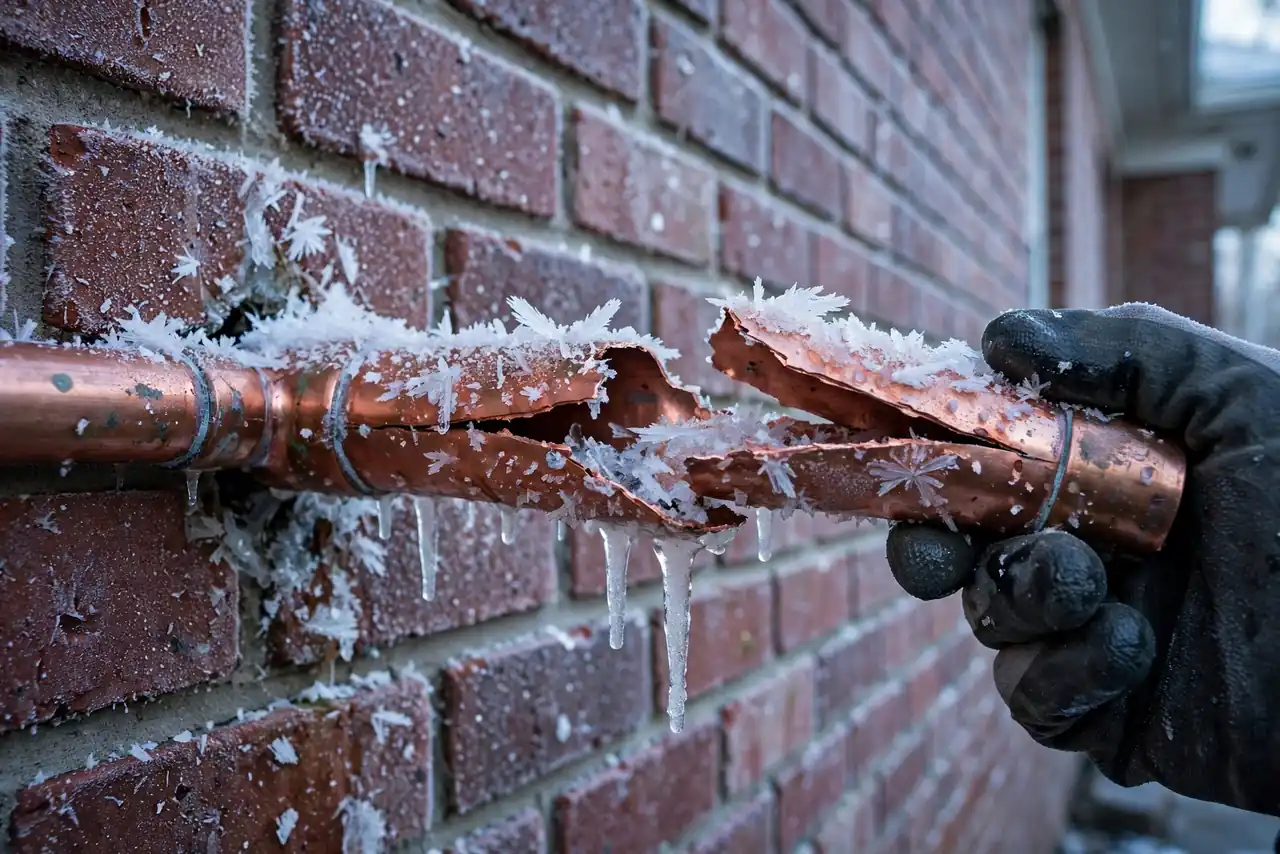
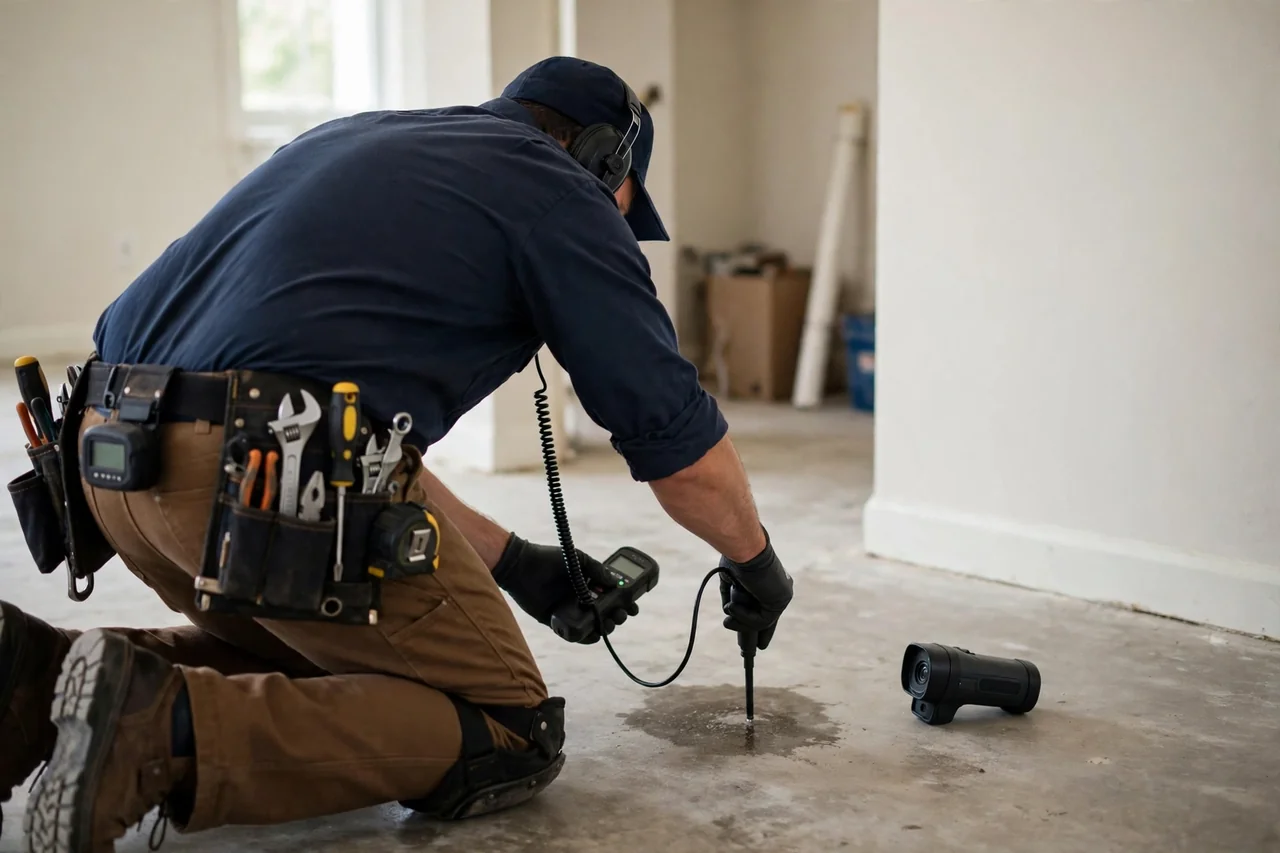
Finds hidden leaks in walls and under slabs near the heater before we start opening anything up.

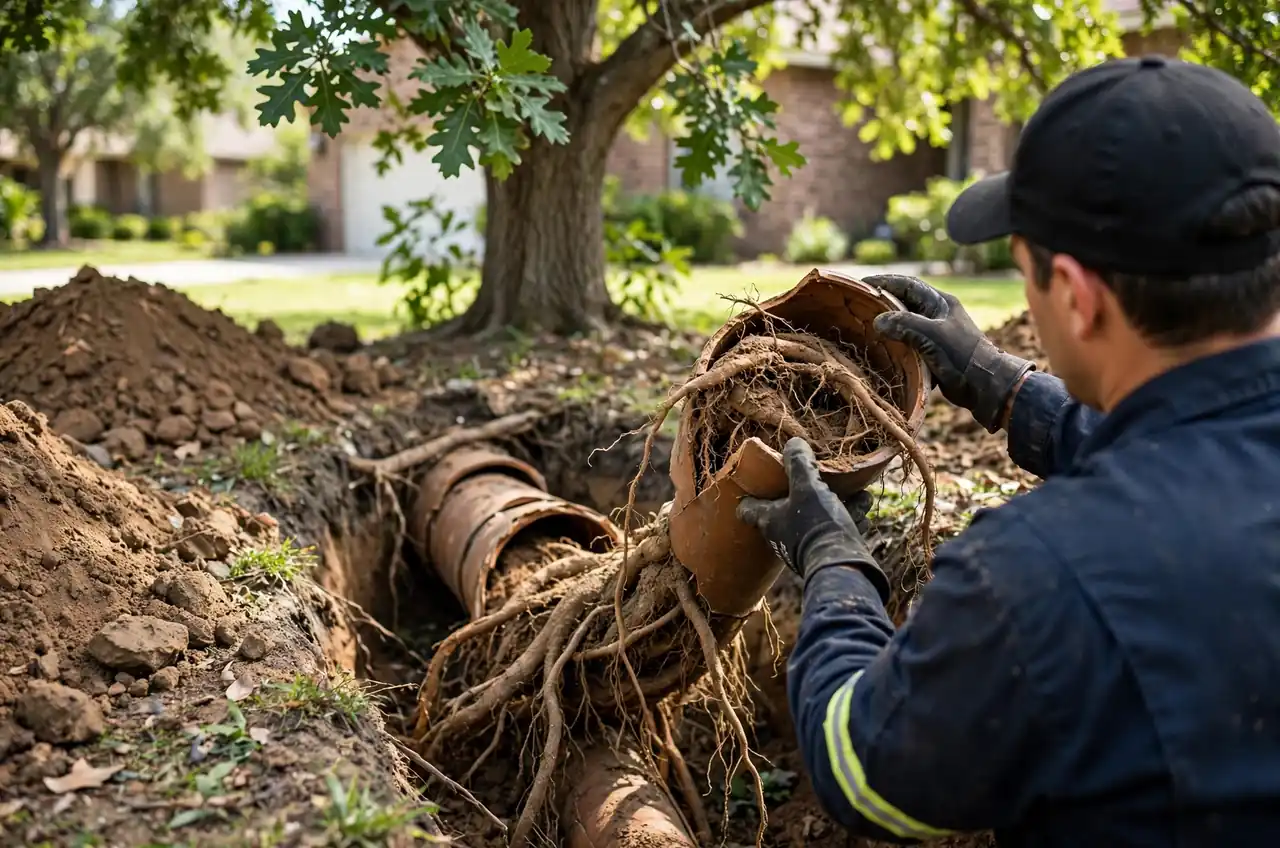
Clears the drain line when a heater flush sends sediment into the drain and slows it down.
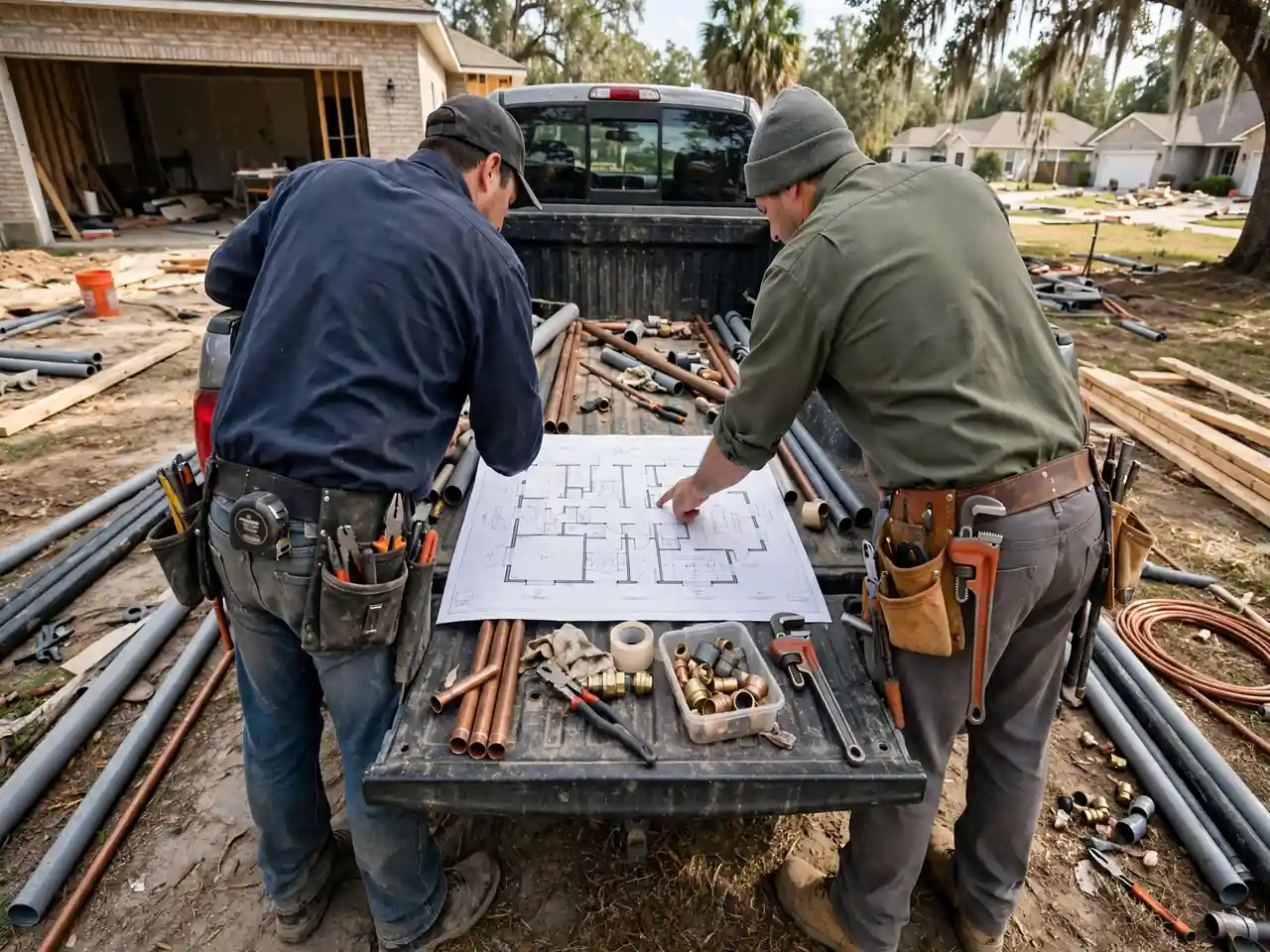
Every repair and replacement follows UPC and 2021 Uniform Plumbing Code with Houston Amendments standards for relief valve discharge, venting, and gas connections. That keeps the work safe and passes inspection.
We shut the unit down, locate the leak, and either repair the fitting or replace the tank. We check the pan and drain line while we are there. The leak stops, the ceiling stays dry, and you get hot water back once the repair is done.
We test the thermocouple and gas valve, check the venting, and replace the failed part. We also check the combustion air supply in the tight closet. The pilot holds, the unit runs reliably, and you are not relighting it every morning.
We take the prompt call, diagnose a burned-out upper element, replace it, and test the unit up to temperature. Hot water is back before lunch, and the family does not miss a day.
We schedule a diagnostic visit, repair the failed part, and document the work so the owner has a record for the property file. The unit is back online, the unit is ready to rent, and the owner has paperwork for the file.
Tanks in 1960s to 1980s stock in Sharpstown, Meyerland and Memorial are at end of life, while hard water shortens heater life everywhere in the city. Flood-damaged heaters after Harvey follow a different rule: replace, do not repair, if floodwater reached the burner or controls.
A 10-year-old tank in an attic closet was dripping onto the ceiling below. The homeowner noticed a stain but did not know the source, and the unit was still running.
We shut the unit down, confirmed the tank seam was corroded, and replaced the tank before we left. The ceiling stain stopped spreading and hot water was back by evening.
Check the pan and drain line twice a year, and flush the tank annually to slow corrosion in Houston's hard water.
A tenant reported no hot water on a Monday morning. The electric unit had a burned-out upper element and a tripped high-limit switch, and the landlord needed it fixed fast.
We replaced the element, reset the switch, and tested the unit up to temperature. The tenant had hot water by early afternoon and the landlord had a written record of the repair.
Test the T&P valve annually and flush the tank once a year to keep sediment off the elements.
A gas heater kept going out overnight. The homeowner was relighting the pilot every morning and had already replaced the thermocouple once without success.
We found a draft issue in the closet and a failing gas valve. We replaced the valve, corrected the venting, and the pilot has held since.
Keep the closet vent clear and have the unit checked once a year before the heating season starts.
Most Houston water heater calls fall into a handful of patterns. Here are the ones we see most, and what happens if they are left alone.
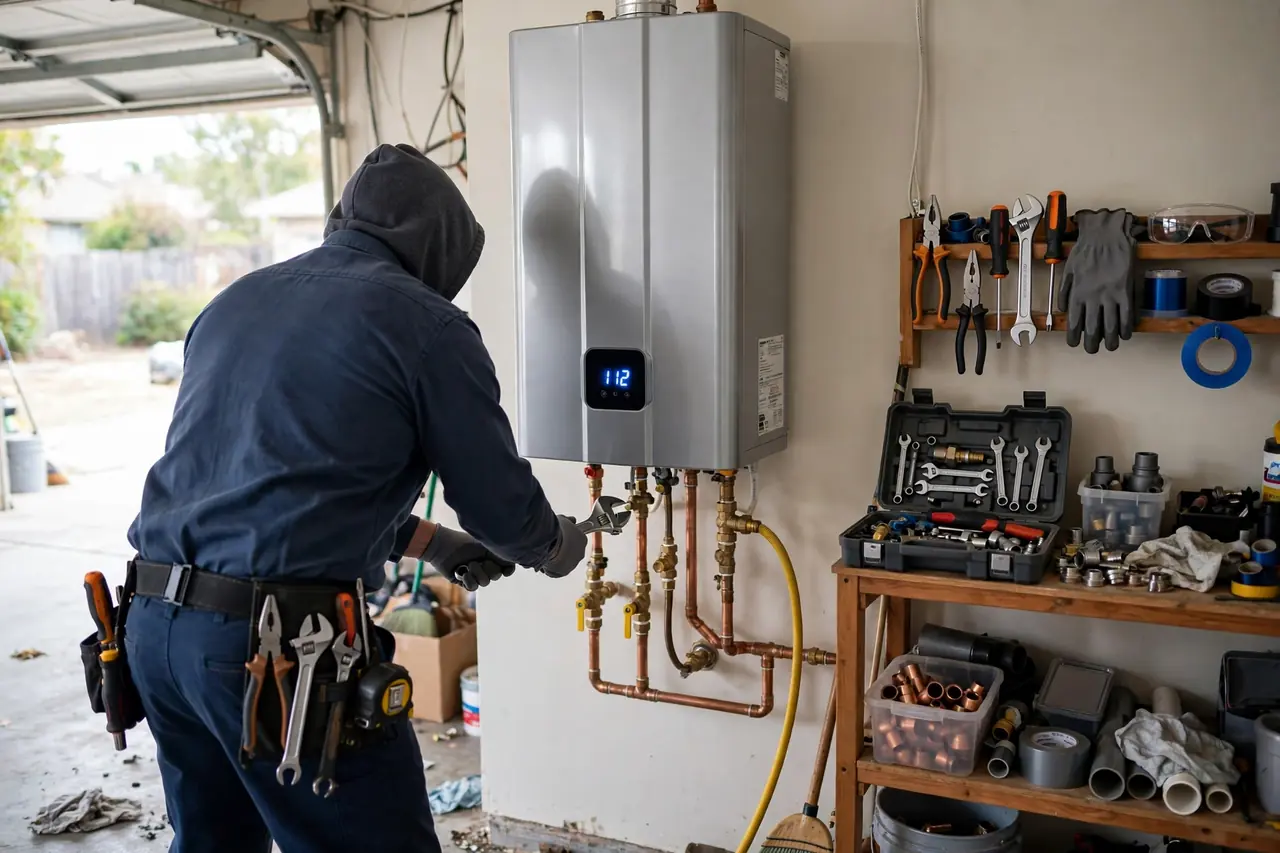
We test the gas valve and thermocouple on gas units and the elements and thermostats on electric units, replace the failed part, and run the unit up to temperature before we leave. A failed thermocouple, tripped high-limit switch, or dead heating element leaves the whole house cold. Left alone, the underlying issue can damage the unit further.
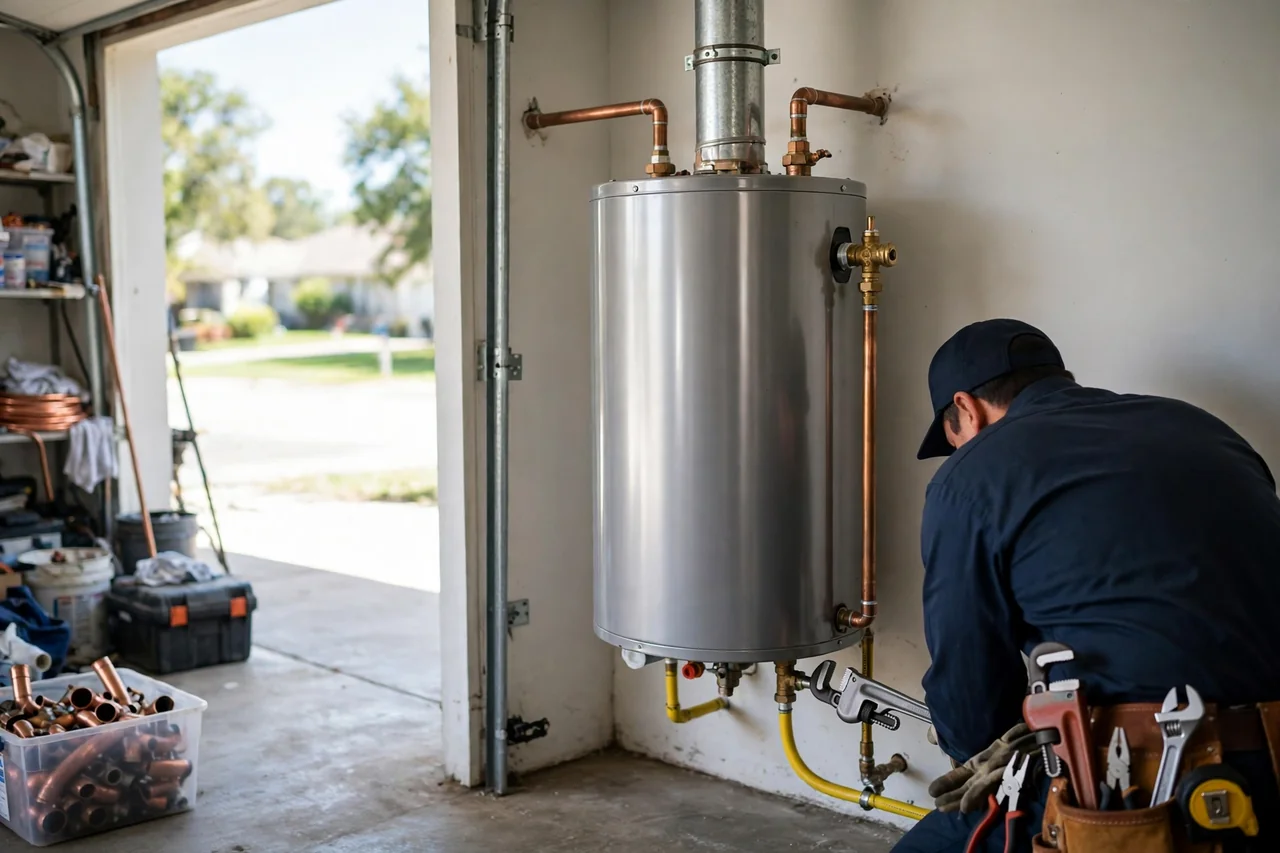
We check the anode rod and the tank interior, replace the rod if there is life left in the tank, and tell you honestly if the corrosion has gone too far to repair. A corroding anode rod or tank interior sends rust into your supply lines. Ignoring it shortens the life of fixtures and can mean a tank failure is close.
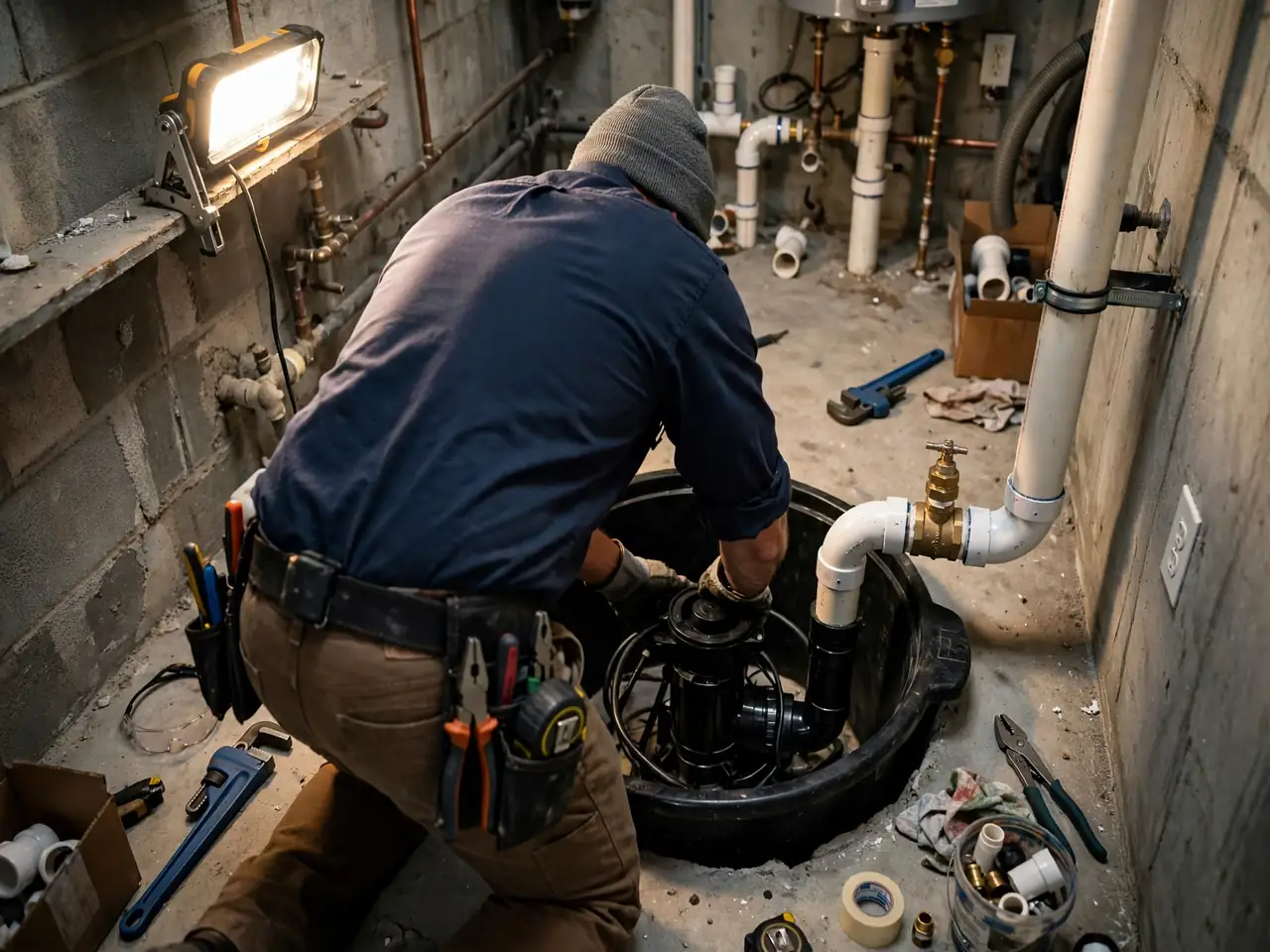
We flush the tank, clear the sediment, and check the elements for scale. Houston's hard water makes this a routine fix, and it is one of the cheapest ways to extend the unit's life. Sediment buildup on the tank bottom traps water under it and causes the popping noise. It also cuts efficiency and speeds up tank failure.
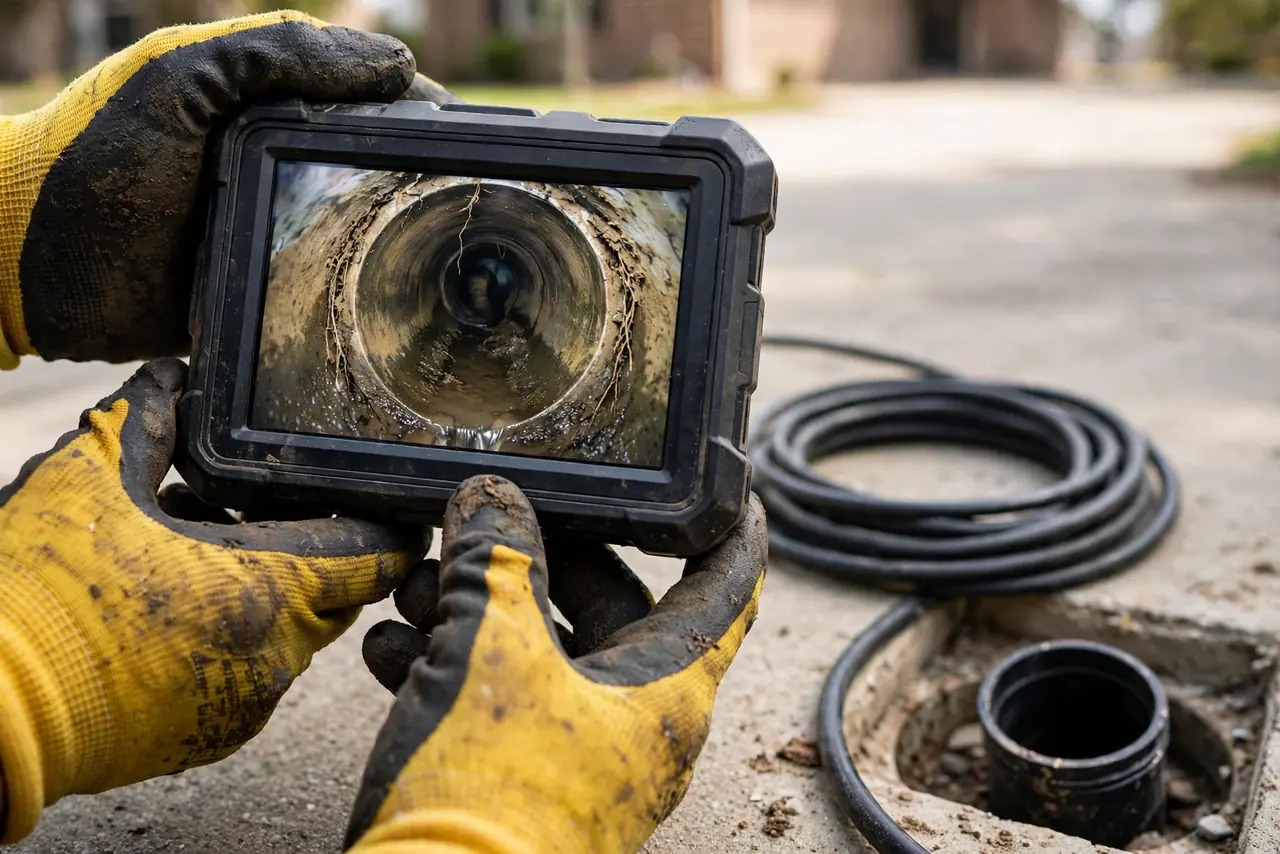
We locate the source, repair fitting and valve leaks on the spot, and if the tank itself is leaking, we shut it down and price a replacement so you can decide fast. A leak at a fitting is a quick fix. A leak at the tank seam means the tank is done, and every hour it runs risks water damage to floors and ceilings.
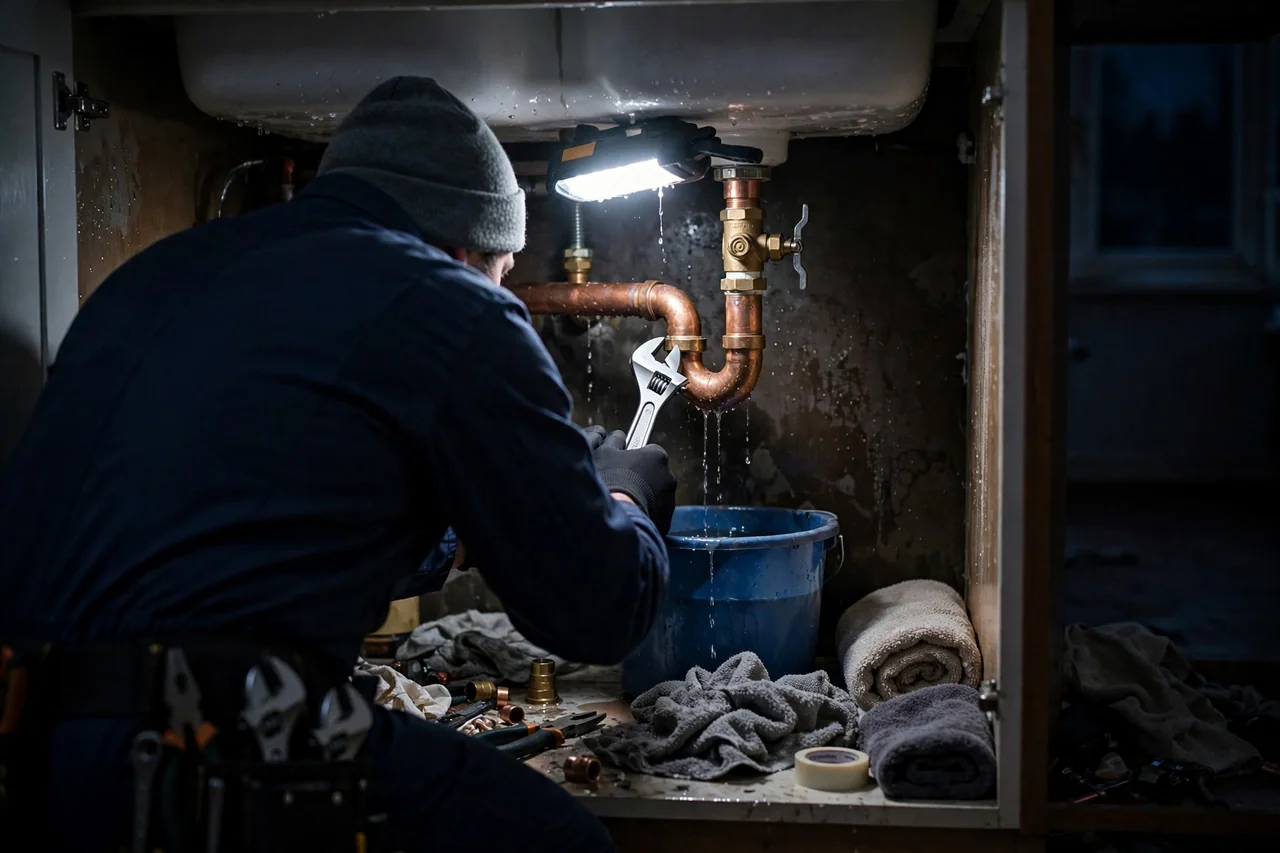
We test the thermocouple and gas valve, check the venting and combustion air, replace the failed part, and confirm the pilot holds before we leave. A bad thermocouple or a draft issue shuts down a gas heater. In Houston, attic and closet installations are prone to this, and it usually happens at the worst time.
Most repairs are finished in a single visit of two to four hours. We stock common parts for water heater units on the truck, so we are not making a second trip for a thermocouple or element.
You get the price before we turn a wrench. water heater repair Houston Texas does not mean cheap parts or shortcuts, and we will tell you when a repair is throwing money at a tank that is already done.
Our techs work on both gas water heater repair Houston Texas and electric systems, including tankless brands like tankless and tankless. One call covers the diagnosis, the part, and the test run.
A lot of Houston heaters sit in attic decks and garage closets where a leak ruins ceilings and drywall. We inspect the pan, the drain line, and the shutoff valve while we are there, so the next failure does not turn into a water damage claim.
Clear records you can keep and share.
Quoted before any work starts
Written summary of what was fixed
Unit run up to temperature and checked
The decision usually comes down to the tank's condition and the cost of the repair. A part failure on a younger unit is worth fixing. A leaking tank is not.
A leak at the tank seam cannot be repaired reliably. The tank is done, and replacement is the right call.
Thermostats, elements, and thermocouples are replaceable. On a unit under 10 years old, a repair usually makes sense.
Two major repairs in a short window usually means the unit is failing. We price both options so you can compare.
Tank and tankless are different answers to the same job. Here is how they compare on the points Houston homeowners ask about.
| Tank water heater | Tankless water heater | |
|---|---|---|
| How it heats | Keeps a tank of water hot around the clock. | Heats water on demand as it flows through the unit. |
| Sizing | Sized by tank size, for example a 50-gallon tank. | Sized by flow rate and temperature rise: a unit rated at 7 GPM delivers 7 gallons per minute at a specific temperature rise. In Houston, incoming water runs about 70 degrees, so the rise to 120 degrees is 50 degrees. |
| Gas line | Runs on the gas line sized for a 50-gallon tank. | A 199,000 BTU unit needs a larger gas line than a 50-gallon tank. If the line is undersized, the unit short-cycles or will not fire, and the fix is a new gas run. |
| Hard water | Sediment builds up in the tank; no hot water, a leak at the base, rusty water or a popping tank all mean the heater needs attention now. | Scale coats the heat exchanger. Annual descaling with isolation valves is the difference between a 20-year unit and a 10-year one. |
| Repair or replace | Part failures — thermostats, elements, and thermocouples — are replaceable. On a unit under 10 years old, a repair usually makes sense. A leak at the tank seam cannot be repaired reliably; the tank is done, and replacement is the right call. | We install, repair and descale tankless units. Some homes are better served by a tankless unit, especially where hard water makes descaling a routine job. |
Outside these areas? Call and ask if we can reach you. (346) 776-8560
Hard water is the main reason. Scale builds at the bottom of the tank, makes popping noises, corrodes internal parts and shortens the heater's life. Flushing sediment and checking the anode rod are the maintenance steps that slow it down.
Repair of a fitting or valve usually does not need one. Replacement always does: the City requires a permit pulled by a master plumber registered with the City, plus an inspection. We confirm which applies to your job.
Sediment at the bottom of the tank. Water trapped under the scale boils and pops. It is a sign the tank needs flushing, and left alone it shortens the tank's life.
Rusty water usually means the tank interior or the anode rod is corroding. A smell often points to bacteria in the tank or the water supply. Both need a look inside before the heater is written off.
Call (346) 776-8560 for a free estimate. We diagnose the heater, repair what is repairable, and tell you plainly when replacement is the answer, Monday to Sunday, 7:00 AM to 10:00 PM.
Call us at (346) 776-8560 to book water heater repair or ask a question. We are open Monday to Sunday, 7:00 AM to 10:00 PM, and estimates are free.
The fastest way to book is a phone call. Tell us what is happening and we will give you a free estimate and a time that works, Monday to Sunday, 7:00 AM to 10:00 PM.
Open Mon–Sun, 7:00 AM–10:00 PM. Free estimates.