Hardness test results
Before and after numbers at the tap
Water softener repair in Houston is the work of finding the failed resin, valve or brine part and testing the water after. A softener that stops softening, uses too much salt, or leaks at the connections is usually a resin, valve or brine problem away from working again. El Primo Lalo Plumbing repairs water softeners in Houston, finds the failed part, and tests the water after.
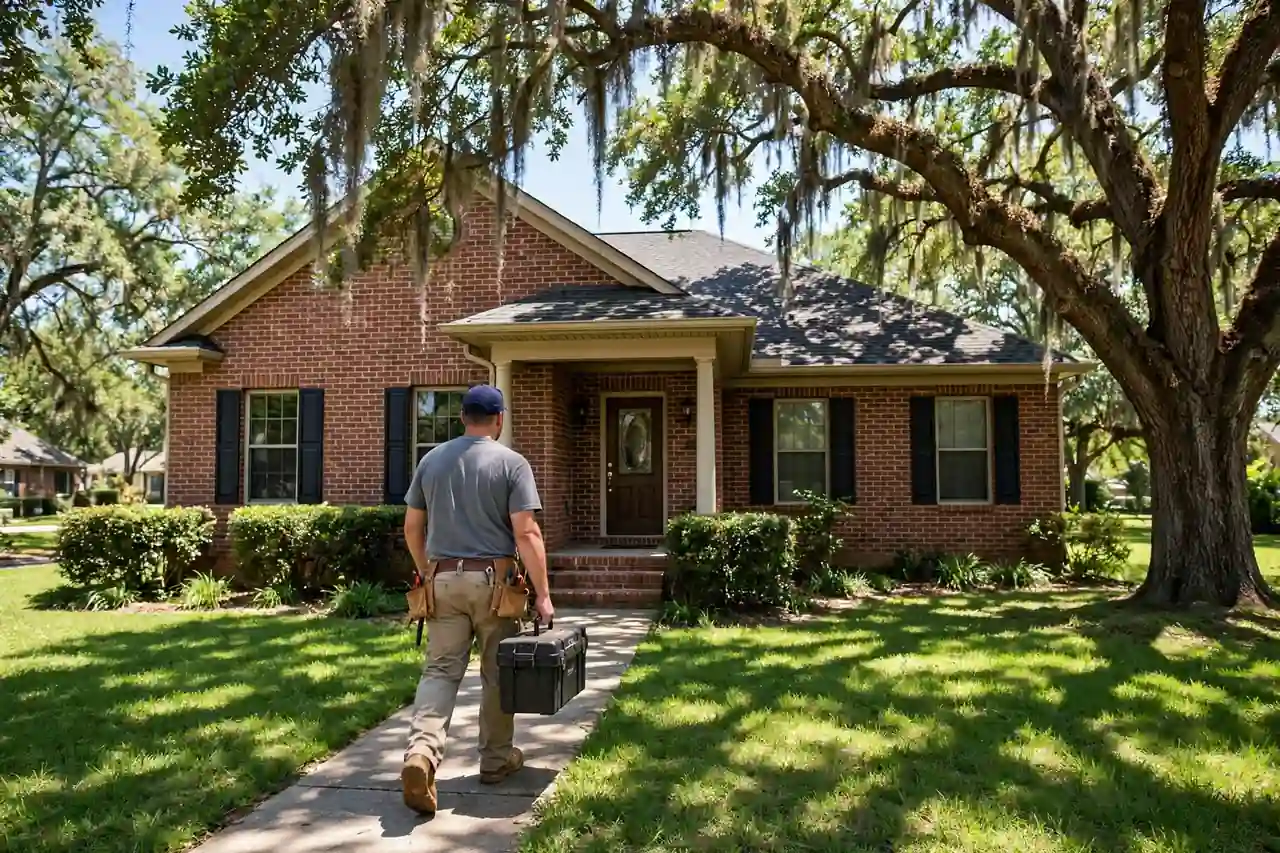
Every water softener repair Houston TX call includes a full diagnostic, not just the obvious part swap. Here is what is covered in a standard repair visit, and what we treat as an add-on only if you approve it.
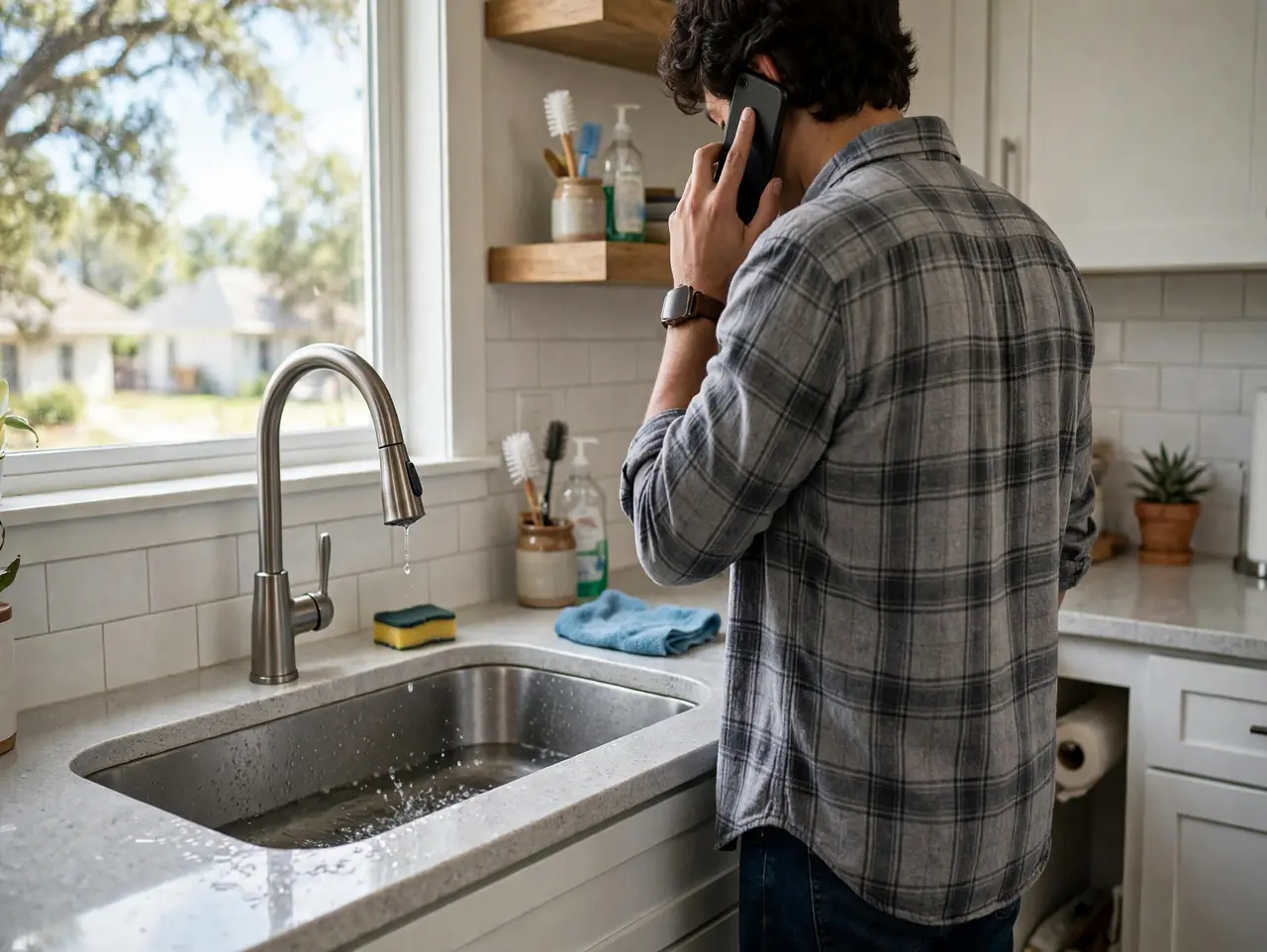
Your softener should make soap lather and keep scale off your fixtures. When it stops, we find the failed part and restore soft water without selling you a new system you do not need.
Restaurants, laundromats, and small hotels need soft water to protect equipment and keep customers happy. We repair commercial softener systems and schedule the work around your business hours.
Softener diagnosis splits four ways: the resin, the control valve, the brine system and the connections. Hard water coming back usually means exhausted resin or a valve that is not regenerating. Too much salt usually means a brine or float problem. Water on the floor means a connection or drain line. Each has its own fix, and a water test after the repair proves it worked.
Houston's hard water, about 8 grains per gallon on average from the City supply, is what makes a working softener worth keeping. A softener that is not regenerating is not protecting the heater, the fixtures or the new repipe it was fitted to guard. We check the resin, the valve, the injector screen and the salt level, and tell you plainly when repair beats replacement.
Hard water coming back means the softener stopped working, not that the water changed.
We keep it simple and predictable. Here is exactly what happens from the first phone call to the final water test.
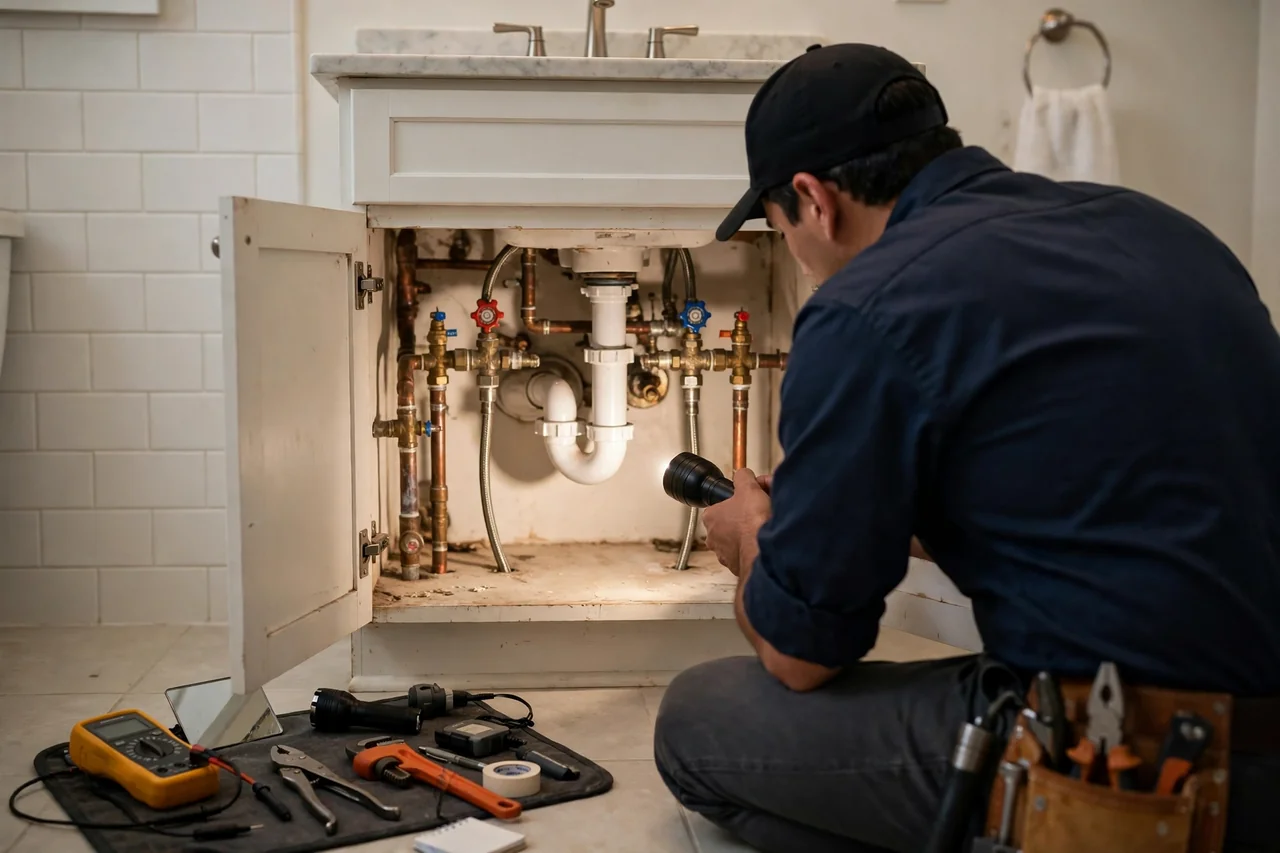
We ask what the unit is doing: no soft water, constant regeneration, salt bridge, or a leak. That conversation usually narrows the problem to two or three likely causes before we ever roll a truck, so we arrive with the right parts for your softener.

Our technician tests incoming hardness with a titration kit, checks the brine tank for salt bridges or mushing, and inspects the control valve, injector, and bypass assembly. We also look at the supply lines and shutoff valves. This takes 20 to 30 minutes and tells us exactly what failed.
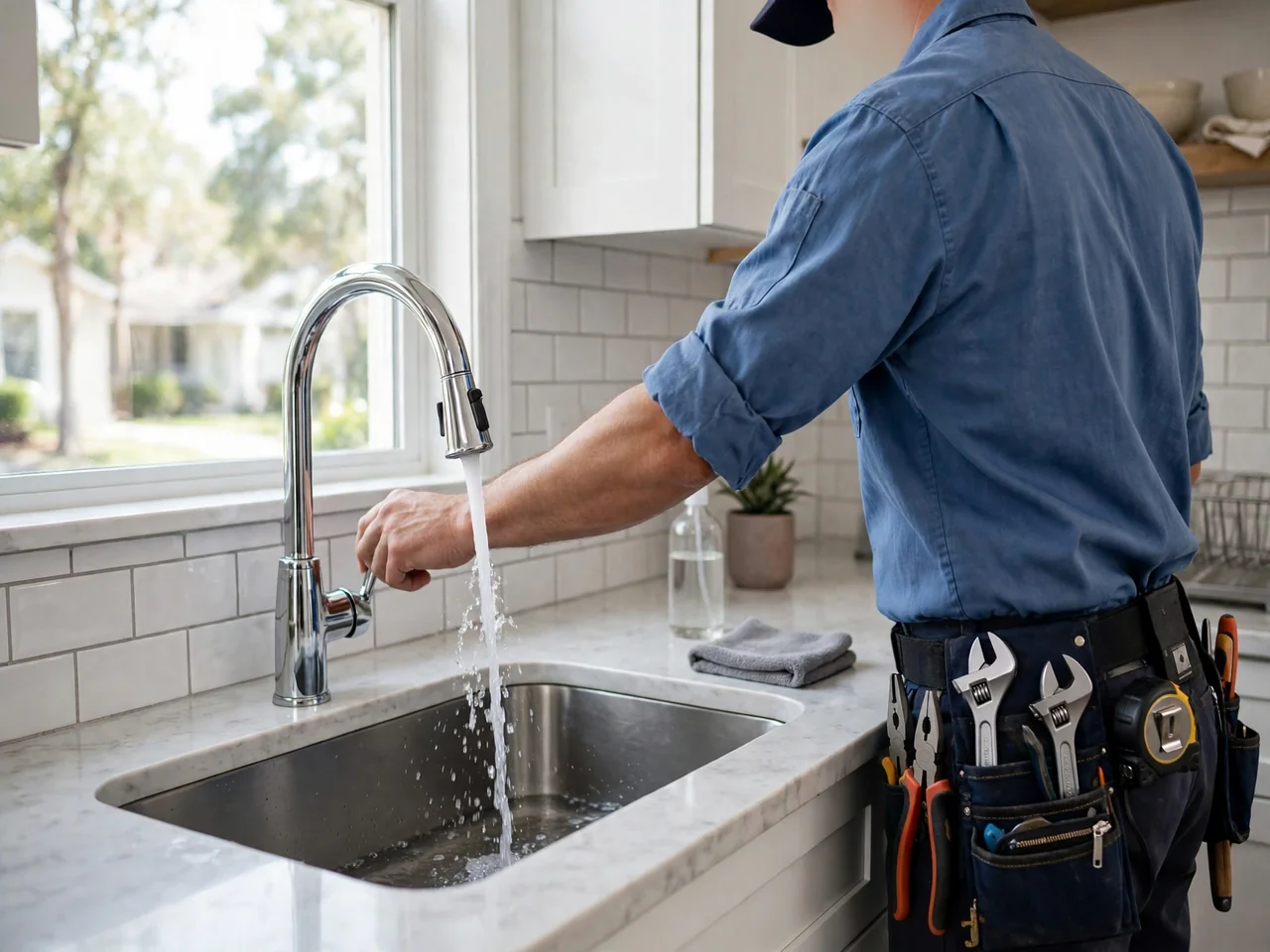
You get a clear price before we turn a wrench: parts, labor, and any recommended upgrades like a resin replacement or a new bypass. No surprises on the invoice. If the repair is not worth it, we will tell you that too and quote a replacement instead.
Most jobs take 1 to 3 hours. We rebuild or replace the control valve, clear the injector screen, replace the brine pickup tube, or swap the resin if it is iron-fouled. We use new brass fittings, Teflon tape, and supply lines where needed, and we pressure-test every connection before we leave.
We run a manual regeneration, test the softened water at the tap, and confirm hardness drops to the target range. Then we walk you through the settings, show you how to check salt levels, and hand you the paperwork. You will know exactly what was fixed and why.
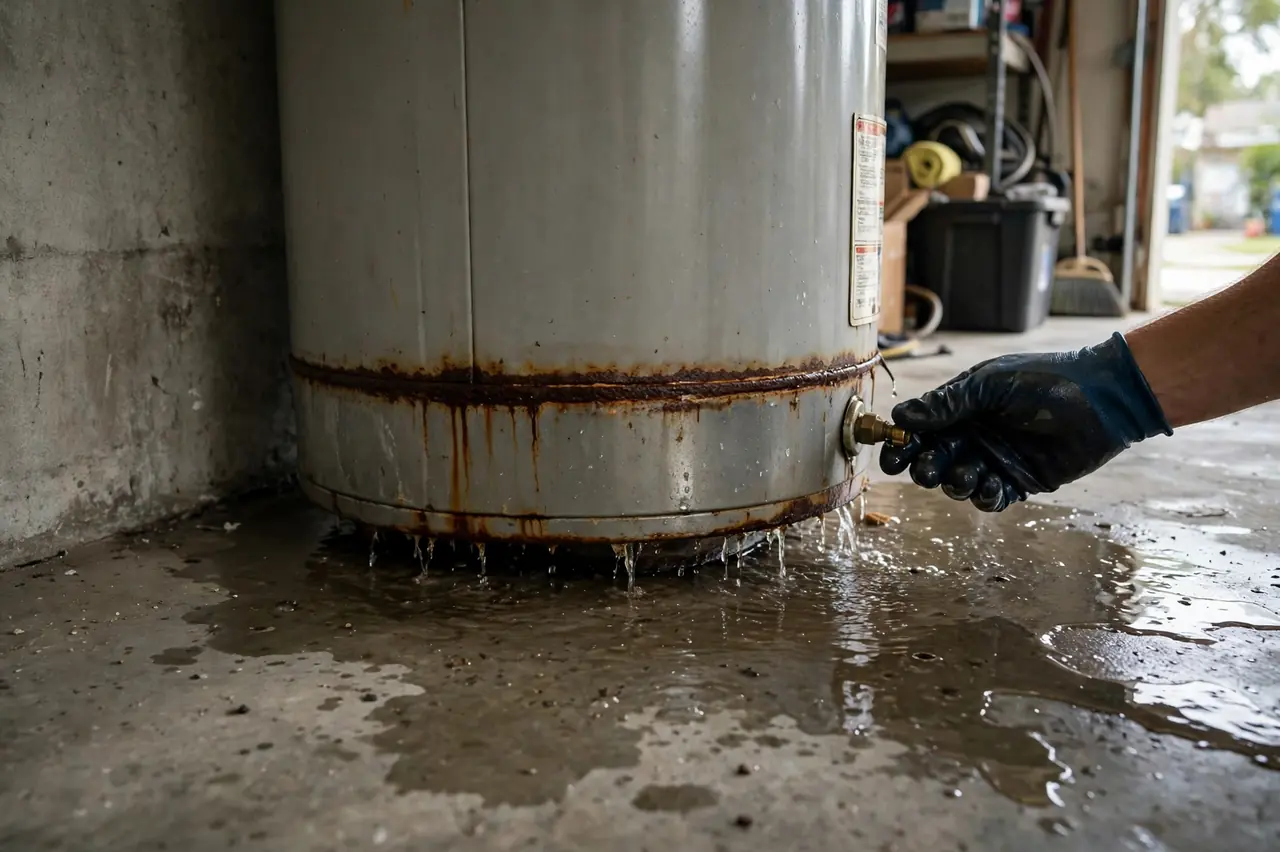
Measures incoming and treated water hardness on-site so we know whether the softener is actually softening, not just running.
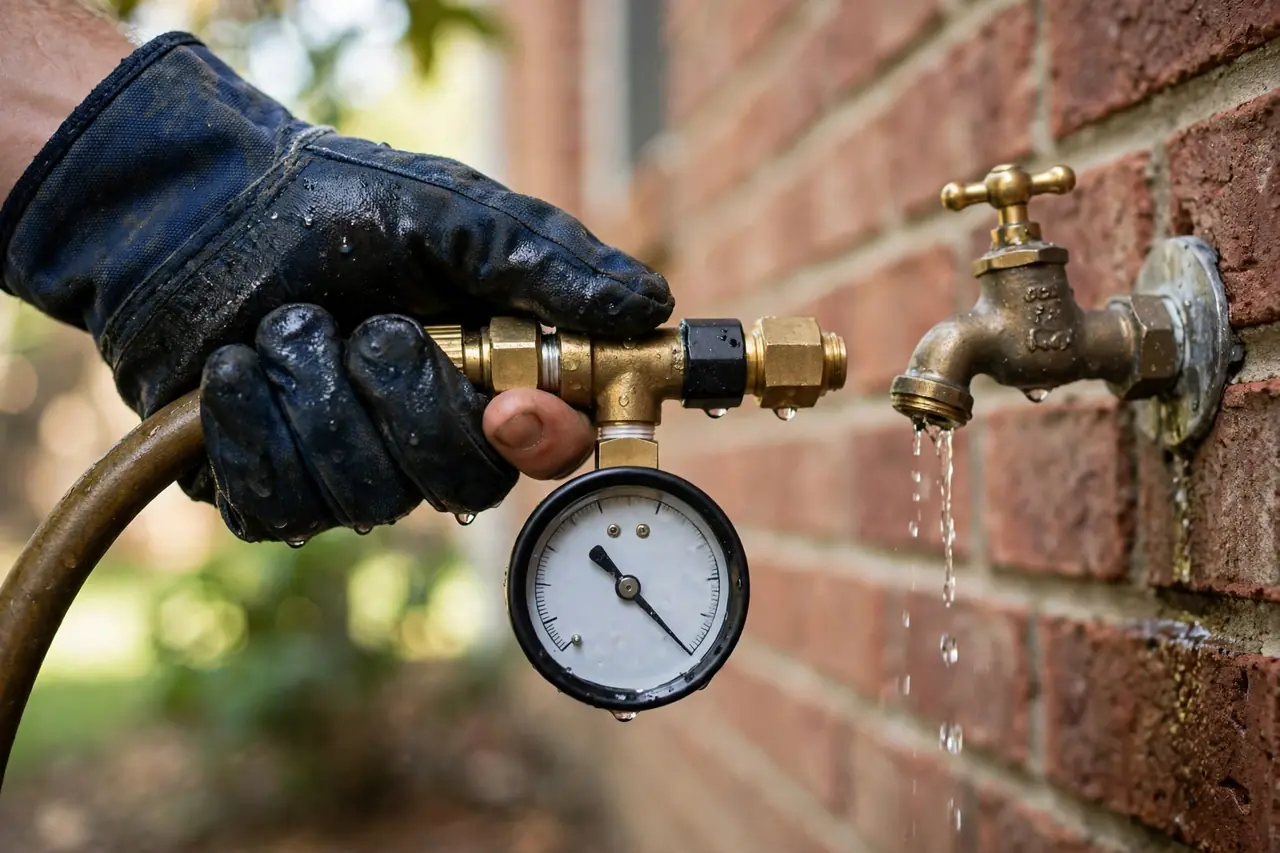
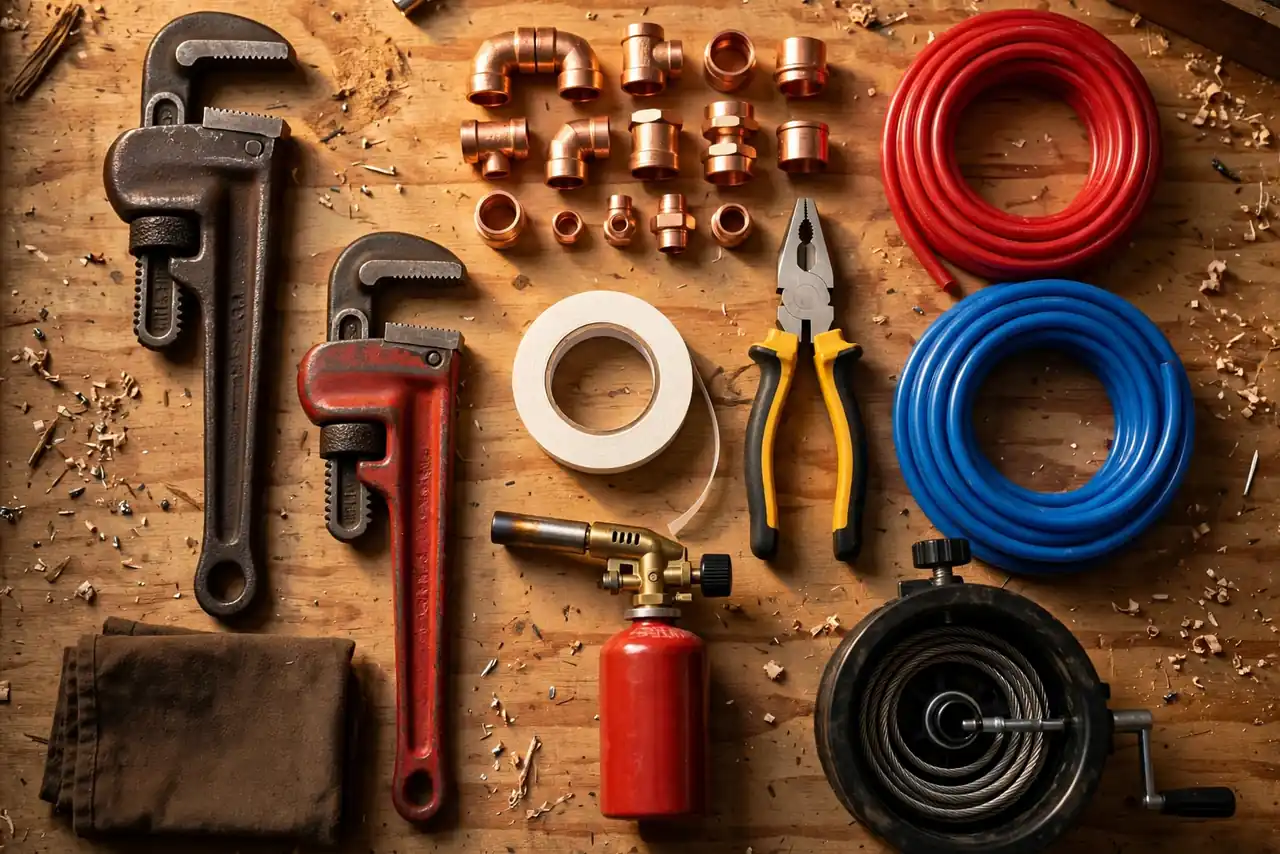
Used to break loose old fittings and cut copper or PEX tubing cleanly when a supply line or bypass needs replacement.
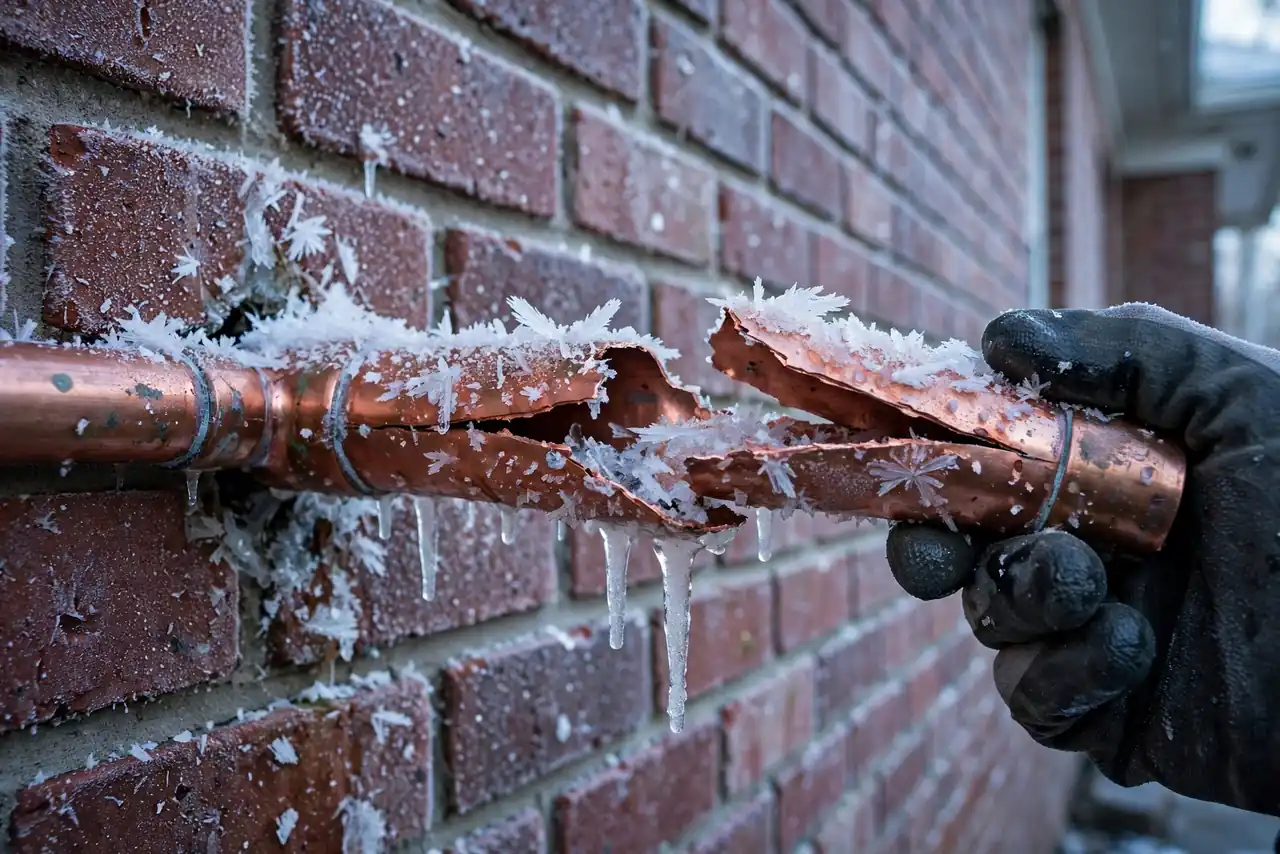
Makes fast, reliable connections on copper and PEX without soldering, which matters in tight utility closets where a torch is risky.

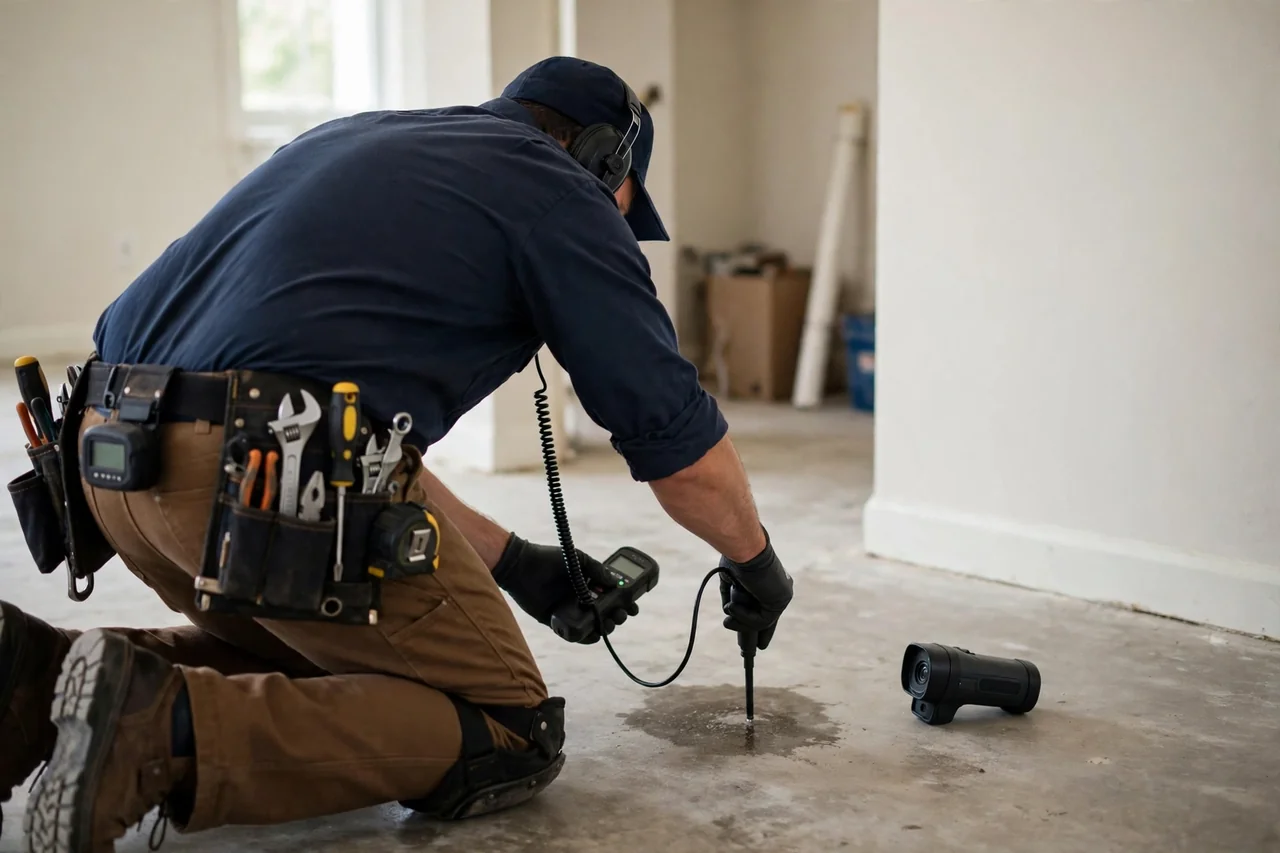
Finds hidden leaks under slabs or behind walls when water is pooling near the softener and the source is not visible.
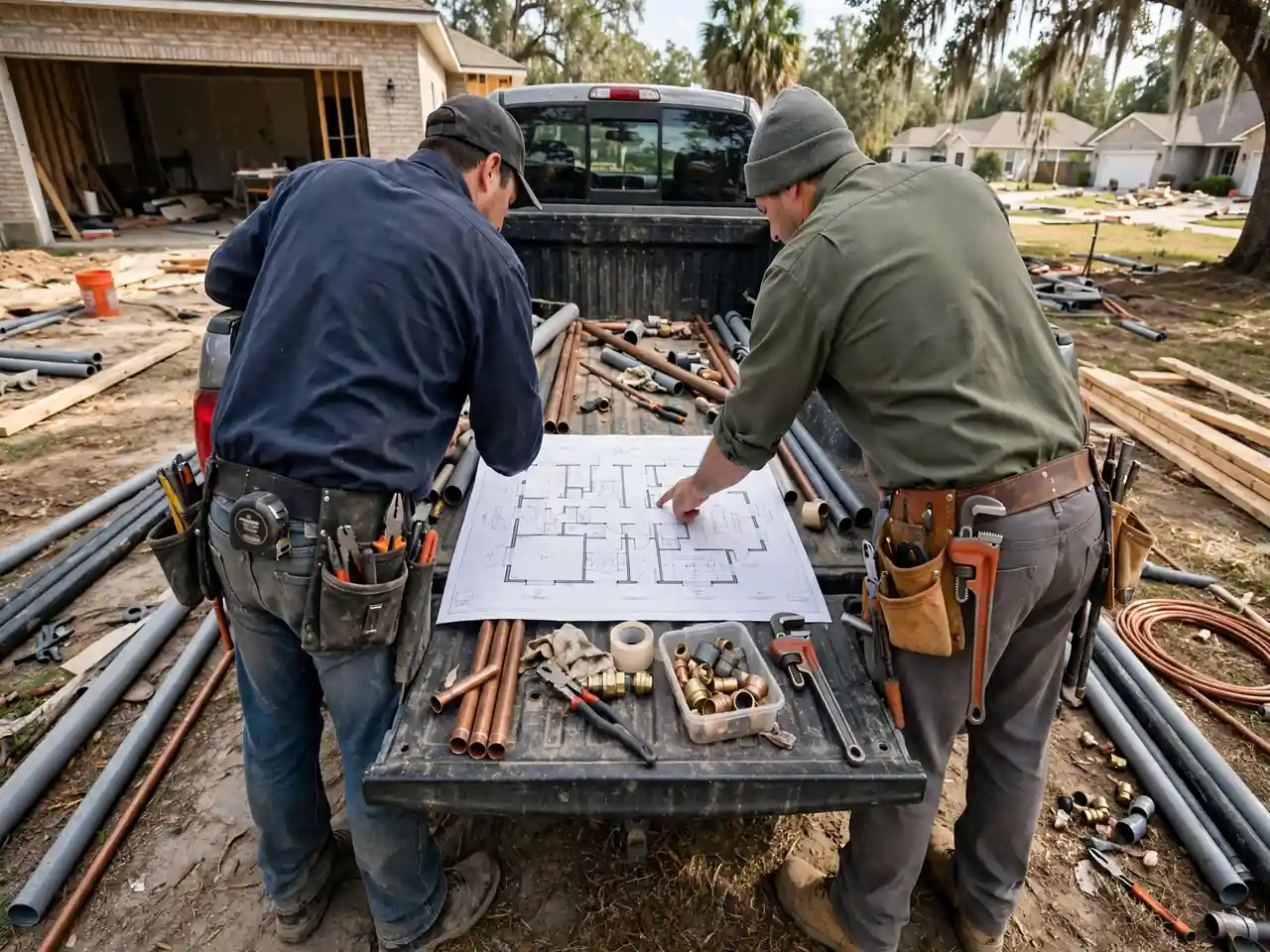
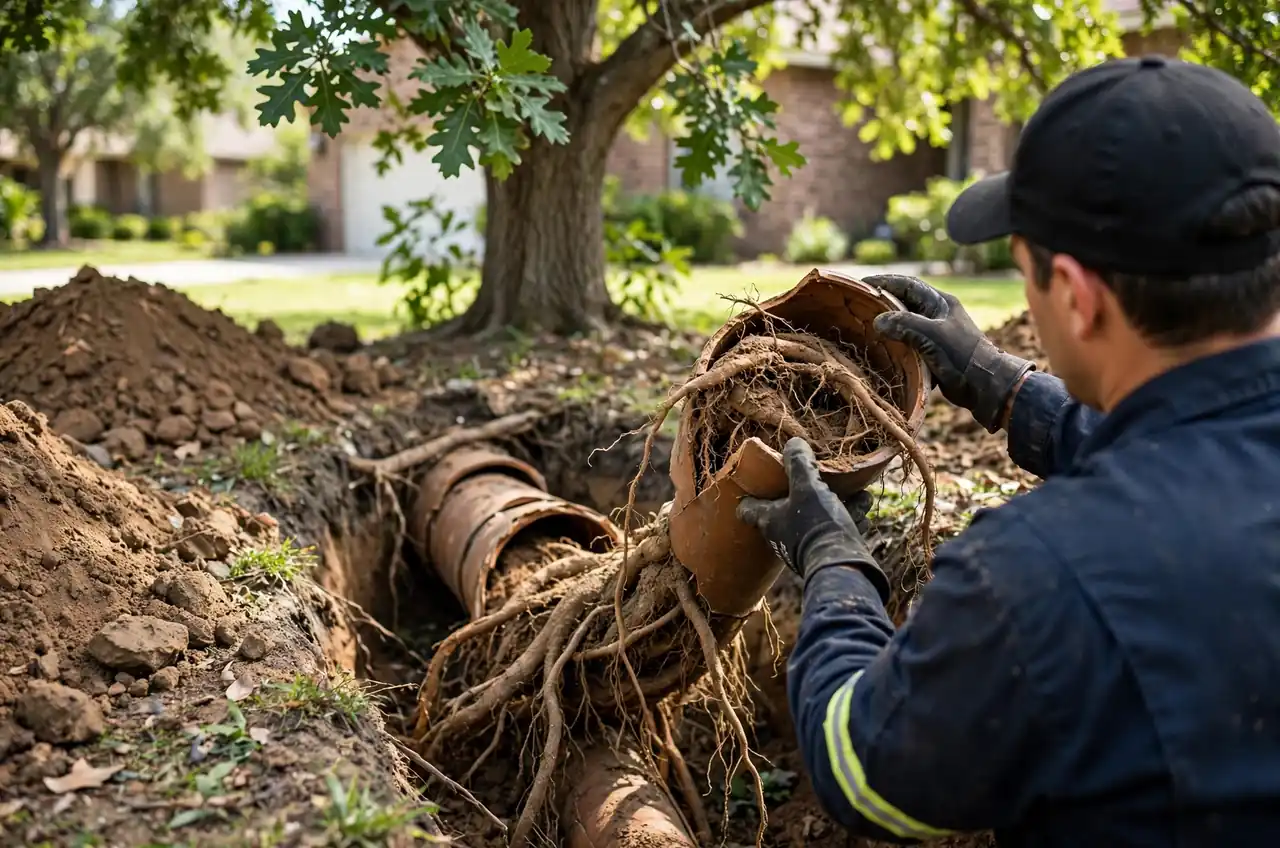
Inspects the drain line when brine discharge or heavy water use is backing up, so we fix the real cause instead of guessing.
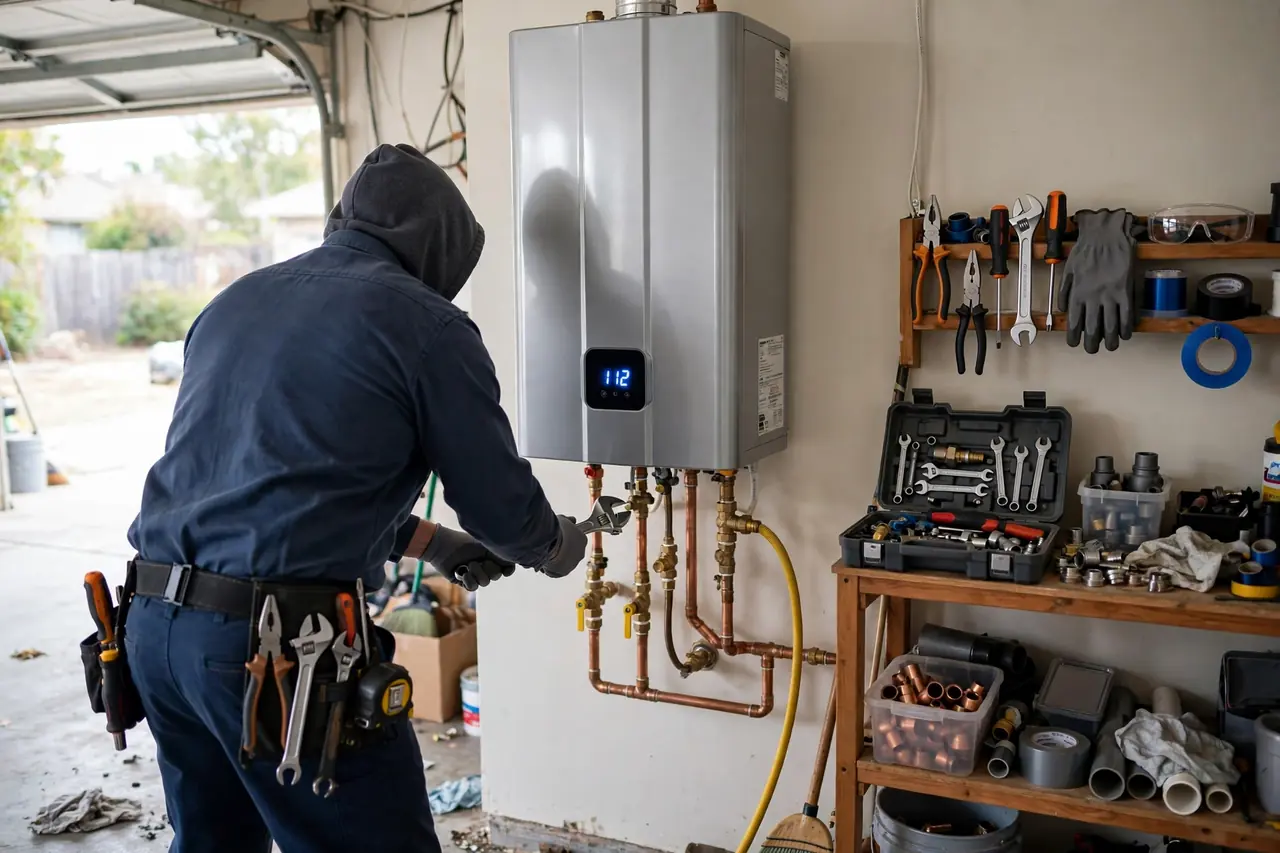
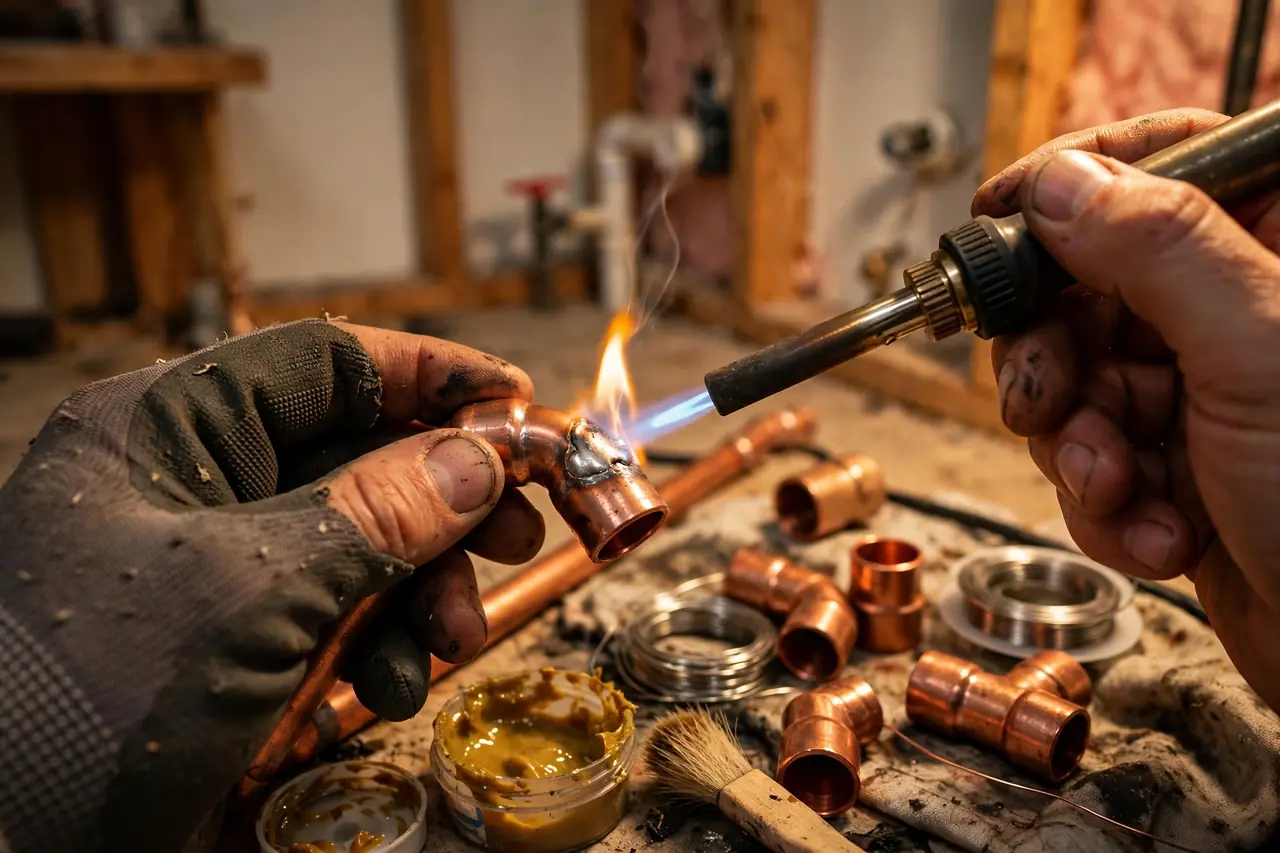
Used for copper pipe repairs where a soldered joint is the right call, with pipe insulation and Teflon tape on hand to protect nearby surfaces.
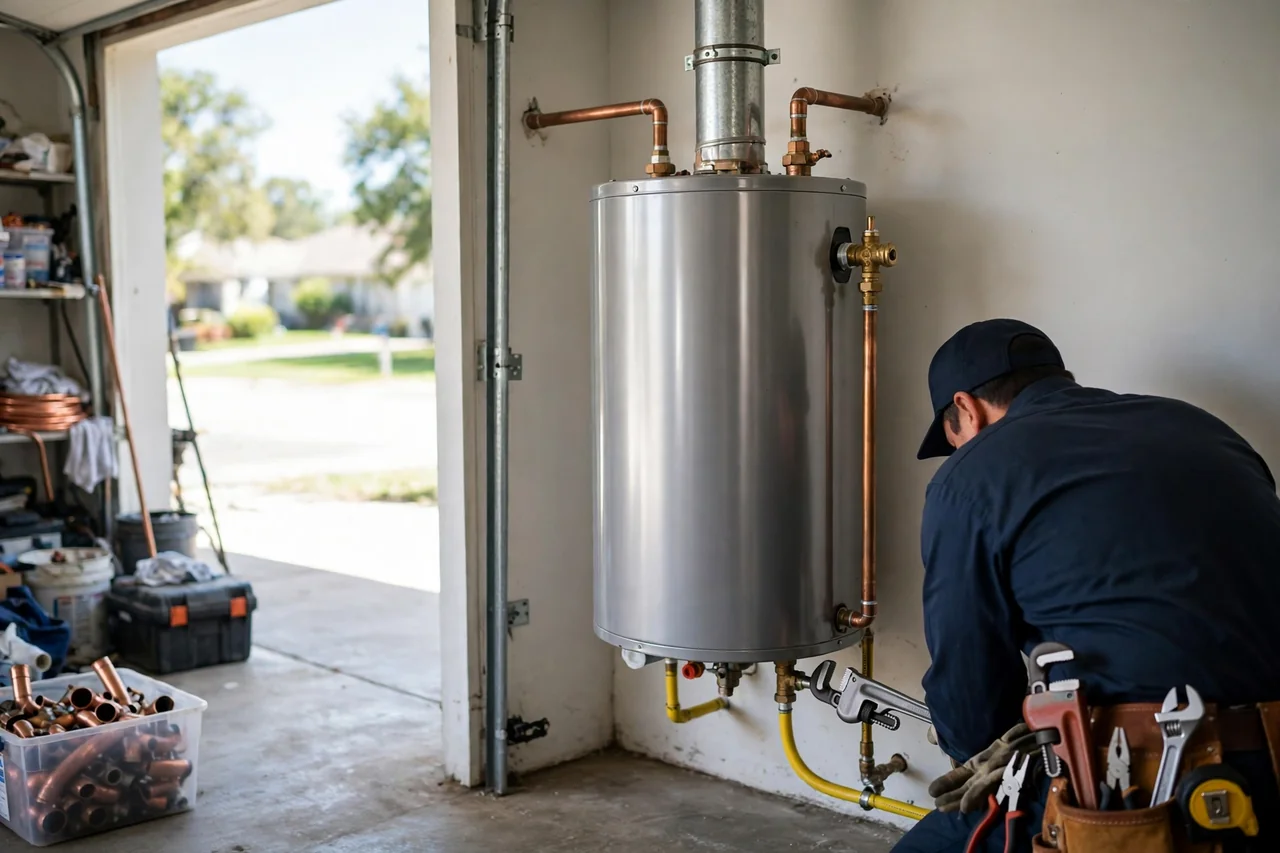
We test hardness, brine draw, and valve operation in sequence rather than replacing parts until something works. This keeps the repair cost down and pinpoints the actual failure.
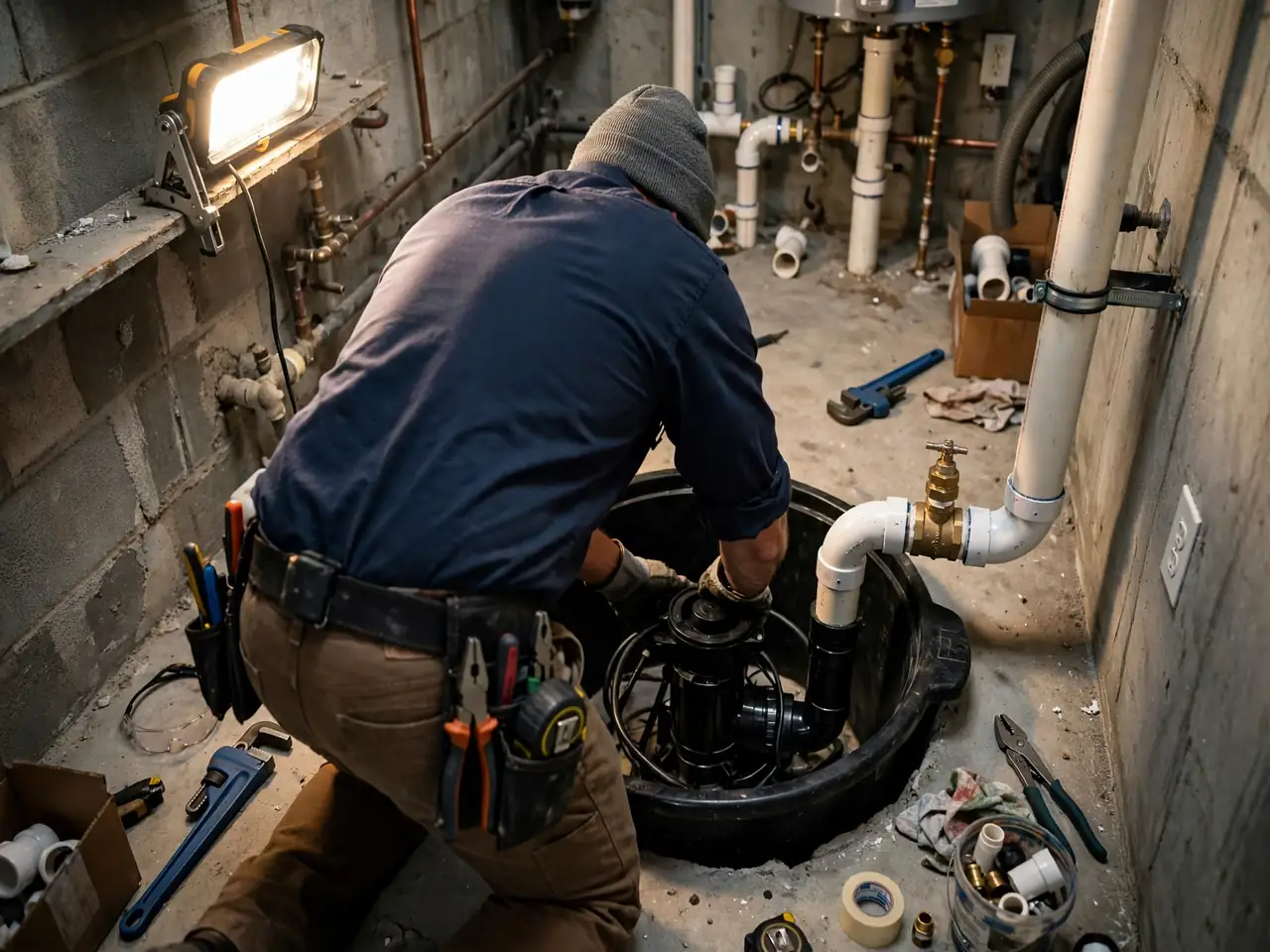
Every repair and installation follows the 2021 Uniform Plumbing Code with Houston Amendments, including proper backflow protection where the softener ties into irrigation or commercial supply.
We test hardness at the tap and inspect the resin and control valve. If the resin is iron-fouled, we replace it; if the valve is stuck, we rebuild it. Either way, we confirm soft water before we leave. Scale stops forming and the fixtures you already cleaned stay clean longer.
We prioritize leak calls. Call (346) 776-8560 during our hours — Monday through Sunday, 7:00 AM to 10:00 PM — and we will talk through the next step. When we come out, we shut off the supply and repair the fitting or valve. If a part needs ordering, we cap the line so the leak stops immediately. You leave with a dry floor and no risk of returning to water damage.
We diagnose the unit, tell you whether a repair or replacement makes more sense, and quote both. If it is a simple valve or injector fix, we often do it on the spot. You move in with working soft water instead of inheriting someone else's problem.
We check the control head settings, the meter, and the brine draw. A misread hardness setting or a failed meter is usually the cause, and both are fixable in one visit. Regeneration returns to a normal schedule and the water bill settles back down.
Softener repairs follow the installs: larger homes in Memorial and River Oaks protecting tankless units, and slab homes in Sharpstown and Meyerland where the softener guards a new heater or repipe.
A homeowner in the Heights had a softener that ran but left water hard. Dishes were spotted and the shower door had a fresh scale film. The unit was regenerating on schedule but not drawing brine.
We cleared the clogged injector screen and replaced the brine pickup tube, then tested the treated water at the tap to confirm the softener was treating again.
Check the injector screen and salt level monthly, and have the resin inspected every few years. A small screen is cheaper than a new valve.
A Bellaire homeowner found a puddle in the garage under the brine tank. The inlet fitting was cracked and the float valve was stuck, so the tank was overfilling and leaking onto the floor.
We replaced the inlet fitting and float valve, pressure-tested the assembly, and ran a manual regeneration. The floor stayed dry, and the water bill dropped back to normal the following month.
Inspect the brine tank fittings and float annually, and keep the tank about half full of salt. Do not let salt bridge form, which stresses the float.
A newer home in the Energy Corridor had a softener regenerating every night. Salt use was high, the water bill was climbing, and the homeowner was ready to replace the unit.
We recalibrated the control head to the actual hardness and household size and replaced a failing meter. Regeneration dropped to every third day, and salt use fell by roughly 25 percent.
Recheck hardness settings after any change in water source or household size. A yearly calibration keeps salt use and water waste in check.
If your water softener not working Houston is the search that brought you here, you are in the right place. These are the failures we see most often in Houston homes.
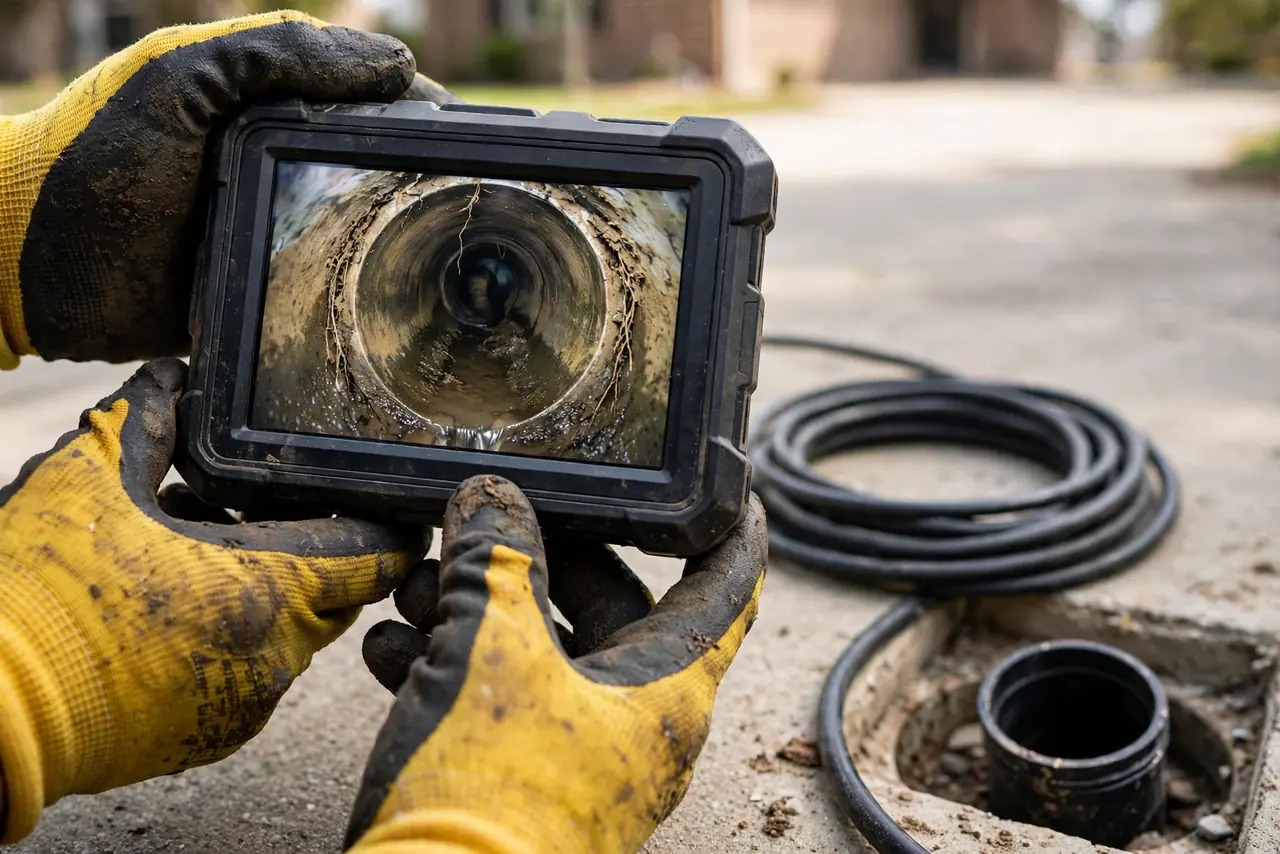
We test the resin bed and control valve to find out whether the unit is regenerating at all. Often the injector screen is clogged or the bypass is stuck open. We clear or replace the failed part and confirm hardness drops at the tap before we leave. Soap will not lather, dishes come out spotted, and scale builds up in the water heater and pipes. Left alone, the scale hardens and shortens appliance life.
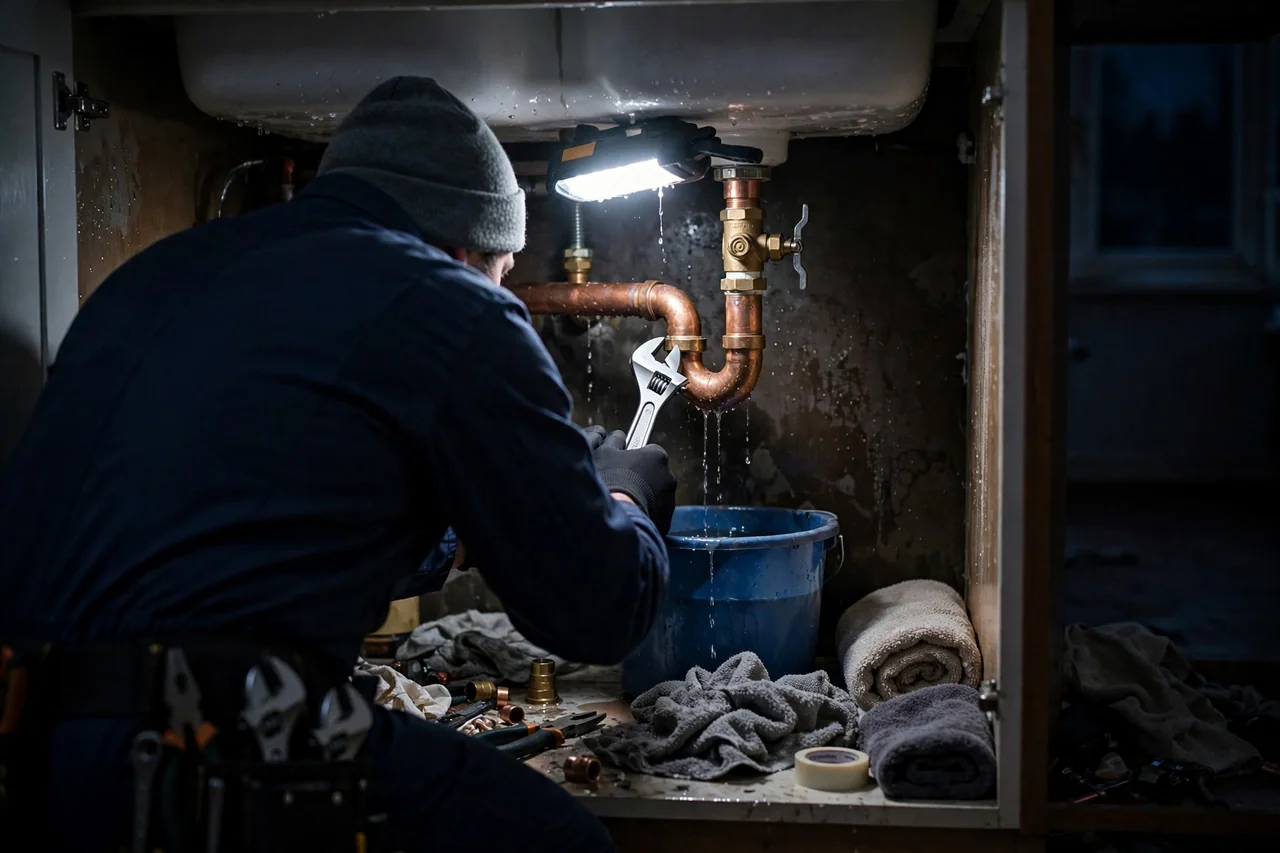
We break up the bridge, check the float and brine valve, and replace the pickup tube if it is clogged. Then we run a manual regeneration and watch the brine draw to confirm the fix. A salt bridge looks like a full tank but the water never touches the salt, so regeneration fails silently. A tank full of water can mean a stuck float or a bad brine valve.
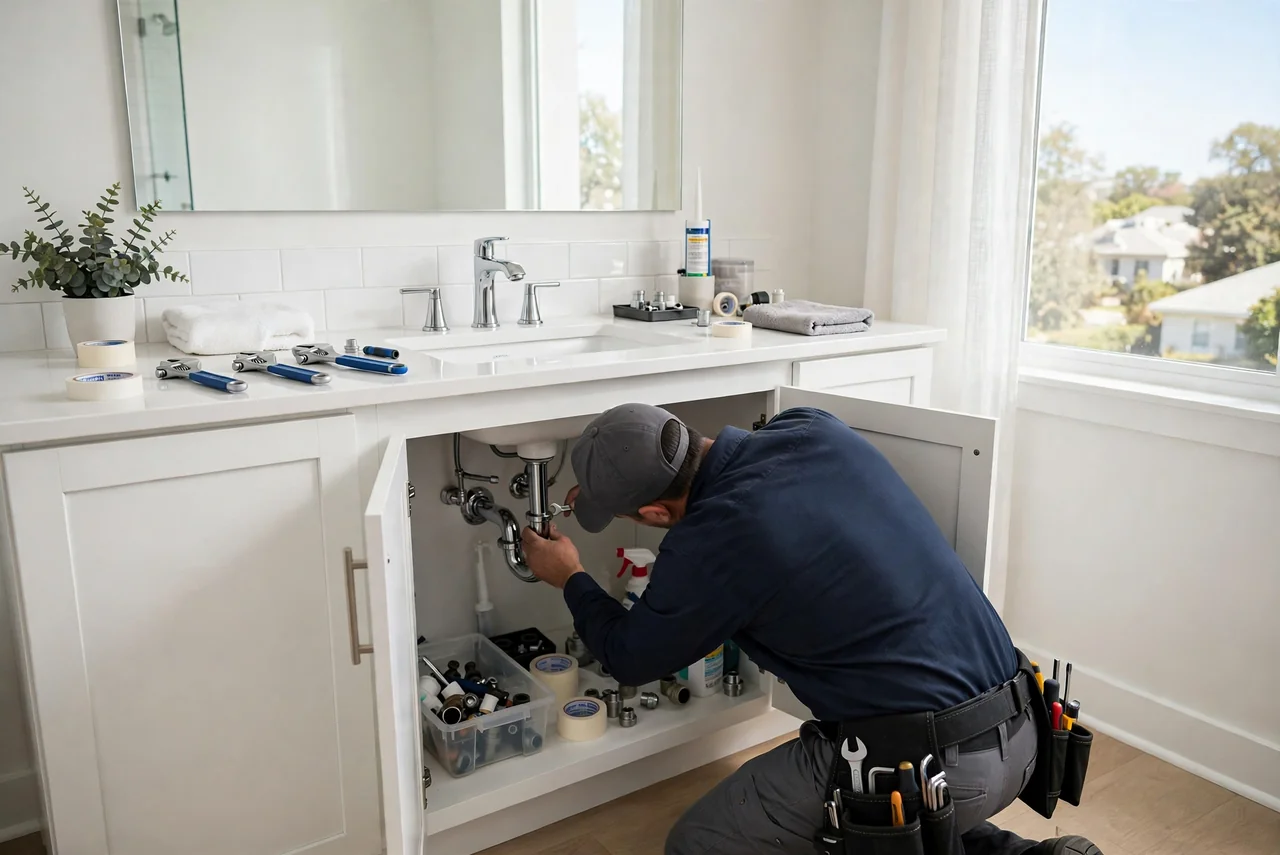
We shut off the supply, find the source with a moisture check, and repair the fitting, valve, or tank connection. New brass fittings and supply lines go in, and we pressure-test the whole assembly before turning the water back on. A small leak at the inlet fitting or brine tank can soak a garage or utility room and damage drywall and flooring. It also spikes your water bill.
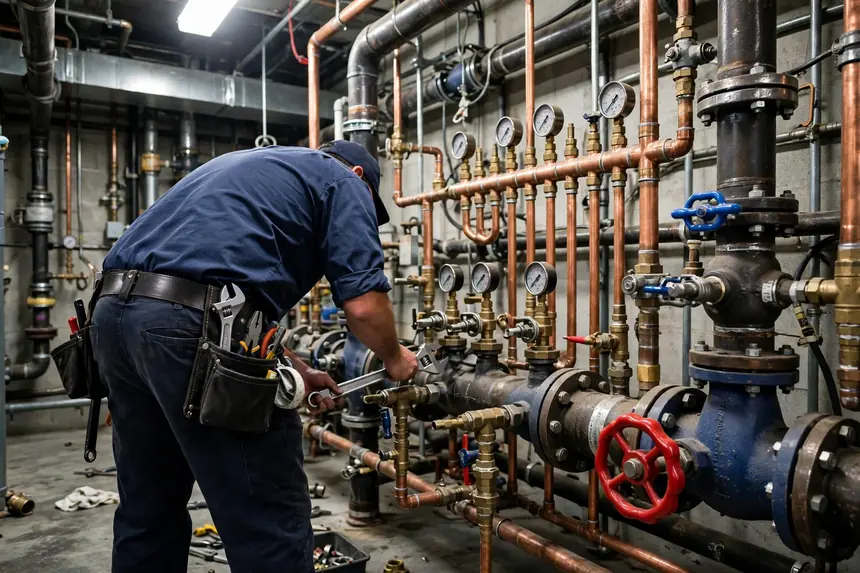
We recalibrate the control head to your actual water hardness and household size, or replace the meter if it has failed. Most customers see salt use drop by 20 to 30 percent after recalibration. Constant regeneration burns through salt and water and can overwhelm a septic or sewer line. It usually means the control head is misreading hardness or the meter is failing.
Most repairs restore full softening within one regeneration cycle, usually 2 to 4 hours after we finish. You will feel the difference in the shower the same evening, and soap will lather again without doubling the dose.
Scale is the quiet killer of water heaters and dishwashers. Soft water keeps mineral buildup off heating elements, which can add years to a tank and protect the copper pipe and brass fittings throughout your home.
A softener that runs too long or regenerates every night is wasting salt and water. We recalibrate the control head to your actual hardness and household size, which typically cuts salt use by 20 to 30 percent.
Cloudy glassware and white film on faucets are the first visible signs of hard water breaking through. Once we fix the softener, those spots disappear, and you stop scrubbing scale off the shower door every weekend.
Clear records you can keep and share.
Before and after numbers at the tap
Parts and labor priced before work starts
How to check salt and regeneration
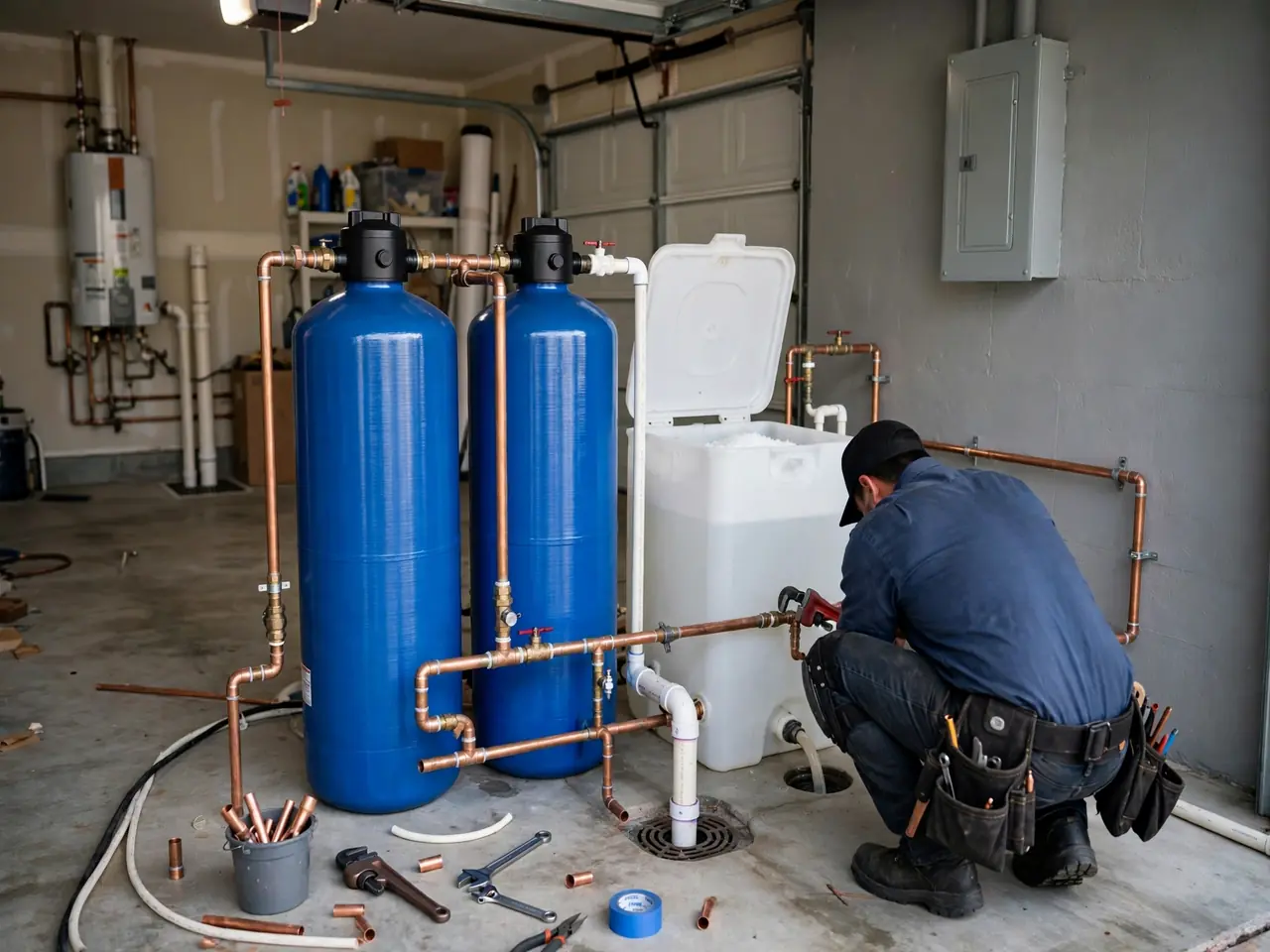
A softener is a tank of resin, a brine tank, and a control valve. Most failures are in the valve or brine side, which is repairable. The resin tank itself is the part that usually decides repair versus replace.
Control valves and injectors fail far more often than resin tanks. A rebuild or replacement valve is a fraction of a new unit and restores full function.
Iron fouling and broken beads reduce capacity. If the resin is spent and the tank is old, replacement often makes more sense than a repair.
Units under 10 to 12 years old with available parts are usually worth repairing. Older or discontinued units may cost more to fix than to replace.
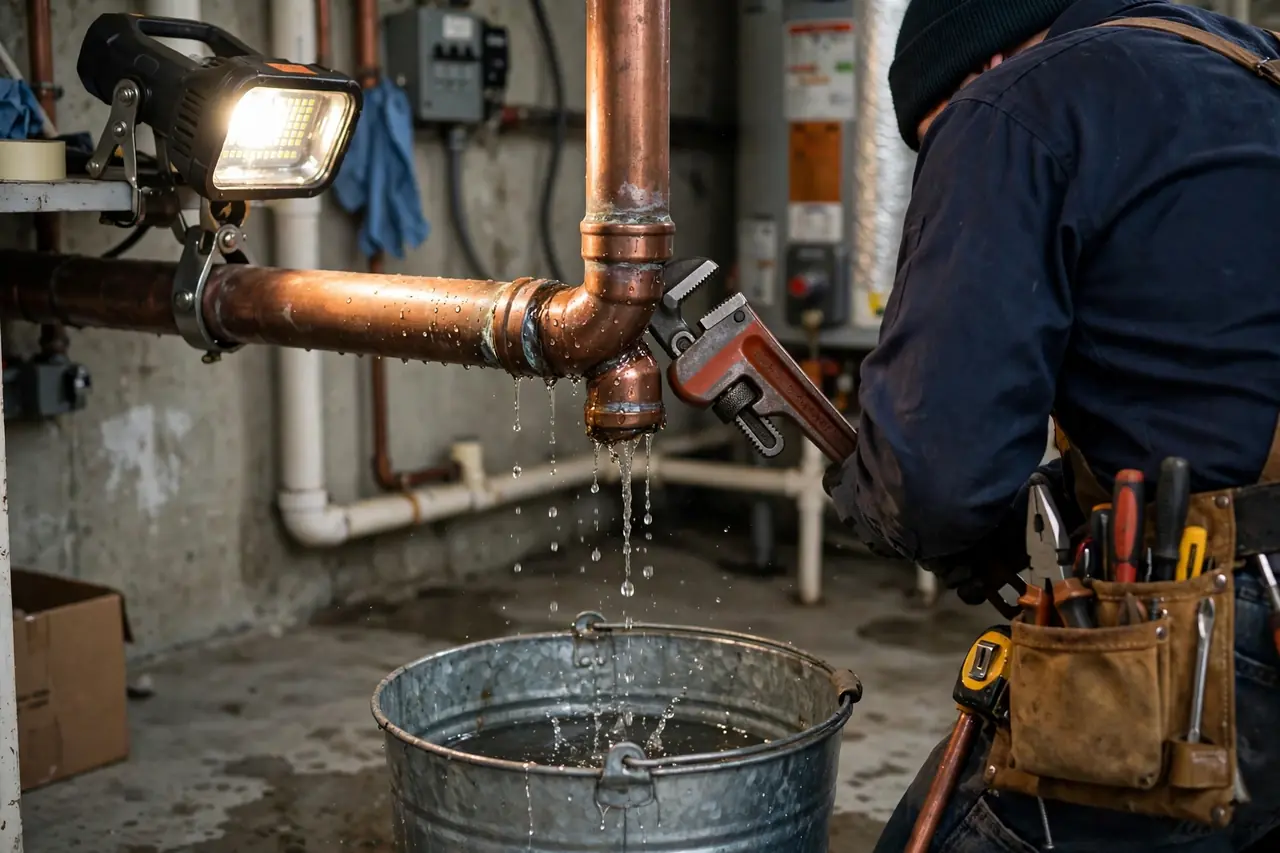
Outside these areas? Call and ask if we can reach you. (346) 776-8560
The resin is exhausted, the control valve is not regenerating, or the brine system is not drawing salt. We check the resin, the valve, the injector screen and the salt level to find which one failed.
Usually a brine or float problem, or a valve stuck in regeneration. We check the brine tank, the float and the valve settings before replacing anything.
Repair when the failure is a part: a valve, an injector, a float or a seal. Replace when the resin is exhausted across the bed or the tank itself has failed. We test the water after the repair so you know it worked.
Yes. Estimates are free, and you approve the written scope before work starts. We are open Monday to Sunday, 7:00 AM to 10:00 PM.
Call (346) 776-8560 for a free estimate. We find the failed resin, valve or brine part, fix it, and test the water after, Monday to Sunday, 7:00 AM to 10:00 PM.
Call us at (346) 776-8560 to book water softener repair or ask a question. We are open Monday to Sunday, 7:00 AM to 10:00 PM, and estimates are free.
The fastest way to book is a phone call. Tell us what is happening and we will give you a free estimate and a time that works, Monday to Sunday, 7:00 AM to 10:00 PM.
Open Mon–Sun, 7:00 AM–10:00 PM. Free estimates.